
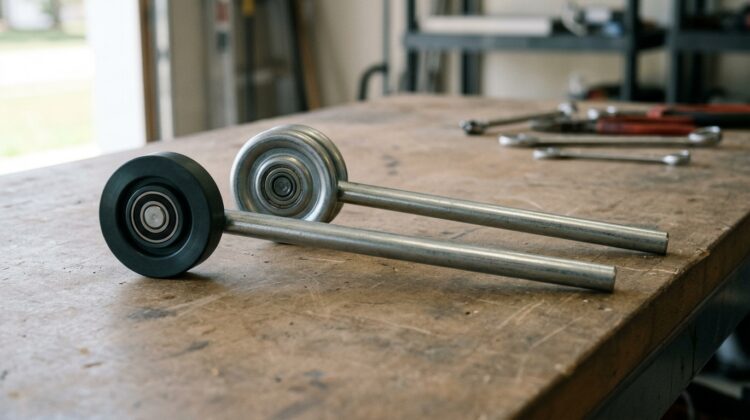
Choosing between nylon vs steel garage door rollers sounds like a simple materials question. In practice, the roller’s design, bearing quality, stem length, door weight, track geometry, and overall condition matter as much as the outer wheel. A premium roller installed in a damaged track will not create a healthy door. A quiet nylon wheel does not repair an out-of-balance spring system. Before shopping, homeowners need to know what can be observed safely and what must be handled by a trained technician.
Rollers are the small wheels that move through the vertical and curved tracks as the garage door opens and closes. They carry guidance loads while hinges let door sections articulate. Because rollers are easy to see, people often blame them for every rattle or grinding noise. Sometimes that diagnosis is correct; other times the real issue involves a bent hinge, damaged track, or failing counterbalance assembly. This 2026 guide compares materials without encouraging risky do-it-yourself repairs.
Nylon vs Steel Garage Door Rollers: What Actually Changes?
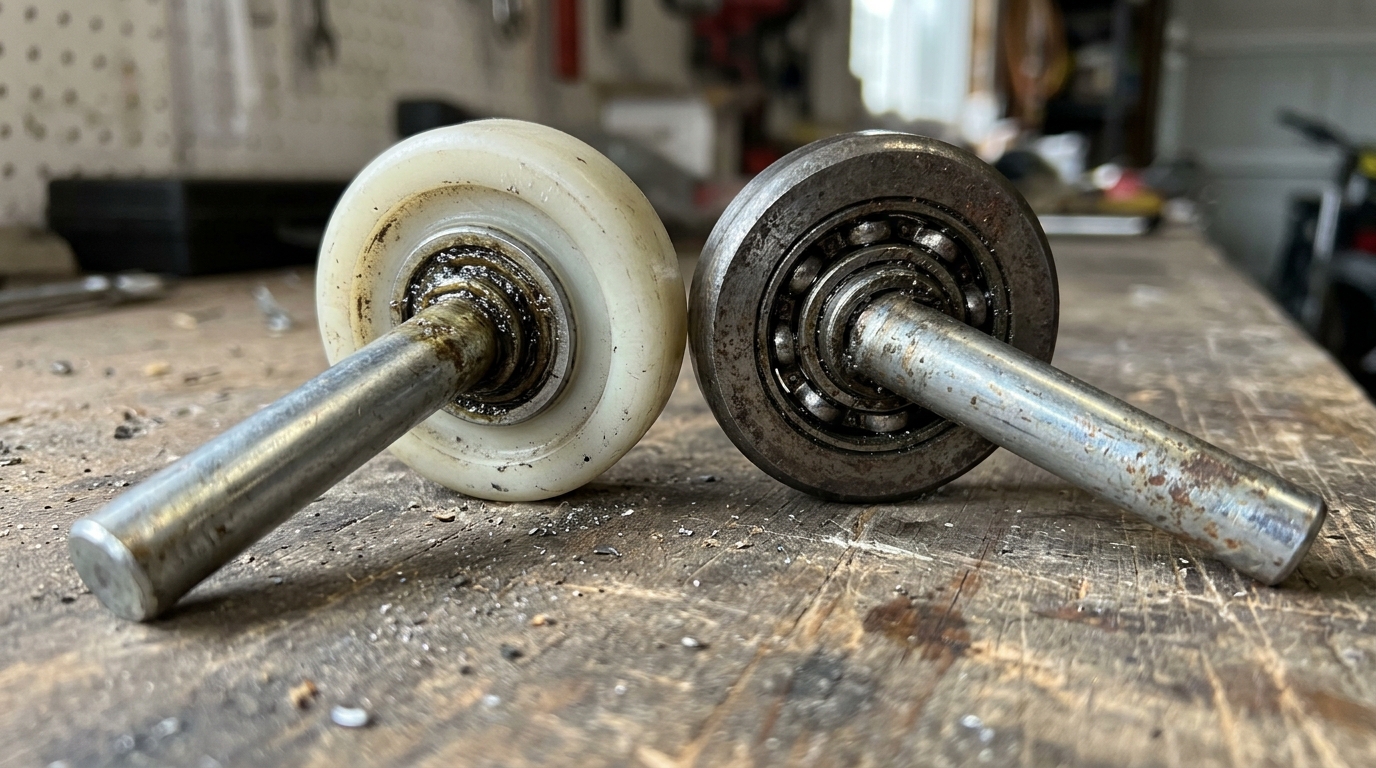
A typical residential garage door roller has a wheel and a metal stem, but designs vary. The wheel may be steel or a polymer often described as nylon, with different bearing arrangements. Some budget versions have fewer moving elements, while other models use sealed ball bearings. The manufacturer may publish load ratings, expected operating cycles, and maintenance instructions. A product label promising “quiet operation” alone is not enough evidence of suitability.
Steel wheels can be durable in appropriate applications, while nylon-tread versions may reduce some rolling noise. However, neither is automatically the longest-lasting option for every door. Installation quality and the condition of the track may dominate the outcome. Start with a compatible replacement recommended by the door manufacturer or technician, not a generic kit chosen from a photograph.
Materials, Bearings, and Stem Compatibility
Wheel material influences rolling contact, but bearings influence resistance and service life. A roller with deteriorated bearings may wobble or grind even when its wheel surface looks intact. Sealed bearings can help reduce contamination, yet their actual performance depends on product design and use. Do not accept a seller’s unsupported cycle-life claim as a warranty guarantee.
When Nylon Wheels Can Make Sense
Homeowners with a bedroom above the garage often prioritize noise. A suitable nylon-wheel roller may reduce one source of rattling compared with a worn metal wheel. It will not silence a chain-drive opener, vibrating bracket, or loose door panel. Before paying for a full set, look at the broader noise pattern and compare our garage door vibration and noise guide.
Some polymer rollers should not be lubricated on the wheel surface. Amarr’s maintenance guidance explicitly cautions against lubricating plastic components such as plastic rollers and idler bearings. That advice is more reliable than spraying every visible part with a multipurpose lubricant. Follow the instructions for the specific roller and door system.
Why Steel Rollers Are Not Automatically a Bad Choice
Steel rollers may be appropriate for particular tracks or heavier-duty applications. They can also be noisier when worn or poorly lubricated. A homeowner should not assume nylon will fit simply because an online listing uses the phrase “universal.” Some doors require specific stem lengths, wheel diameters, or bearing arrangements. Wrong dimensions can introduce looseness, binding, and premature wear.
Ask whether the replacement is rated for the door and permitted by its manufacturer. The wheel should roll properly without excessive lateral movement or rubbing. A trained technician can assess that fit while checking track spacing and hinge condition. Mixing unmatched rollers without a clear plan may complicate diagnosis later, especially on older systems with nonstandard hardware.
How to Recognize Roller Wear Without Taking the Door Apart
Look for visible flat spots, cracks, missing wheel material, unusual stem angles, or wheels that appear to wobble when the door is stationary. During one normal cycle, listen from a safe distance for repeating grinding or rhythmic knocking. Do not put fingers near the track or hinge points. A roller that has left the track, a sharply tilted door, or a cable that looks loose is a stop-use condition, not a reason to try one more opening cycle.
Separate Roller Symptoms From Other Door Problems
A sticking door may have a track alignment problem. A heavy door may indicate spring imbalance. A repeated bang near the top of travel may involve opener limits, mounting, or track geometry. You cannot identify these faults confidently from sound alone. The Door & Access Systems Manufacturers Association’s safety tips recommend monthly visual checks and professional attention for hazardous springs, cables, and related components.
Our garage door repair cost guide provides context for estimating a repair, but ask a local installer for an itemized proposal. Replacing all rollers may be reasonable when they are consistently aged and worn. Replacing one defective component may be enough when the rest of the system is healthy. The proper scope is a condition-based decision, not a fixed rule for every home.
How to Plan a Safe Garage Door Roller Replacement
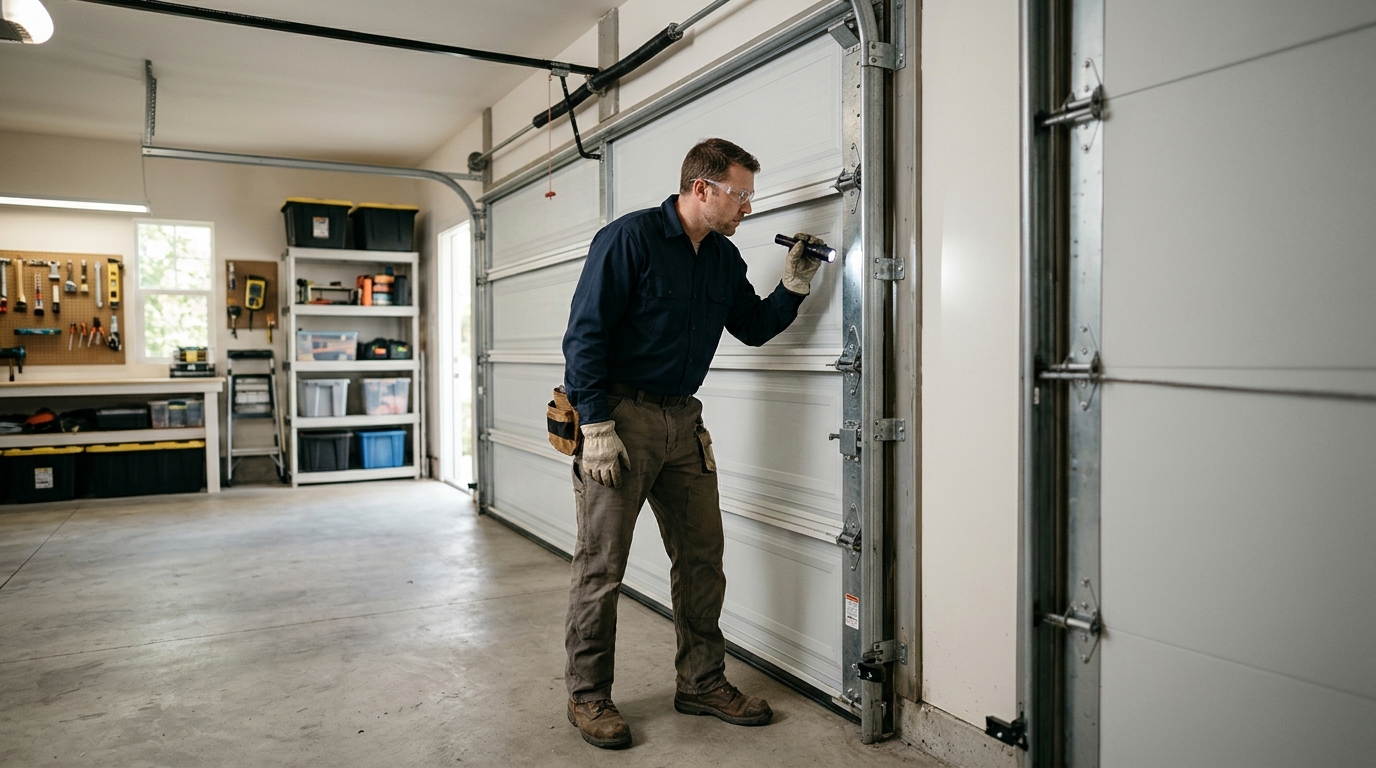
Roller work often seems small because the parts fit in one hand. The danger is the system supporting them. Bottom fixtures and components near lifting cables can carry substantial spring force, and altering the wrong bracket can allow an uncontrolled movement. Tracks also guide a heavy moving door. Do not remove bottom brackets, loosen structural track supports, disconnect cables, or manipulate springs to change a roller.
An experienced door technician will inspect the hinges, tracks, spring system, safety hardware, and opener before recommending replacement. Request compatible parts and a clear written scope. If noise is your main complaint, say so; if the door binds or leans, describe that separately. Honest symptom descriptions help prevent an expensive cosmetic upgrade from overshadowing a necessary safety repair.
Compare Replacement Estimates and Maintenance Requirements
A useful quote names the roller model or specification, quantity, whether hinges or track work are included, the labor fee, and the warranty terms. Ask whether the price covers diagnostic testing and safe disposal of the old rollers. If a contractor recommends a full new opener merely because a roller rattles, request an explanation of the actual opener fault. Conversely, if severe track or spring damage exists, accepting only a roller swap could be unsafe.
After-Service Checks and Ongoing Care
Once a professional completes service, observe a normal opening and closing cycle from a clear position. The door should travel without scraping, shaking, or obvious unevenness. Ask the technician to demonstrate the applicable reversing safety checks and provide any maintenance recommendations in writing. Do not perform a manual balance test on a door with suspicious springs or cables; leave that assessment to qualified personnel.
For continuing care, keep dust and stored objects away from the track opening and photograph unusual wear at the next inspection. Follow manufacturer instructions for lubrication, avoiding heavy grease packed into the tracks or spray applied indiscriminately to nylon wheels. The DASMA maintenance guide emphasizes inspection and warns that spring adjustment requires qualified people.
If a contractor proposes a warranty upgrade based on an advertised roller lifespan, ask for the actual written conditions. Labor, wear, corrosion, and misuse may be treated separately. Review our garage door warranty guide before approving a costly package. Ask what routine care is expected and whether the warranty transfers to a later homeowner.
A practical maintenance log makes future decisions easier. Once or twice a year, photograph the closed door and note any new sound, uneven movement, or visible roller damage. Record which service company inspected the door and whether bearings, hinges, or tracks were discussed. This can distinguish a recurring installation issue from ordinary aging. The log also helps if you sell the property, because a future owner can understand what was changed without relying on guesses about the hardware.
When comparing online videos, be especially cautious of demonstrations that remove a bottom roller bracket or lever the track away from the wall. The apparent simplicity of those actions hides stored mechanical force. Use videos to learn terminology, not as a substitute for qualified diagnosis.
The best decision about nylon vs steel garage door rollers is usually the one that restores safe, smooth travel with properly matched hardware. Compare noise goals, fit, bearings, condition, and service quality together. If the door is crooked or a roller has escaped its track, stop using it and call a professional. The savings from an improvised repair are not worth the risk posed by a heavy door or loaded spring hardware.