
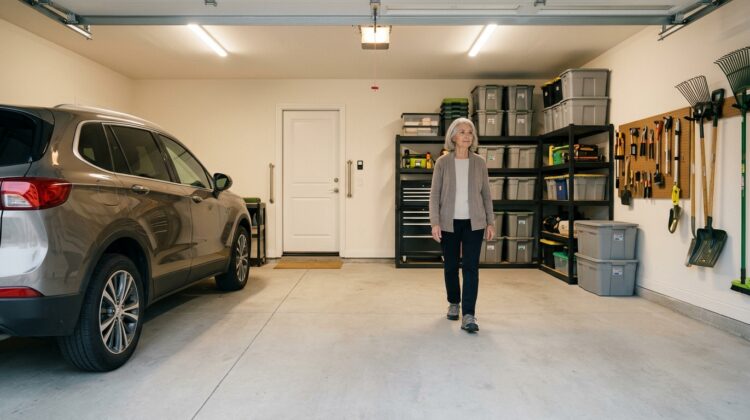
Accessible garage door upgrades are becoming part of a wider conversation about staying independent at home. A garage is often the place where people unload groceries, enter from the car, store mobility equipment, and move between outdoor and indoor spaces. If its controls are hard to reach or the path is uneven, everyday trips can become tiring or unsafe.
Aging-in-place design is a meaningful 2026 remodeling theme. However, a more accessible garage is not only for older adults. Clear pathways, easier controls, better lighting, and dependable power-outage access can help families with children, people recovering from injuries, and anyone carrying bulky supplies.
The best improvements start by identifying actual difficulties, not buying every smart accessory. This guide covers the garage entry route, the automatic opener, emergency access, and practical planning with qualified professionals. It also explains why accessibility should never come at the expense of required garage-door safety features.
Design the Garage Around the Full Entry Route
A remote control can make the overhead door easy to open, but it does not solve every barrier. Consider the route from the vehicle to the pedestrian door, the door leading into the house, the location of stored items, and the lighting at night. A useful accessibility plan follows the entire journey from parking to arriving safely indoors.
The broader demand is measurable. AARP’s March 2026 universal design research reports that many adults age 50 and older value home features that work across ages and abilities. The takeaway for a garage is straightforward: design for changing needs before a daily obstacle becomes an emergency.
Improve Pathways, Thresholds, and Everyday Controls
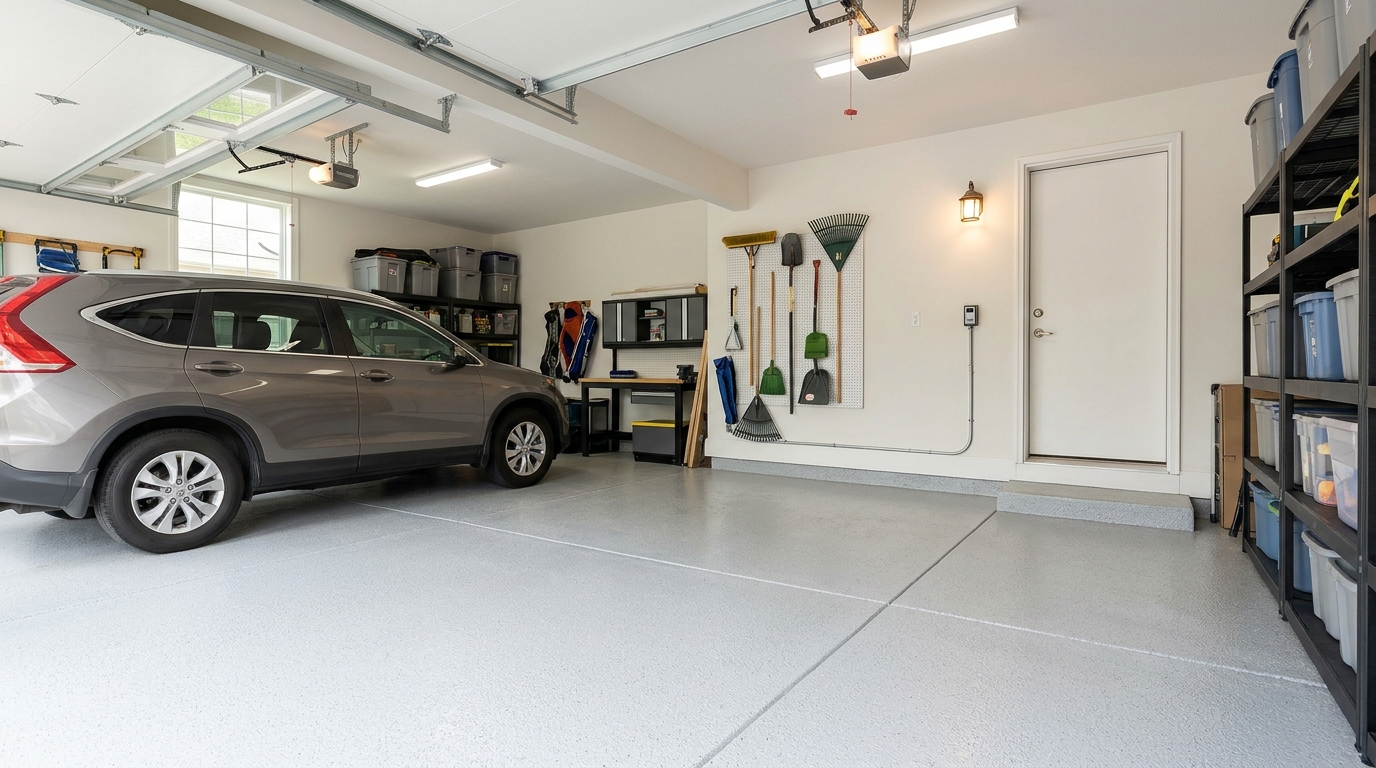
Start with a walkthrough while the overhead door is stationary. Is there enough room to move around a parked vehicle? Do storage bins narrow the walkway? Are the light switches visible? Can the interior entry door be opened comfortably while carrying bags or using a mobility aid? Write down obstacles that happen every day before considering structural modifications.
Small organizational changes can make a real difference. Keep the path clear, improve glare-free lighting, secure loose mats, and relocate frequently used supplies to reachable heights. If a person uses a wheelchair or walker, measure the actual turning and approach space with that person’s equipment rather than relying on a generic diagram.
Safer Floors and the Garage-to-House Threshold
Slippery concrete, uneven patches, clutter, and raised thresholds can increase difficulty entering the home. Use suitable nonslip surfaces and repair damaged floor areas. Where a ramp or threshold change is being considered, ask a qualified designer or contractor to check slope, landings, door swing, drainage, and building requirements. A quick plywood ramp may create a new obstacle instead of removing one.
The garage-to-house pedestrian door may also form part of a required fire separation. Do not remove its closer, modify a rated assembly, or cut openings simply to make entry easier without checking applicable code. Accessibility and fire protection should be designed together, especially in attached garages.
Reachable Wall Buttons, Keypads, and Lighting
Controls should be visible, easy to understand, and located where the intended users can operate them safely. Ask an installer about appropriate wall-control height and position, keeping buttons away from moving door parts and outside children’s reach as required by the product instructions. Large, clearly labeled controls can reduce confusion, while bright entry lighting can help people see curbs and steps.
Wireless keypads and smartphone apps may provide additional access options, but they introduce batteries, connectivity, and account-management needs. Choose features that match the user’s comfort with technology. A physical control that works reliably can be more useful than a complicated app with features that nobody remembers how to use.
Choose an Opener That Supports Reliable, Safe Access
An automatic opener can remove the need to lift a heavy overhead door manually. Yet it should not be used to compensate for broken springs or an unbalanced door. A properly maintained garage door must move safely on its own mechanical system. If the opener groans, the door jerks, or one side rises unevenly, call a qualified garage door technician.
For attached garages beside bedrooms, quieter operation may also improve daily life. Belt-drive and appropriate vibration-control options can reduce certain kinds of opener noise, but noisy rollers, loose hardware, and failing springs must be assessed separately. See our guide to quiet garage door upgrades for additional considerations.
Battery Backup and an Emergency Exit Plan
During a power outage, an opener without functioning backup power may stop responding to normal controls. Battery backup can provide limited additional operation when power is unavailable. That can be particularly helpful for someone who cannot safely lift an overhead door. However, backup batteries age, and their available cycles vary with the model and conditions.
Create an emergency access plan that does not depend entirely on one device. Know where the pedestrian exits are, keep the routes unobstructed, and arrange help when needed. The emergency release is not a substitute for an accessible powered opener. It should not be operated on an open, unstable, or damaged door. Compare the options in our battery backup and manual release article.
Photo-Eye Sensors and Automatic Reversal
Accessibility features must preserve the door’s entrapment protection. Photo-eye sensors help detect an obstruction across the opening, while the opener’s reversal system provides another important safeguard. Remote access, scheduling, or automatic closing should never bypass these protections. Keep the closing path clear of wheelchairs, walkers, pets, and stored items.
Follow the manufacturer’s instructions for routine safety testing. If the door fails an automatic-reversal test, stop using the opener and arrange service. Read our garage door sensor and auto-reverse testing guide for an overview. Never adjust spring tension, lift cables, or bottom brackets as a homeowner workaround.
Plan Accessible Garage Improvements Without Overspending
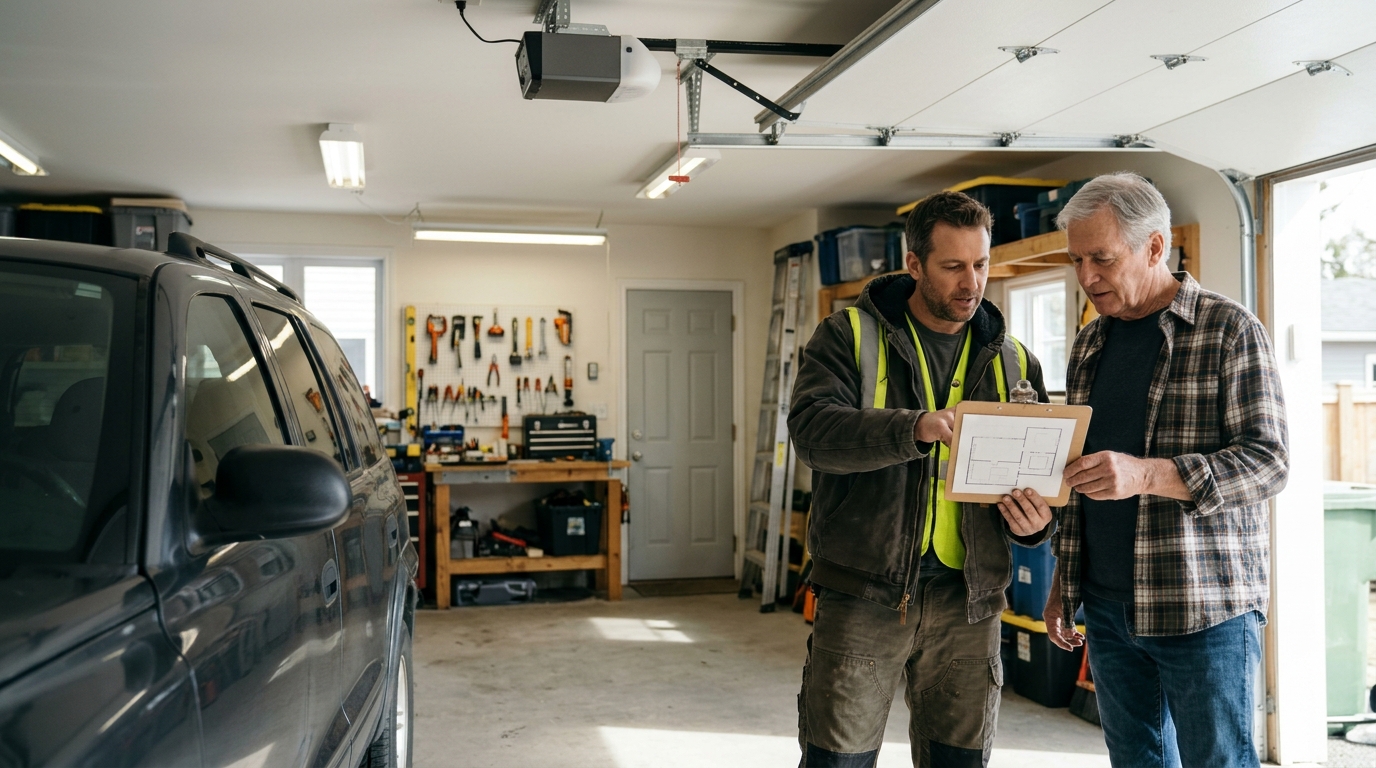
An effective project prioritizes a person’s daily needs. A household may benefit most from a brighter pedestrian entrance and a dependable wall control. Another household may need professional threshold work, a new opener with backup power, or a redesigned parking and walking route. The same checklist will not fit every property or mobility requirement.
Prioritize Projects, Compare Quotes, and Maintain the Results
Start with low-disruption improvements. Remove clutter, improve storage, replace burnt-out lights, add suitable task lighting, and keep approved controls easy to identify. Make sure doors and locks function properly. These actions can reveal whether larger renovations are necessary without committing to unnecessary products.
Then consider equipment upgrades. Compare opener reliability, battery backup availability, compatible accessories, noise, warranty, and accessibility of everyday controls. Ask a garage door contractor to inspect the door before suggesting a replacement. If the existing door is mechanically unsafe, repair needs take priority over convenience features.
Reserve structural work for qualified specialists. A change to thresholds, drainage, framing, or the garage-to-house door may affect safety and local requirements. When mobility access is central to the project, an occupational therapist or an aging-in-place specialist can help translate individual needs into design choices. Ask for a written scope that covers the complete route, not only the overhead garage door.
The National Association of Home Builders explains universal design through features such as step-free entries, adequate clearances, good lighting, and easy-to-use hardware. These are useful planning principles, although specific accessibility regulations for a private home vary by location and project type. Do not assume commercial accessibility rules apply automatically to every private garage.
Before approving work, compare at least two detailed proposals when feasible. Ask which tasks require permits, what warranties cover labor and equipment, whether new wiring is needed, and how the finished system will be demonstrated. A technician should explain safe operation, backup testing, and whom to contact if the opener begins behaving unpredictably.
Maintain the results after installation. Keep the access path clear, inspect lighting and floor conditions, replace keypad batteries as required, and test safety systems according to the owner’s manual. Review the setup when household needs change. A control that was convenient last year may become difficult to use after an injury or changes in mobility.
Accessible garage door upgrades in 2026 are ultimately about dependable movement between home, vehicle, and community. Start with the route people actually use, choose safe and manageable controls, protect emergency access, and bring in qualified help for mechanical or structural work. A well-planned garage can be easier for everyone to use without sacrificing the safety features that protect the household.