
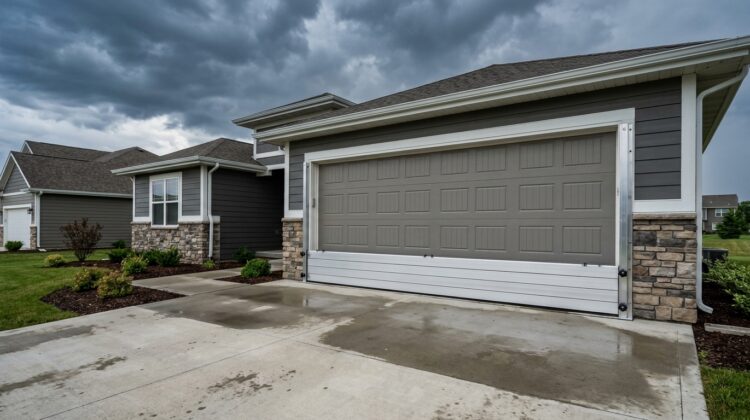
Garage door flood protection starts with a simple question: where is the water coming from? A garage may stay dry during ordinary rain yet flood when a downpour overwhelms the driveway drain. In another home, a worn bottom seal lets a shallow stream spread across the concrete floor. These problems look similar, but they require different solutions.
For 2026, homeowners are paying closer attention to practical resilience: drainage, removable flood barriers, vulnerable equipment, and safe recovery. The goal is not to promise a waterproof garage. Instead, it is to reduce manageable rainwater intrusion while understanding when rising floodwater presents a serious structural and personal danger.
This guide explains what each protection method can accomplish, where it falls short, and how to make a sensible plan before the next storm. It also distinguishes routine weatherproofing from engineered flood mitigation, an important difference that many product advertisements ignore.
Why Water Enters the Garage and What a Barrier Can Really Do
A typical overhead garage door is designed to move smoothly and resist ordinary weather exposure. It is not automatically a watertight flood gate. Water can arrive beneath the bottom gasket, between side seals, through wall joints, or from drainage that cannot handle a storm. Finding the entry path is more useful than buying the first flood product in an advertisement.
Identify the Water Source Before Spending Money
After a safe, ordinary rainfall, inspect the garage from inside. Look for staining, sediment lines, worn seals, and the direction in which puddles spread. Check whether the driveway slopes toward the door. Photograph the findings and note whether the water appeared during a short cloudburst or after prolonged neighborhood flooding.
Inspecting drainage is often more revealing than examining the door. A clogged channel drain may cause water to pool against an otherwise sound threshold. Downspouts that discharge beside the driveway can make a small grading issue much worse. For help separating slab problems from seal problems, read our guide to garage door gaps on uneven concrete.
Driveway Runoff and Poor Drainage
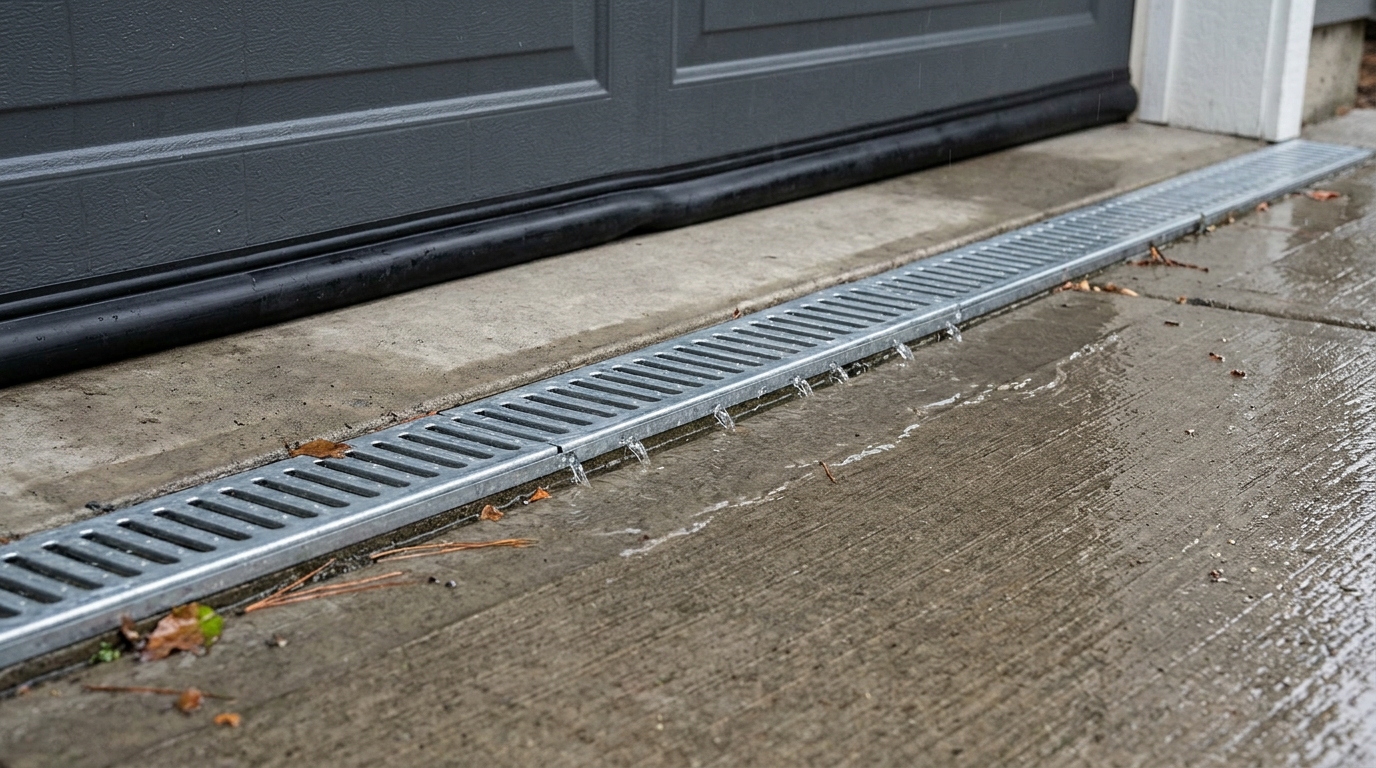
Surface runoff is water traveling over the driveway or adjacent pavement. It often follows a visible path during heavy rain, especially where a slope directs it toward the opening. Clear accessible leaves and debris from existing drains before the storm, not while floodwater is rising. If water repeatedly pools, ask a qualified drainage contractor to assess grading, drain capacity, discharge locations, and local rules.
A rubber threshold or bottom gasket may help with small amounts of runoff, but it cannot replace a correctly designed drainage system. Installing a higher lip without evaluating the surrounding pavement can also create access, tripping, or drainage issues. Consider the whole water path rather than treating the garage opening in isolation.
Rising Floodwater and Structural Pressure
Rising floodwater behaves differently. It may surround the building, enter through multiple openings, and remain for hours. Holding water outside creates pressure against the door, walls, and foundation. A barrier that reduces a shallow splash problem may be unsuitable for a deeper flood. In designated flood areas, approved flood openings and other construction requirements can also affect whether an enclosure should admit and release water.
Never install a tall, improvised watertight wall across a garage without appropriate engineering advice. Sealing an opening can shift dangerous loads onto surrounding construction. Consult local floodplain and building officials before structural changes, particularly for attached garages below the home’s elevated living level. No barrier should make evacuation harder.
Compare Garage Door Flood Protection Options
The best approach usually combines several modest improvements instead of relying on one product. Select measures according to expected water depth, warning time, how often the garage is used, and whether someone can safely deploy a barrier. A homeowner who travels frequently may need a different plan from someone who can prepare the property well before a forecast storm.
Bottom Seals, Thresholds, and Channel Drains
Weatherstripping closes the normal gap between the moving door and floor. A compatible replacement can reduce drafts, dust, and minor rainwater entry. A floor-mounted threshold may improve contact on some surfaces, provided it does not interfere with safe closing or the vehicle route. A channel drain installed across an appropriate driveway can capture runoff and send it to an approved outlet.
None of these products makes a typical residential garage floodproof. In particular, a larger bottom seal cannot correct a crooked door, broken spring, or substantial foundation movement. Keep the opener’s travel and force settings within manufacturer requirements. If the door binds or reverses unexpectedly, arrange professional inspection rather than trying to force it against a new threshold.
Removable Flood Gates and Temporary Barriers
Purpose-built flood panels, deployable gates, and other temporary defenses may reduce entry during limited flooding if the system is suitable for the building and installed correctly. Product dimensions, anchors, gaskets, expected water level, and sidewall construction matter as much as the advertised barrier height. Ask suppliers for installation documentation, limitations, testing information, and requirements for annual inspections.
Temporary systems also depend on warning time. If installation requires several people or tools stored far away, it may not be practical during a sudden flash flood. Plan a trial installation in dry weather. Never remain in a danger zone to finish fitting a gate after authorities direct evacuation. A barrier is replaceable; personal safety is not.
For broader preparation guidance, the National Flood Insurance Program’s flood damage reduction guidance recommends elevating utilities, clearing gutters, and moving valuables to safer locations. Those steps remain useful even when a garage barrier is part of the plan.
Build a Practical Garage Flood Plan Before the Next Storm
Garage door flood protection should be one element of a household emergency plan. In particular, think about vehicles, stored chemicals, electrical equipment, the door connecting the garage to the home, and alternative ways to leave the property. A sealed garage door does not guarantee a safe route or prevent water from entering elsewhere.
What to Do Before, During, and After Heavy Rain
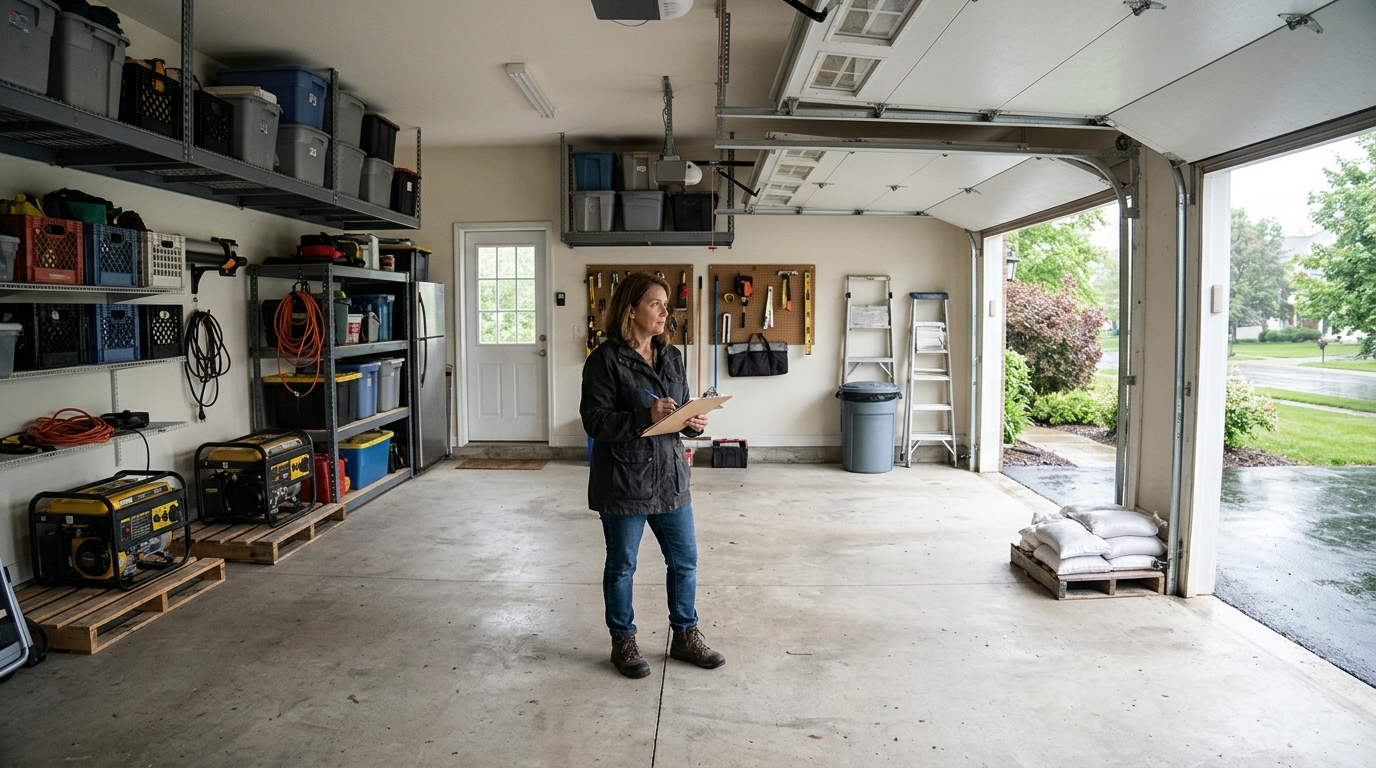
Before the storm: Examine visible seals, clean accessible drainage, and test the garage door’s normal safety functions using the owner’s manual. Move important documents, power tools, chargers, and vulnerable storage off the floor. Ask a licensed electrician about relocating outlets or equipment where flood risk justifies it. Check whether your insurance includes separate flood coverage and document existing property conditions.
Make sure you understand how your garage opener works during a power outage. Battery backup can help with normal operation, but it does not protect an opener submerged in floodwater. Learn more in our battery backup versus manual release guide. Do not pull the emergency release on an open, damaged, or unsupported door.
When flooding threatens: Follow local alerts and evacuation instructions. Deploy a temporary barrier only while conditions are safe and there is enough time. Move vehicles early rather than attempting to drive through floodwater. The National Weather Service warns against driving or walking into flooded areas, even when the water appears shallow.
After the water recedes: Avoid standing water near electrical outlets, extension cords, or a wet opener. Have submerged electrical components evaluated before restoring power. Photograph damage before discarding affected materials, provided doing so is safe. Floodwater may contain sewage, fuel, and other contaminants. Wear appropriate protection and use professional cleanup help when needed.
Once the property is safe, inspect the lower door panels, track area, seals, drywall, and stored items for water damage. Do not operate a door with bent tracks, loose cables, damaged springs, or an unfamiliar grinding noise. A qualified technician can evaluate whether the door and opener remain serviceable. Our storm damage documentation guide explains why photographs and written repair estimates matter.
Finally, review what actually worked. Did runoff bypass the drain? Did the barrier fit securely? Were the instructions easy to follow? Could everyone leave by another route? Updating the plan after each incident is more valuable than assuming one successful storm proves the garage is protected forever.
For 2026, the smartest garage door flood protection strategy is realistic, layered, and safe. Fix ordinary water entry with suitable drainage and seals. Consider engineered barriers where appropriate. Elevate valuables, understand flood insurance, and put evacuation first. The right solution is the one matched to your property, not the most dramatic flood-defense claim.