
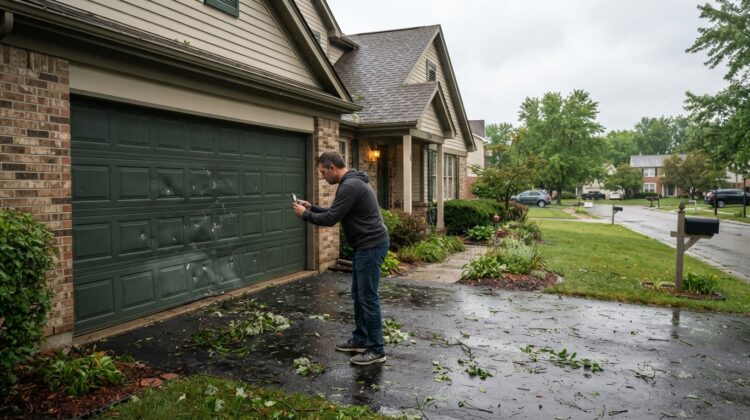
Garage door storm damage can happen in seconds. Strong wind can bend panels, hail can dent metal sections, and flying debris can crack windows or knock tracks out of alignment. A fallen branch can also damage the opener, frame, or hardware.
After the storm, many homeowners want to clean up and schedule repairs right away. That reaction makes sense, but moving too fast can hurt an insurance claim. Photos, videos, damaged parts, and repair estimates may help explain what happened. If you remove or replace everything first, you may lose useful evidence.
The safest approach is simple. Document the damage first. Protect the home from further harm. Contact the insurer when the loss may exceed your deductible. Then ask a qualified garage door technician to inspect the full system.
This guide explains how to handle garage door storm damage in 2026. It covers documentation, temporary repairs, professional inspections, deductibles, warranties, and the choice between repair and replacement.
What to Do After Garage Door Storm Damage
Start with safety. Do not operate the door if it hangs unevenly, sits outside the tracks, has loose cables, or makes unusual sounds. Garage door springs and cables hold substantial tension. A damaged system can move without warning.
Keep children, pets, and vehicles away from the door until a technician checks it. If broken glass or sharp metal creates a hazard, block access to the area. Do not try to straighten tracks or adjust springs yourself.
Next, record the condition of the garage before cleanup. Your insurer may ask for proof of the damage and the event that caused it. Clear documentation also helps a technician distinguish storm damage from older wear.
Document Garage Door Storm Damage Before Cleanup
Take wide photos of the garage, driveway, roofline, and nearby debris. Then take close photos of every damaged component. Include dents, cracked windows, bent tracks, damaged panels, broken seals, loose brackets, and impact marks.
Record a slow video of the entire door from outside and inside. Do not operate the door just to create footage. If the door looks unstable, leave it in place.
Write down the date and approximate time of the storm. Save severe-weather alerts and any photos of hail, fallen limbs, or neighborhood damage. If a security camera captured the storm, copy the video before the system deletes it.
Photograph the Cause and the Full Garage Door System
Insurance coverage often depends on the cause of the loss. Wind, hail, and falling objects may receive different treatment from floodwater, corrosion, poor maintenance, or normal wear.
Photograph the object that caused the damage when possible. For example, capture a fallen branch before anyone removes it. If hail caused the problem, photograph the hailstones next to a familiar object for scale.
Also photograph areas that look undamaged. Those images create context. They may show that one concentrated impact damaged a specific section while nearby parts remained intact.
For future prevention, read our guide to storm-ready garage doors in 2026. It covers reinforcement, weather seals, inspections, and preparation before severe weather arrives.
Make Temporary Repairs Without Losing Evidence
You should prevent additional damage when you can do so safely. Cover a broken window, place a tarp over an opening, or secure the garage from unauthorized entry. Keep receipts for materials and emergency services.
However, avoid permanent repairs until you understand your insurer’s inspection requirements. Do not discard damaged panels, hardware, glass frames, or other parts unless safety requires removal.
If a technician must remove a dangerous component, photograph it before removal. Ask the technician to explain why the part created a safety risk. Keep the removed part when practical until the insurer completes its review.
The National Association of Insurance Commissioners also recommends documenting damage, keeping receipts, and contacting the insurance company promptly after a loss.
Check the Full Garage Door System Before Filing a Claim
A dented panel may look like the only problem. Storm forces can also damage parts that homeowners cannot see from the driveway.
Ask a qualified technician to inspect the tracks, rollers, hinges, reinforcement, springs, cables, bottom brackets, opener attachment points, safety sensors, and automatic reversal system. The technician should also check door balance and alignment.
A written estimate should separate visible storm damage from unrelated maintenance when possible. That distinction helps you compare the repair cost with your deductible.
Separate Storm Damage From Normal Wear and Tear
Insurance usually focuses on sudden covered events. Maintenance problems often fall outside that role. A spring that reaches the end of its service life differs from a track that bends when debris strikes the door.
The same principle applies to rust and corrosion. Gradual deterioration may point to maintenance or environmental exposure. A fresh impact mark from a storm tells a different story.
Ask the technician to describe the condition clearly. Avoid vague estimates such as “garage door repair.” A useful estimate lists each damaged component, the recommended work, and the likely cause.
If only one section needs work, see our garage door panel replacement guide. It explains when one-panel repair makes sense and when age, structural damage, or unavailable matching sections may justify replacement.
How a Garage Door Storm Damage Insurance Claim Works
A garage door storm damage insurance claim may make sense when repair costs exceed the deductible by a meaningful amount. It can make even more sense when the same storm damaged the roof, siding, windows, fence, or other parts of the property.
Start by reviewing the declarations page and relevant policy sections. Look for the standard deductible and any separate wind, hail, hurricane, or named-storm deductible.
Then contact the insurer and ask about the claim process. Find out whether an adjuster needs to inspect the garage door before permanent work begins. Keep the claim number and save every email, estimate, receipt, and letter.
Compare Repair Cost, Deductible, and Coverage
Do not file a claim based only on the appearance of the door. Get a complete estimate first.
For example, a few cosmetic dents may cost less than your deductible. In that case, an insurance claim may offer little financial benefit. However, several bent sections, damaged tracks, broken windows, and opener damage can raise the total quickly.
Also consider the rest of the property. A storm may create one insurance event that includes several damaged areas. The garage door may represent only part of the total loss.
Ask the insurer how the deductible applies before you authorize major work. Avoid assuming that every weather loss uses the same deductible.
Insurance Coverage and Garage Door Warranties Serve Different Purposes
A manufacturer warranty usually covers specific defects in materials or manufacturing. It does not normally pay for hail, wind, falling trees, vehicle impacts, or flooding.
Homeowners insurance works differently. It may cover sudden losses listed in the policy, subject to exclusions and deductibles. The cause of the damage matters.
This distinction prevents wasted time. A cracked panel caused by defective manufacturing may belong in a warranty claim. A cracked panel caused by flying debris may belong in an insurance discussion.
Our garage door warranty guide explains common warranty limits, exclusions, and documentation requirements. It can help you decide which type of claim fits the problem.
Keep all storm-related records in one folder. Save before-and-after photos, videos, estimates, invoices, receipts, claim emails, inspection notes, and final repair documents.
If the insurer sends an adjuster, ask for a copy of the estimate or claim summary when available. Compare it with the garage door contractor’s scope of work. Ask questions when the two documents describe different damage.
After approval, make sure the repair restores safe operation. The technician should test door balance, travel, safety sensors, automatic reversal, and opener function.
Garage door storm damage can create stress, but a clear process makes the situation easier to manage. Document first. Prevent further damage. Get a professional inspection. Compare the total cost with the deductible. Then decide whether to repair, replace, or submit a claim.
Avoid rushing into permanent work simply because the door looks bad. A careful inspection may reveal hidden damage. Good photos and records can also support a cleaner insurance conversation.
For ongoing care after the repair, use our garage door maintenance checklist. Regular inspections can help you spot worn rollers, damaged seals, loose hardware, and other issues before the next severe-weather event.
This article provides general homeowner information and does not provide insurance, legal, or professional repair advice. Coverage varies by policy and state. Qualified professionals should service high-tension garage door components.