
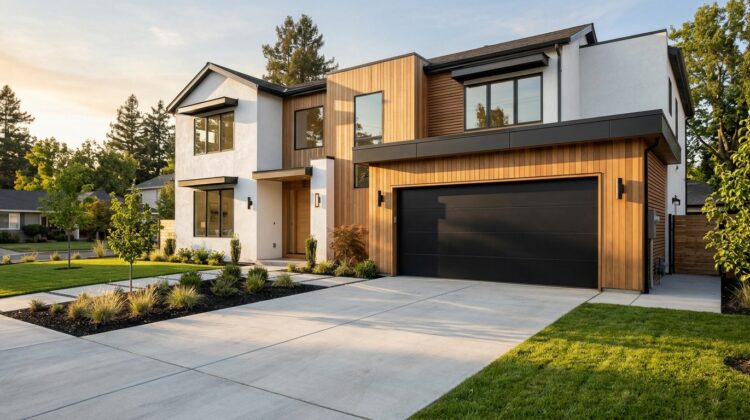
Black garage doors in 2026 are a popular choice for homeowners who want a clean, modern exterior. Matte black, charcoal, and other deep finishes can create striking contrast against white siding, natural stone, or warm wood accents. The appearance is appealing, but a dark garage door is not only a color decision. Sun exposure, panel construction, paint compatibility, and warranty language can affect how that finish performs.
The concern often appears after installation. A homeowner notices that the door is extremely warm in afternoon sun, sees a slight curve in its panels, or discovers that repainting has affected finish coverage under the warranty. None of these outcomes is inevitable, yet all deserve consideration before choosing a color.
This guide separates practical concerns from exaggerated claims. It explains why some dark doors experience thermal movement, when factory finishes offer advantages, and what to ask before painting an existing door black. The goal is a durable design choice, not a guarantee that every dark finish will perform alike.
Why Black Garage Doors Need More Than a Color Comparison
Dark exterior colors are prominent in 2026 design discussions, especially matte black and charcoal. Garage doors are unusually important because they can occupy a large share of the front elevation. Our guide to modern garage door design trends explores how finish, proportions, and materials contribute to curb appeal. However, visual impact is only half the decision.
Understand Heat Absorption and Thermal Movement
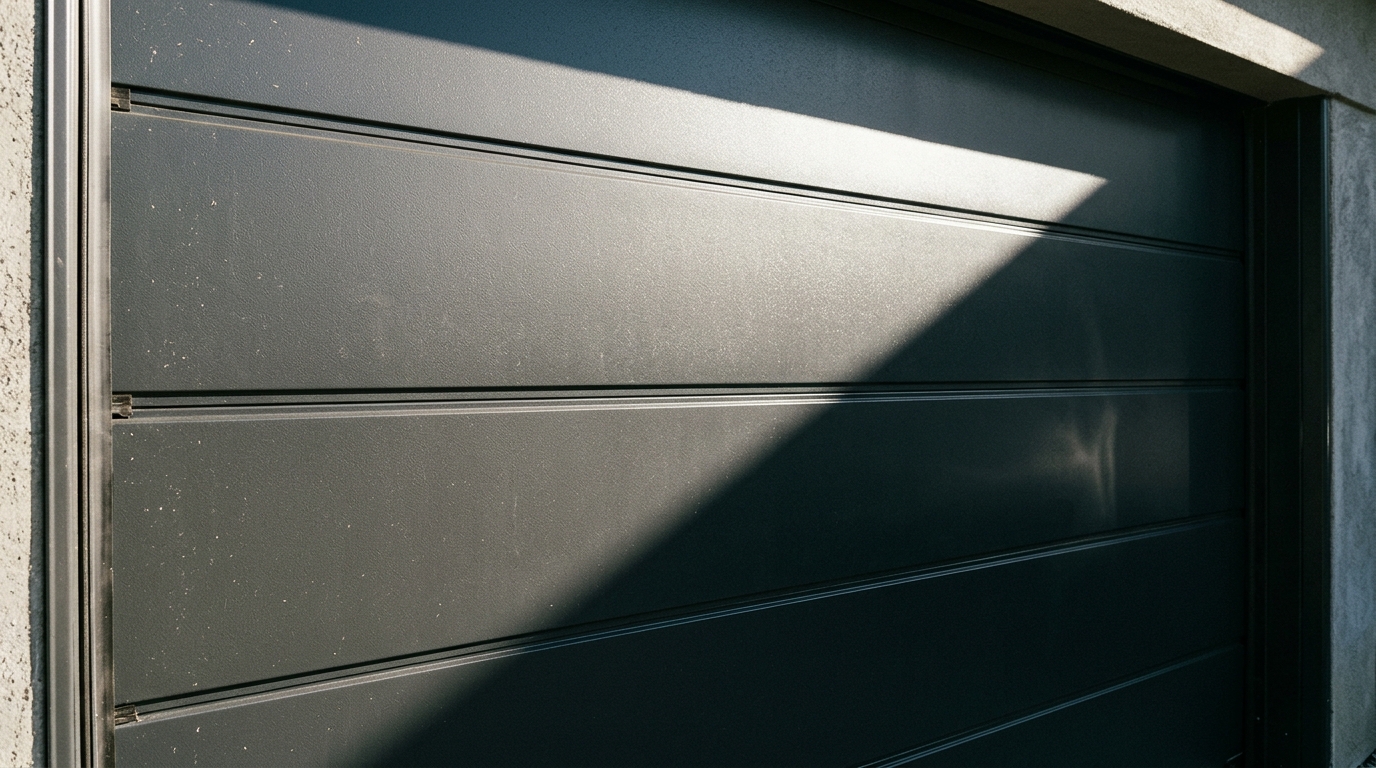
A dark surface generally absorbs more solar energy than a comparable light surface under the same conditions. That can make a black garage door feel noticeably hotter in direct sunshine. The actual temperature difference depends on the coating, material, insulation, ventilation, and orientation of the building. A door facing west may receive intense afternoon exposure, while a shaded north-facing door may behave differently.
A warm exterior panel does not automatically mean the garage or adjoining room will heat up by the same amount. Insulation, air leakage, windows, and the home’s thermal boundary all affect indoor comfort. If temperature control is a priority, see our insulated garage door guide before focusing on color alone.
What Thermal Bowing Looks Like
Some insulated sectional doors can experience temporary panel curvature when the sun heats the outside skin much more than the inside skin. This behavior is often called thermal bowing. It can be especially noticeable on certain bonded insulated steel constructions. Symptoms may include a panel that appears slightly bowed while the door is closed or changes shape as the temperature shifts.
Thermal movement should not be confused with a broken spring, damaged track, or a door that has come off its guides. If panels rub, the opener strains, or the door moves unevenly, stop using it and request an inspection. Never attempt to straighten a moving door or adjust spring tension as a response to heat-related symptoms.
How Material and Sun Exposure Change the Risk
Steel, aluminum, composite, fiberglass, and wood doors do not respond identically to sunlight. Even two steel models from the same manufacturer may use different panel designs and insulation methods. A high-end factory-black door might be engineered and finished differently from an older white door repainted with an unsuitable coating.
Before buying, ask the manufacturer whether the specific model supports the desired dark finish on your home’s solar exposure. Review any limits for temperature, panel width, installation, and finish choice. Do not assume that a paint labeled exterior-grade is automatically approved for a particular garage door construction.
Check Paint Compatibility and Warranty Conditions
Warranty language matters because it varies by brand and product. Some warranties cover manufacturing defects in a factory finish while excluding damage caused by non-factory repainting. Others may treat fading, chalking, dents, environmental exposure, or thermal bowing separately. The answer is in the current written warranty for the exact door, not in a general promise from a salesperson.
For example, Amarr’s official painting guidance warns that dark paint may contribute to thermal bowing and states that non-factory painting voids its paint-finish warranty. That manufacturer-specific policy is an important reason to verify instructions rather than assume every garage door can be repainted without consequences.
Factory-Finished Black Versus Repainting an Existing Door
A factory-finished option can simplify the selection process because the color, coating, and substrate are part of a manufacturer’s product offering. It may also provide clearer documentation about care and finish coverage. However, factory black is not automatically maintenance-free. Request the finish specifications and ask about cleaning, fading, coastal conditions, and touch-up procedures.
Repainting an existing door may cost less upfront, especially when the panels are structurally sound. Yet the job needs compatible preparation, primer when required, appropriate exterior paint, and a finish that suits the material. The manufacturer may recommend particular products or prohibit certain changes. Use the existing door’s model information to confirm what is allowed before purchasing supplies.
Why a Poor Paint Job Can Become an Expensive Upgrade
Incompatible coatings may peel, discolor, or adhere poorly. Paint buildup around hinges, weather seals, and panel joints can interfere with normal movement. Excessive coating weight may also affect a door’s operation, particularly if several layers are added over time. Do not paint sensors, safety labels, rollers, springs, cables, or other working components.
If you hire a painter, request a written scope describing surface preparation, coating products, panel edges, hardware protection, and cleanup. A garage door technician should evaluate any existing binding or balance issue before painting begins. Cosmetic work cannot compensate for an unsafe lifting system or an opener that already struggles.
How to Choose a Dark Garage Door That Still Makes Sense Long Term
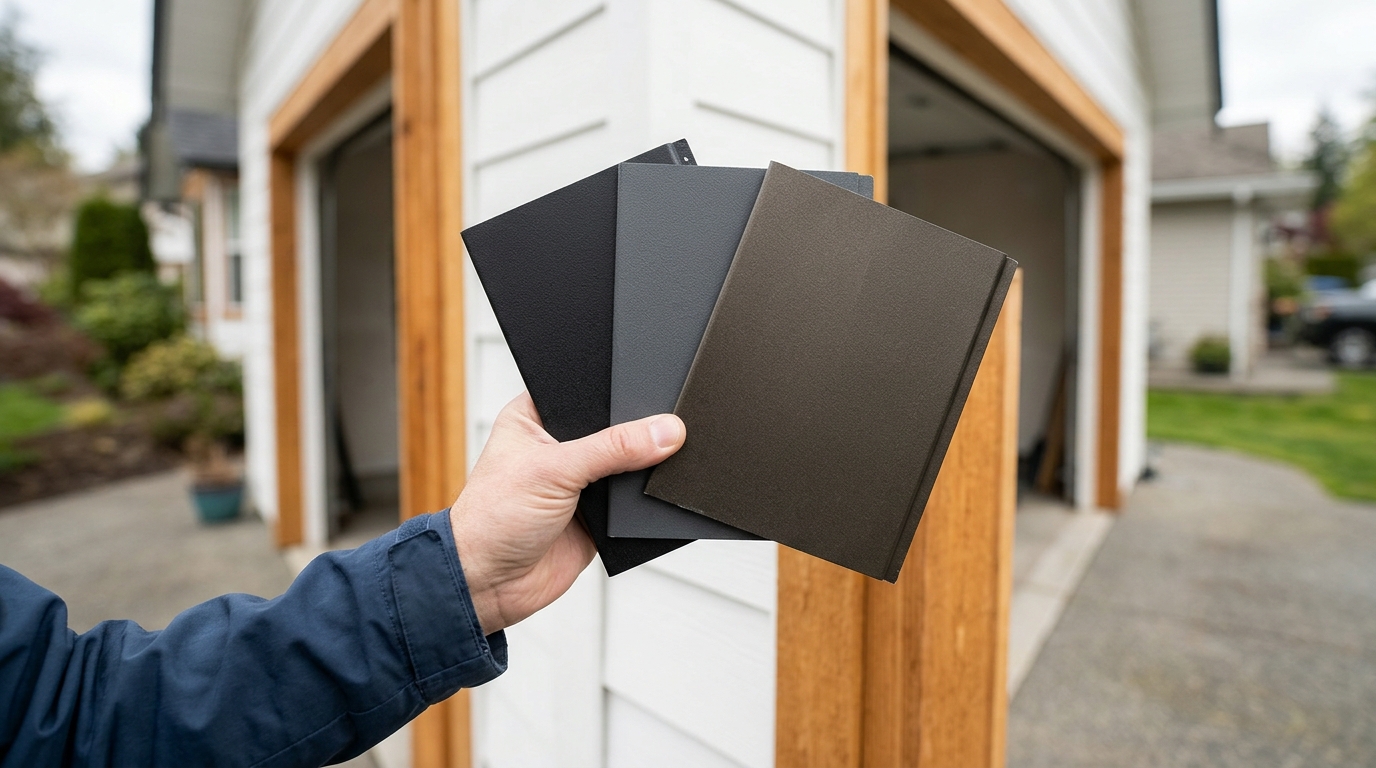
Start with the home rather than a social media photo. Compare the garage door’s color against roofing, siding, trim, sunlight, and landscaping at different times of day. Black can look elegant on contemporary houses, yet a slightly softer charcoal or bronze may suit certain exterior combinations better. A finish should complement the entire facade rather than become an isolated trend.
Use a Practical Pre-Purchase Checklist
Check orientation and shade. Note whether the garage faces intense afternoon sun, receives reflected heat from pavement, or remains shaded for much of the day. Ask how those conditions affect the shortlisted products. Do not rely on showroom lighting to predict the appearance of a full-size outdoor panel.
Review the complete door assembly. Compare insulation construction, weather seals, windows, panel profiles, hardware, and the manufacturer’s tested configurations. A replacement door may be heavier than the old one and can require suitable springs or opener evaluation. Never swap spring sizes or modify lifting hardware yourself simply to accommodate a new style.
Request physical samples. Matte black can look almost gray in direct light and very dark at dusk. Textured and satin finishes also reflect light differently. View samples outside near your home’s actual exterior colors. If possible, inspect a completed local installation built with the same material and finish.
Read the warranty before paying. Ask the seller to identify coverage for factory finish, repainting, fading, coastal exposure, and thermal bowing. Confirm who handles a claim and what documentation must be retained. Save the installation invoice, product model number, care instructions, and photos of the door at delivery.
Consider maintenance realities. Dirt, pollen, mineral deposits, and scratches may stand out more on some dark surfaces. Use the cleaning method approved by the manufacturer, rinse abrasive debris before wiping, and avoid harsh chemical cleaners. Small, regular cleaning sessions are usually easier than aggressive restoration after finish damage develops.
Prioritize safety over appearance. Verify smooth movement, properly working photo-eye sensors, and the correct automatic reversal behavior after installation. An attractive dark door is not a worthwhile upgrade if it binds, closes unevenly, or has incompatible components. A qualified installer should explain how to operate and maintain the system.
Price should be evaluated alongside material lifespan and maintenance. A lower initial quote may not be a bargain if the finish is difficult to repair or the installation excludes required hardware. Ask for an itemized estimate so you can compare the full assembly, not only the price of the decorative panels.
Do black garage doors always warp? No. The risk depends on design and environmental conditions. Are they automatically less energy efficient? No. Color affects solar absorption, while insulation and air sealing influence heat transfer. Is repainting always safe? No. First confirm the door’s instructions and warranty. These distinctions help separate useful advice from blanket claims.
Black garage doors in 2026 can be an excellent aesthetic choice when the product matches the home and local conditions. Choose the finish for its appearance, then verify the engineering, coating requirements, and written warranty. That extra research helps preserve both curb appeal and everyday garage-door reliability.