
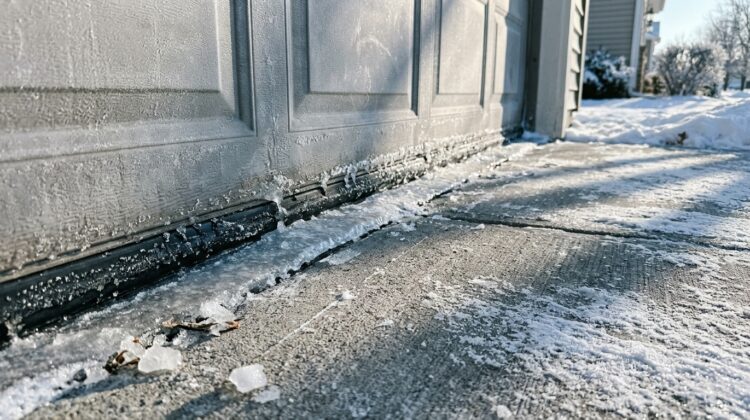
In some cases, the problem is ice bonding the bottom weather seal to the concrete threshold. In others, the symptoms may involve a broken spring, damaged track, opener fault, or another mechanical problem.
Understanding the difference matters because repeatedly forcing a stuck door can damage equipment or create a safety hazard.
This winter 2026 guide explains why a garage door may freeze shut, which low-risk checks homeowners can perform, and when professional assistance is necessary.
Why a Garage Door Freezes to the Floor
The bottom of a garage door contains a flexible weather seal designed to reduce drafts, water entry, and gaps around the opening.
During freezing weather, moisture can collect where this seal meets concrete.
If temperatures fall sufficiently, that water may freeze and temporarily bond the door to the floor.
Common Causes of a Frozen Bottom Seal
Ice at the threshold often develops because of several overlapping conditions.
Snow, melting ice, drainage, and changing outdoor temperatures can all contribute.
Snowmelt and Water Along the Concrete Threshold
Vehicles carry snow and ice into a garage, where warmer conditions may cause them to melt.
Water can then travel across the concrete floor toward the main opening.
If it collects near the bottom seal and freezes overnight, the door may become difficult to open.
Similar problems can develop when snow piles against the exterior door edge.
During warmer periods, the snow partially melts and sends water toward the threshold.
As temperatures fall again, the moisture forms ice.
Repeated freeze-thaw cycles may gradually worsen the problem.
However, not every winter door malfunction involves ice.
A door that appears crooked, has a visibly broken spring, or moves unevenly may have a separate mechanical failure.
Do not continue operating the opener until the cause is understood.
Damaged Weatherstripping and Poor Drainage
Worn bottom seals may allow more moisture to enter than properly fitted seals.
Cracked, flattened, or missing sections can create locations where water collects.
Meanwhile, uneven concrete or improper drainage may direct water toward the garage opening.
This can leave the seal in contact with standing moisture for extended periods.
Some homeowners assume that installing a thicker seal will solve the entire problem.
However, an excessively thick or incompatible seal may interfere with proper door closure.
It can also create additional resistance or affect safety reversal performance.
Inspect the condition of the existing seal visually without placing hands beneath a door that might move.
If the bottom panel or hardware appears damaged, have a technician evaluate the system.
For related advice, see our garage door condensation guide.
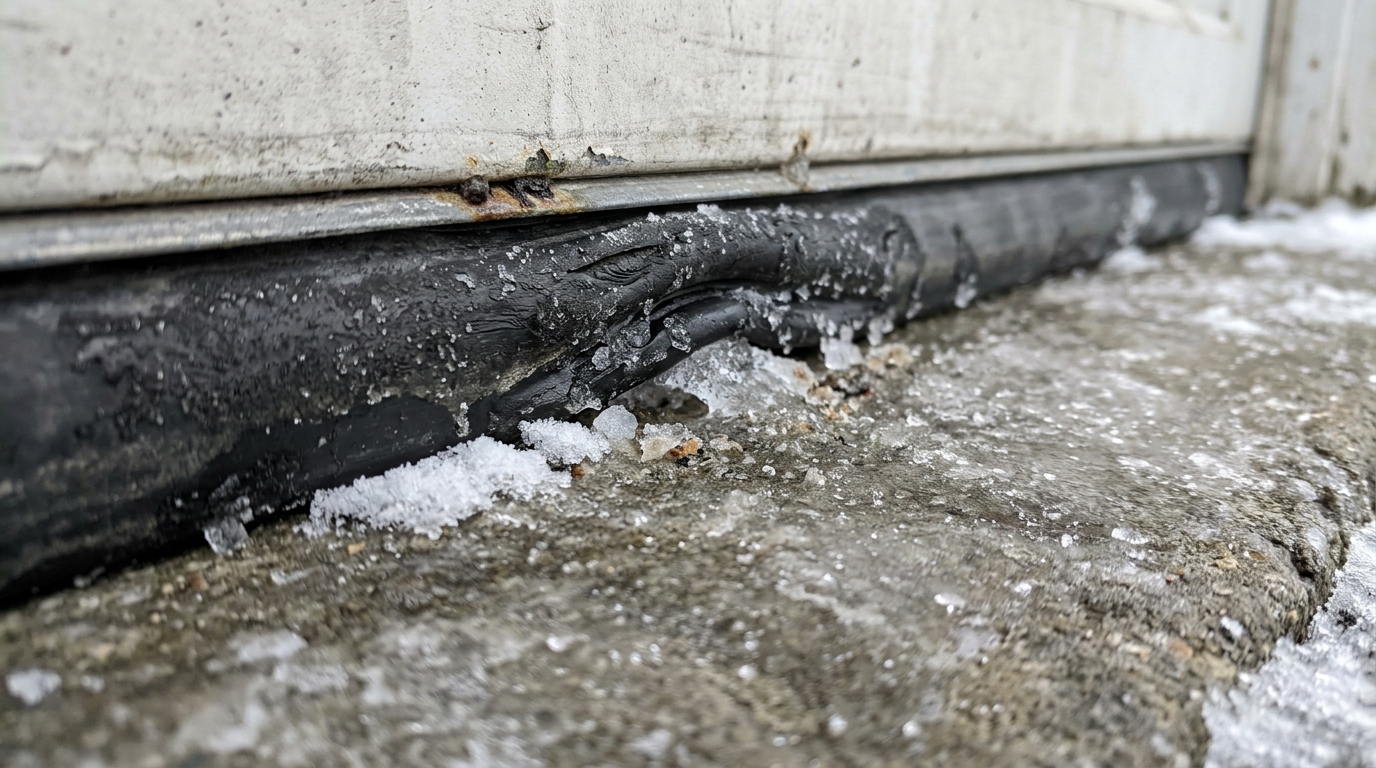
Signs the Door Is Frozen Rather Than Mechanically Broken
A frozen threshold may produce symptoms that resemble other garage door problems.
However, appearance alone is not sufficient to diagnose the system.
What Happens When the Opener Meets Resistance
When the door cannot move freely, an automatic opener may detect resistance and stop or reverse.
Some systems may strain briefly before activating a protective response.
Never repeatedly press the opener button to force the door upward.
Doing so can place additional stress on the opener, door panels, and lifting system.
Likewise, do not increase the opener’s force setting to overcome a suspected ice problem.
The force and travel settings are related to safe operation and should follow manufacturer instructions.
Another warning sign is a loud cracking sound followed by unusual movement.
That may indicate ice has released, but it can also occur when a stressed component fails.
If the door jerks, tilts, or stops unexpectedly, discontinue operation.
How to Recognize More Serious Warning Signs
Look from a safe distance for broken springs, loose cables, bent tracks, damaged rollers, and distorted door panels.
Any of these conditions may require professional service.
Do not touch lifting cables or springs to check their tension.
These components store or transfer substantial force and can cause serious injuries.
Similarly, avoid operating an emergency release when a door appears unsupported or damaged.
Releasing the opener may allow an unbalanced door to move unexpectedly.
If there is visible mechanical damage, the situation is no longer ordinary ice removal.
Keep people and pets away from the opening and contact a trained technician.
How to Deal With a Frozen Garage Door Safely
The safest response is to avoid forcing the system and identify whether ice is visible along the threshold.
Choose low-risk measures that do not interfere with springs, cables, tracks, or electrical components.
Winter Prevention, Troubleshooting, and Maintenance Tips
Start with the surrounding ground and accessible exterior surfaces.
Do not crawl beneath the door or place tools under a door that could suddenly move.
Stop using the opener if the door resists.
When the opener fails to move the door normally, stop issuing repeated commands.
Disconnecting electrical power may be appropriate before certain inspections, but follow the manufacturer’s instructions and avoid electrical work beyond your competence.
Never defeat the opener’s safety sensors or reversal system.
The U.S. Consumer Product Safety Commission has long emphasized the importance of garage door entrapment protection.
Its garage door opener safety guidance explains the underlying hazards.
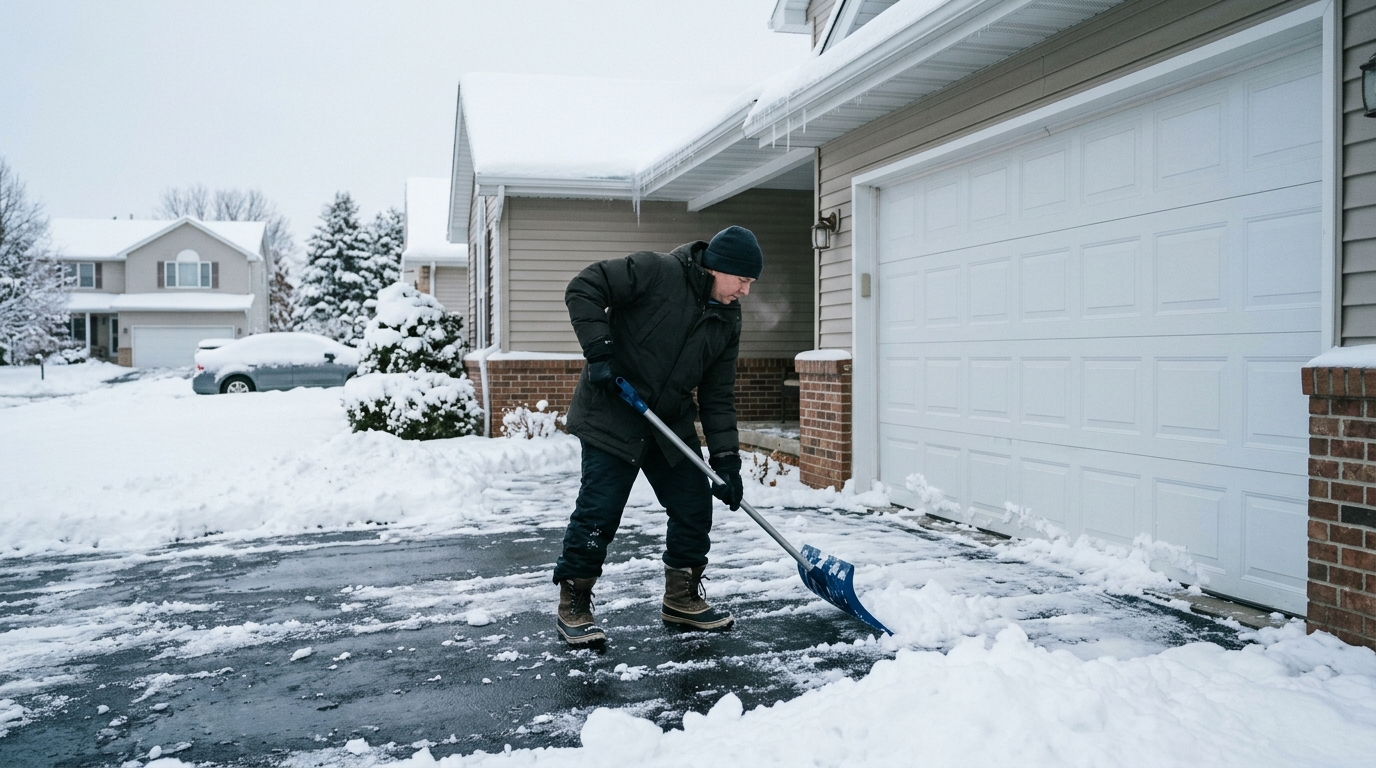
Clear loose snow around the opening.
Remove accessible snow away from the threshold using a suitable nonmetallic tool.
Work only from a stable position outside the moving door’s path.
Do not strike the door, its glass panels, or hardware.
Chipping aggressively at ice may damage the bottom seal or concrete.
Never use an open flame to thaw a garage door.
Heat from a torch or other uncontrolled source can damage rubber, paint, wiring, and nearby materials.
Avoid using boiling water.
Pouring boiling water over a frozen threshold can create new problems.
Rapid temperature changes may damage some materials, and the water can refreeze.
Likewise, indiscriminate use of chemical deicers may harm certain metal finishes, concrete surfaces, or weather seals.
Choose products only when the relevant manufacturers identify them as suitable.
If the door remains firmly frozen, professional assistance may be safer than experimenting with heat or force.
Improve moisture control near the threshold.
One of the best prevention strategies is to keep water from collecting where the garage door meets the floor.
Clear snow before it repeatedly melts and freezes against the weather seal.
Use appropriate floor drainage or a squeegee for water that enters from vehicles, when conditions permit.
However, do not push water toward walking areas where it could create dangerous ice.
Evaluate driveway grading and exterior drainage if water consistently flows toward the opening.
Drainage improvements may require a qualified concrete or site contractor.
Inspect the bottom seal in warmer weather.
Once conditions are safe and the door is operating normally, examine the weatherstripping for cracks, tears, and deformation.
Replacement seals must match the door’s retainer and manufacturer requirements.
Improvised materials may interfere with normal closure.
A technician can also determine whether the problem involves door alignment rather than the seal itself.
For more maintenance ideas, visit our garage maintenance article archive.
Do not confuse a keypad failure with a frozen door.
In winter, cold batteries and moisture can also affect exterior keypads.
A keypad may fail to transmit a command even when the door is mechanically sound.
On the other hand, the keypad may work correctly while the door remains stuck to the floor.
Compare available controls only when it is safe to operate the door.
Our cold-weather garage keypad troubleshooting guide explains that distinction.
Never keep testing controls when the door appears to be under mechanical strain.
When to call a garage door professional.
Seek service if ice cannot be addressed without force, the door remains stuck after temperatures rise, or the system makes unusual noises.
Professional assistance is especially important when springs, cables, tracks, or panel connections appear damaged.
A trained technician can inspect the lifting system and confirm that the door moves freely.
They can also examine the weather seal and recommend appropriate repairs.
Ask for a written explanation before approving major replacement work.
Frequently asked questions
Can ice make a garage door opener stop?
Yes. Ice may prevent normal movement and cause an opener to stop or reverse.
Should I increase the opener force setting?
No. Do not change safety-related settings to force a frozen door open.
Can I use boiling water?
It is not recommended. Water may refreeze and temperature changes can damage some surfaces.
Does a new bottom seal prevent every freezing problem?
No. Poor drainage and standing water may still lead to ice accumulation.
When should I call a technician?
Call when the door remains stuck, moves unevenly, or shows signs of damaged lifting hardware.
Final thoughts
A garage door frozen to the floor is frustrating, but forcing it open can turn a temporary winter problem into a costly repair.
Stop repeated opener commands, examine accessible areas safely, and reduce moisture around the threshold.
If the door remains stuck or shows mechanical damage, arrange professional service before using it again.
Safety note: Never adjust springs, cables, bottom brackets, or other high-tension components during winter troubleshooting.