
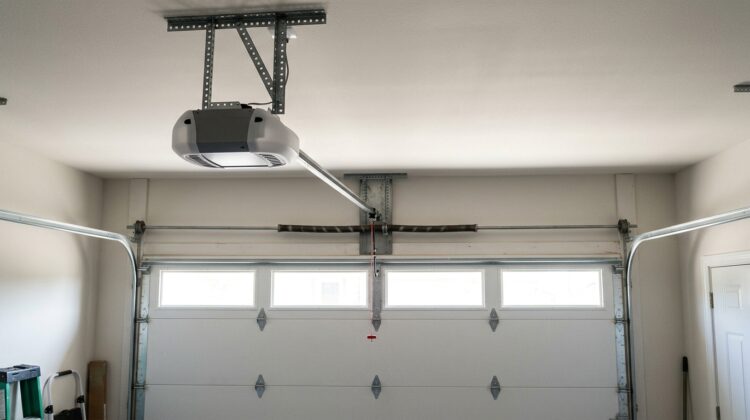
Garage door vibration and noise can become a daily frustration when opening the door sends a rumble through the ceiling, shakes nearby rooms, or wakes someone sleeping above the garage. A garage door naturally produces some sound, but excessive vibration can signal worn components, poor mounting, or a mechanical problem.
In 2026, many homeowners use the garage as a workshop, gym, storage area, or primary family entrance. That makes the sound of an operating door more noticeable than ever.
Fortunately, not every noisy system needs replacement. Some problems involve ordinary wear or vibration traveling through the building structure.
However, a door that jerks, binds, or appears unstable requires professional inspection. This guide explains where the noise comes from, what homeowners can observe safely, and which improvements deserve consideration.
Why Garage Doors Create Noise and Vibration
A typical sectional garage door contains multiple moving parts. Rollers travel along tracks while hinges allow the panels to bend through the curved sections. Springs counterbalance the door’s weight, and the opener supplies controlled movement.
Each component contributes a small amount of sound. When parts wear or lose proper alignment, those sounds can become more noticeable.
Sometimes the equipment operates normally, yet the building amplifies the resulting vibrations.
Understand the difference between normal noise and warnings
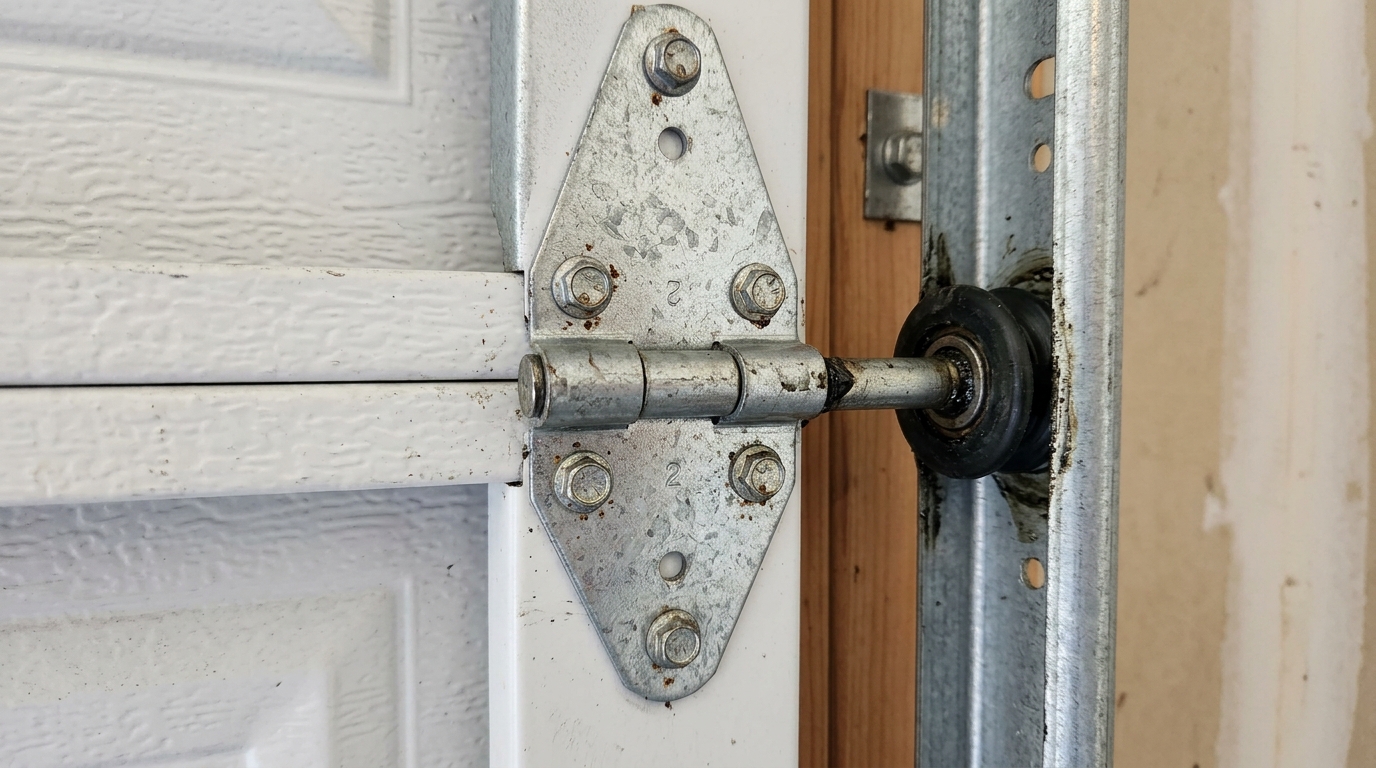
A brief motor hum or rolling sound is common. However, grinding, sharp bangs, scraping, and unusually heavy vibration deserve attention.
Changes in sound often provide more useful information than absolute loudness.
If the door operated quietly last month but suddenly shakes, record when the behavior began.
Do not continue cycling an obviously damaged door simply to reproduce the noise.
Why vibration travels into nearby rooms
The opener and its supports connect to structural framing. Those connections can transmit some vibration to ceilings, walls, and adjacent rooms.
Hard surfaces may amplify sound, especially when a garage contains little acoustic absorption.
A bedroom above the garage can be particularly sensitive to low-frequency rumbling.
However, structural noise is not always caused by the motor itself.
Worn rollers, loose mounting hardware, or a door that moves unevenly may increase the vibration entering the building.
How rollers and hinges contribute to sound
Rollers support smooth travel along the garage door tracks.
When bearings deteriorate or rollers become damaged, the door may rattle or operate roughly.
Hinges can also produce squeaking or clicking, particularly when their components wear.
However, lubrication cannot repair a cracked hinge or damaged roller.
Visible damage requires professional evaluation, especially where a component supports the door’s weight or affects alignment.
Read our seasonal maintenance guide for safe routine inspection advice.
Identify common opener-related noise sources
The type of opener can affect the sound profile. Chain-drive, belt-drive, screw-drive, and wall-mounted systems use different mechanisms.
Some produce more noticeable mechanical noise than others, but maintenance condition and installation quality also matter.
Do not assume that buying a quieter opener will solve a problem caused by the door’s springs or tracks.
When an opener makes a grinding or buzzing sound
A grinding sound may come from a mechanical drive component, while buzzing may involve the motor or another electrical component.
Neither symptom identifies a single guaranteed failure.
Stop operating the system if the motor strains, produces a burning smell, or fails to move the door normally.
Do not open an energized motor housing to investigate.
A qualified technician can determine whether the opener, door balance, or another component is responsible.
How to Reduce Garage Door Vibration Safely
Begin with observation, cleaning, and manufacturer-approved maintenance. Avoid adjustments involving springs, lifting cables, bottom brackets, or structural track mounting.
These parts can carry substantial force even when the door is stationary.
The safest approach separates homeowner maintenance from professional repairs.
Create a practical garage door noise checklist
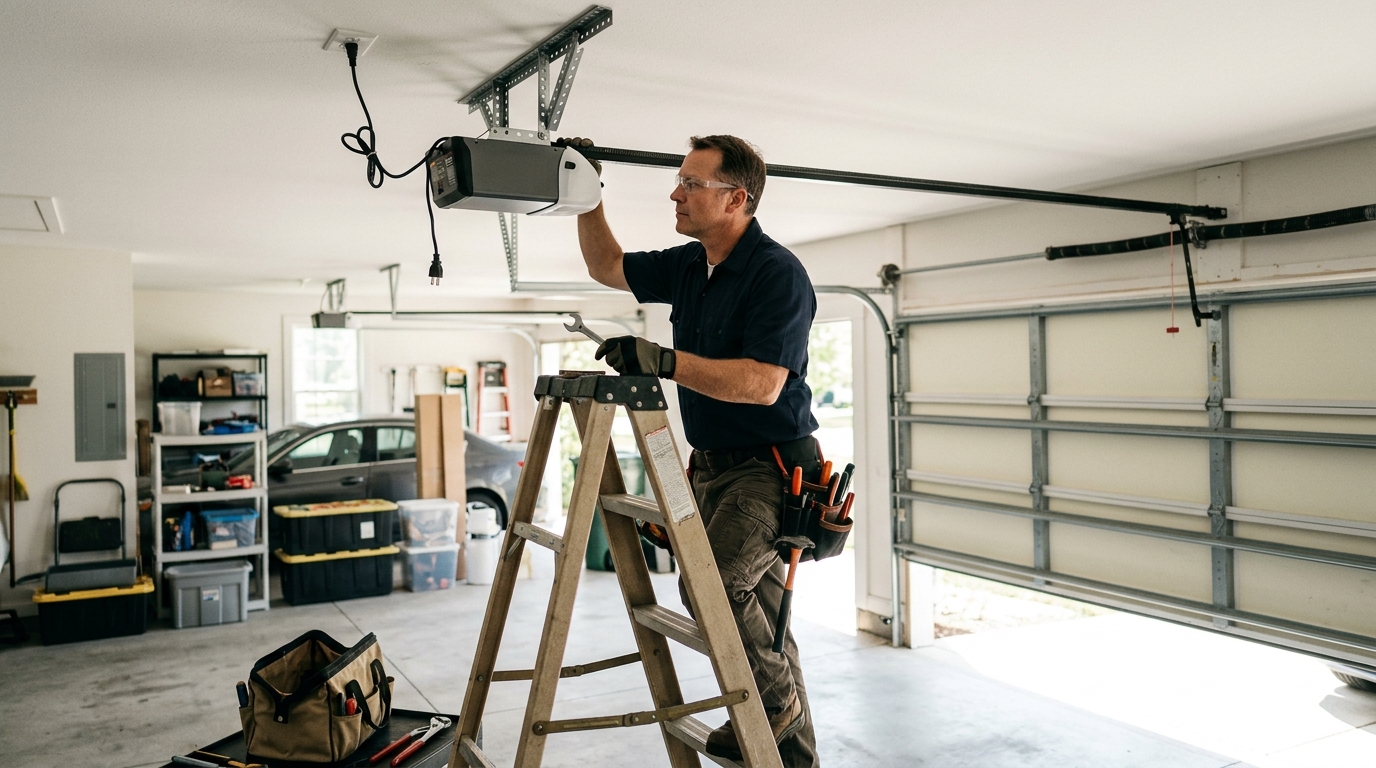
Stand away from the moving door and listen during one normal operating cycle.
Note whether the noise begins immediately, occurs near the curved tracks, or appears as the door reaches its travel limits.
Observe the movement without placing hands near hinges, rollers, or tracks.
Check for visible damage only with the door stationary and the system in a safe condition.
Maintenance that may help without major repairs
Clean accessible dust and debris from the surrounding area. Follow the manufacturer’s instructions for lubricating designated components.
Use the recommended product sparingly.
Do not coat the track running surfaces with heavy grease or apply oil to electrical components.
Arrange professional service if you notice damaged rollers, frayed cables, loose structural supports, or unusual door movement.
DASMA recommends routine inspection and maintenance, with trained technicians handling hazardous door components.
Inspect for visible panel damage
Bent garage door sections can interfere with normal travel, especially near the hinges or edges.
Check whether panels appear distorted or rub against the frame.
Do not hammer a panel back into position while it remains attached to the door.
A technician can determine whether a section can be repaired or requires replacement.
Consider vibration isolation carefully
Some opener installations may benefit from vibration-isolating mounting components designed for that equipment.
However, selecting unsuitable materials or altering structural supports can create safety problems.
Ask a qualified installer whether approved isolation hardware is compatible with your opener and framing.
Never replace secure mounting brackets with improvised rubber, rope, or lightweight fasteners.
Know whether the door is poorly balanced
A properly balanced door should not require the opener to compensate for a major spring problem.
Heavy operation, uneven travel, or sudden movement can suggest a counterbalance fault.
Do not attempt to change torsion spring tension.
Read our garage door safety articles before attempting any maintenance that affects door operation.
Check opener compatibility before upgrading
A newer opener may offer quieter operation, but its suitability depends on the door’s dimensions, weight, and condition.
Ask about the intended mounting configuration and any necessary reinforcement.
Also, confirm that the replacement includes current safety features and compatible controls.
Do not select a motor solely because an advertisement describes it as silent.
Understand how insulation affects sound
An insulated door may transmit some outside noise differently from a thin, uninsulated panel.
However, insulation does not automatically fix loose rollers or vibration from an opener mount.
Adding material also changes door weight and potentially affects balance.
Consult a professional before installing heavy aftermarket insulation.
Our energy-efficient garage door guide explains the broader comfort considerations.
Check noise at different operating stages
A door that rattles throughout movement may have a different problem from one that bangs only at the top.
Record the general pattern and share it with the technician.
However, do not intentionally operate a door that has jumped a track or has visibly damaged cables.
Those conditions call for immediate professional service.
Do not overlook safety sensors
Excessive door movement or improper alignment can sometimes accompany other mechanical problems.
However, safety sensors should never be moved or bypassed merely to reduce operating noise.
Confirm that the door’s protective systems function according to the manufacturer.
Stop using a system that fails its required reversal test until a trained professional corrects the issue.
Compare repair and replacement estimates
If the door is structurally sound, targeted service may be sufficient.
However, repeated mechanical problems and extensive wear may justify considering replacement.
Ask for a written assessment separating necessary safety repairs from optional comfort upgrades.
Do not approve an expensive new opener without understanding whether the existing door moves correctly.
Protect rooms above the garage
If noise travels into a bedroom or office, identify whether it comes through the opener mounting points, shared framing, or general airborne sound.
Different transmission paths require different solutions.
Acoustic improvements to the room may reduce some noise, but they cannot correct unsafe garage door equipment.
Address mechanical problems first.
Develop a monthly inspection habit
Monthly visual checks help homeowners notice changes before they become disruptive.
Look for unusual wear, damaged hardware, and deteriorating seals.
Follow the manual for safety-system tests and lubrication.
DASMA also recommends a regular professional service assessment.
Use its official garage door safety guidance as a reference.
What homeowners should remember
Garage door vibration and noise can come from mechanical wear, opener operation, mounting conditions, or sound traveling through the building.
Understanding the pattern helps homeowners explain the problem accurately.
Routine care may improve some sounds, but persistent grinding, shaking, damaged hardware, or unusual travel requires professional attention.
Prioritize safe operation before attempting comfort upgrades.
Safety disclaimer: Never adjust garage door springs, lifting cables, or load-bearing brackets without professional training.