
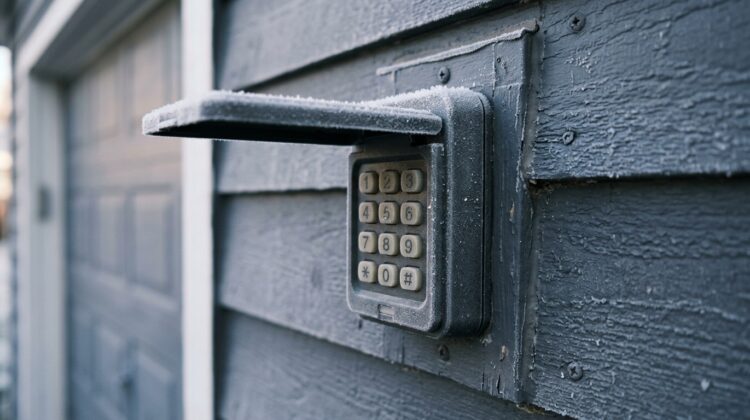
A garage door keypad not working in cold weather can become especially frustrating when you’re arriving home with groceries or leaving for work on a freezing morning. The keypad worked during summer, but now the buttons respond slowly, the light barely illuminates, or the door refuses to open.
Outdoor keypads operate in challenging conditions. Rain, cold temperatures, direct sunlight, dust, and repeated button presses can gradually affect their performance.
However, an unreliable keypad does not necessarily mean the garage door opener itself is failing.
Often, homeowners can identify the likely cause through safe, straightforward checks.
This guide explains common cold-weather keypad problems, how to recognize battery and moisture issues, and when replacement or professional assistance is appropriate.
Why Garage Door Keypads Fail During Cold Weather
Wireless garage door keypads usually contain batteries, electronic circuits, buttons, and a transmitter.
The keypad sends an authorized signal to the opener when the correct access code is entered.
Cold temperatures can affect battery performance, while repeated exposure to moisture may damage contacts or electronic components.
Other issues, such as worn buttons or lost programming, may appear unrelated to the weather even if they become noticeable during winter.
Check battery performance before blaming the opener
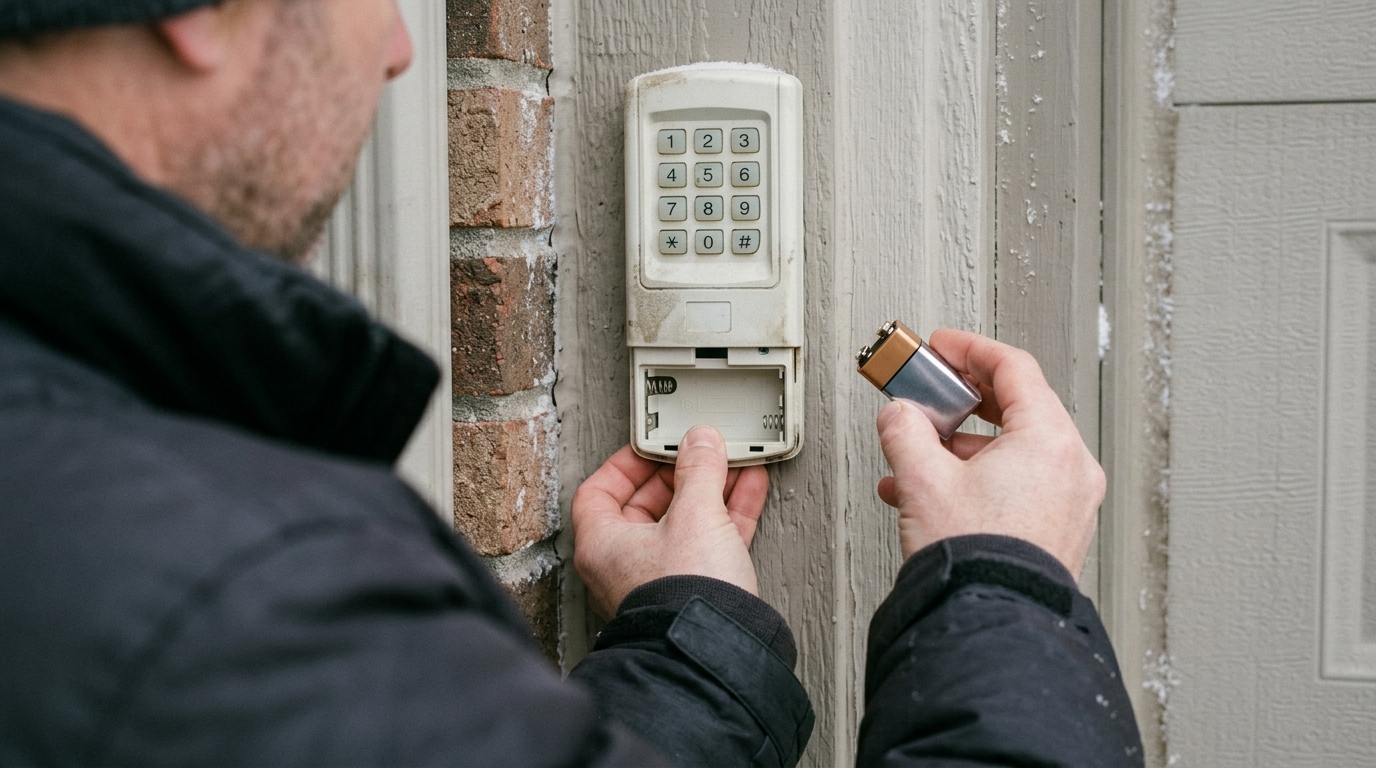
A weak battery is a common reason why an outdoor keypad becomes unreliable.
Battery performance may decline in low temperatures, particularly when the battery is already near the end of its useful life.
Some keypads show a dim light or respond inconsistently when power becomes insufficient.
Others provide no obvious warning.
Because keypad models differ, consult the specific manual before selecting a replacement battery.
Why cold temperatures can reduce battery output
Batteries rely on chemical reactions to provide electrical energy.
Lower temperatures can slow these reactions and reduce available performance.
A battery that still operates in mild weather may struggle on a very cold morning.
However, replacing a battery will not correct corroded contacts, damaged circuitry, or an incompatible keypad.
If the battery compartment contains leakage or significant corrosion, follow the manufacturer’s safety guidance rather than touching the residue with bare hands.
How to replace a keypad battery safely
Start by identifying the keypad model and reading its battery replacement instructions.
Use the specified battery type and observe the correct polarity.
Check that the compartment is dry and the cover closes securely.
Do not improvise with a different battery chemistry or voltage.
After replacement, test the keypad while standing clear of the door’s movement.
If the problem persists, investigate other possible causes instead of repeatedly replacing fresh batteries.
Our seasonal garage door maintenance guide includes additional winter preparation advice.
Understand moisture, ice, and worn buttons
Outdoor keypads are exposed to temperature changes and precipitation.
Rain or melting snow may reach vulnerable parts when the protective cover or housing deteriorates.
Moisture can interfere with electrical contacts or eventually cause corrosion.
Meanwhile, buttons may become stiff or difficult to press because of age, wear, or contamination.
What to look for after rain or freezing weather
Inspect the keypad housing for cracks, missing covers, loose seals, and visible moisture.
Do not open an electrical enclosure beyond the user-serviceable parts identified in the manual.
If the device shows water damage, stop using it until you determine whether the manufacturer permits safe servicing.
A replacement keypad may be more practical than trying to repair damaged electronics.
Never use an open flame or high-temperature heat gun to thaw a frozen keypad.
How to Troubleshoot a Garage Door Keypad Safely
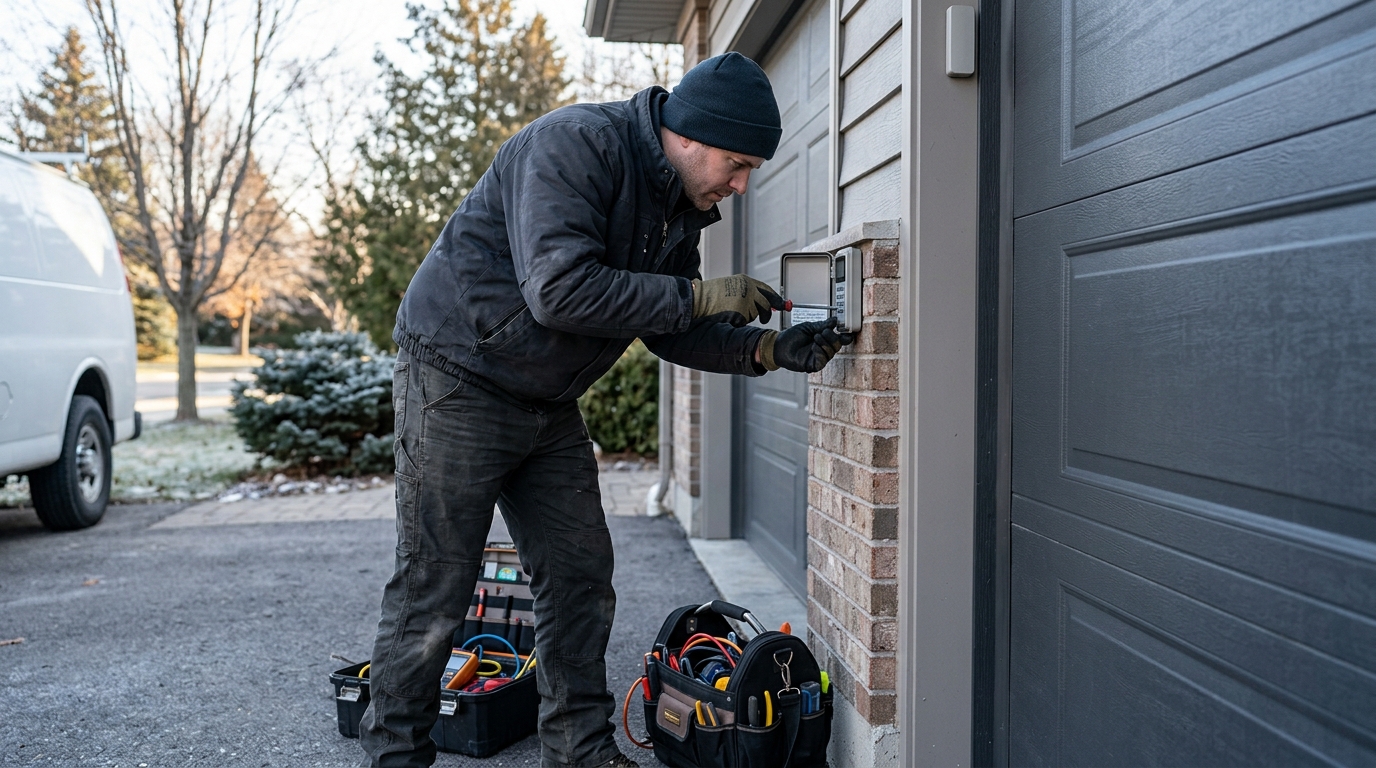
Begin by determining whether the problem affects only the keypad or the entire opener system.
Try the approved handheld remote or wired wall control from a safe location.
If other controls work normally, the keypad or its wireless connection becomes a more likely suspect.
If none of the controls operates the door correctly, the problem may involve the opener, power supply, door hardware, or safety features.
Check programming, compatibility, and placement
Some keypad problems occur after battery replacement, opener service, or changes to programmed access codes.
Other failures involve incompatible equipment or poor signal reception.
The correct troubleshooting sequence depends on the manufacturer and model.
Always follow the instructions supplied for your keypad.
When to reprogram or replace the keypad
If the manufacturer recommends reprogramming, use its documented procedure.
Confirm that the keypad is compatible with the opener’s communication system.
Do not repeatedly erase all programmed remotes unless the manual calls for that step and you understand its consequences.
If buttons remain unresponsive after approved checks, replacement may be appropriate.
Choose a model explicitly compatible with your opener rather than relying on a generic universal label.
Inspect the keypad’s mounting location
Look for a location that exposes the keypad to repeated direct water runoff or physical impact.
A properly installed keypad should follow the manufacturer’s mounting and weather exposure recommendations.
Do not relocate it to an area that creates a safety problem or violates the required control placement instructions.
If mounting changes require drilling near electrical wiring, obtain qualified assistance.
Know when the access code may be the issue
A keypad can appear broken when an incorrect code or programming error prevents operation.
Check whether the keypad registers button presses and provides the expected indicator response.
Review the manual for the model’s error indications and reprogramming steps.
Do not share access codes publicly or leave them written on the garage wall.
Reset a code if you believe unauthorized people may know it.
Understand temporary lockout features
Some opener systems include lock modes or other access restrictions.
These functions may prevent certain remote or keypad operations.
Check the user manual to determine whether your model supports such a feature.
Do not assume all keypads share the same lockout behavior.
Manufacturer-specific instructions are more reliable than random internet reset sequences.
Keep the keypad dry without trapping moisture
Protecting the unit from direct precipitation may help extend its service life.
However, placing an unsuitable airtight cover around damaged electronics can trap moisture.
Use only accessories that meet the manufacturer’s requirements.
Inspect the protective housing periodically for cracks or deterioration.
Replace damaged components instead of sealing over obvious water ingress.
Check remote operation during the same conditions
Comparing controls can help identify whether the failure is isolated.
Try an authorized handheld remote under similar conditions while maintaining a clear view of the door.
If the remote works but the keypad fails, investigate keypad-specific causes.
If both fail, receiver or opener troubleshooting may be needed.
However, a successful remote test cannot prove the entire garage door system is safe.
Don’t confuse keypad faults with a frozen door
During winter, water may freeze around the bottom seal and temporarily attach the door to the floor.
In that situation, the keypad might transmit correctly even though the door does not move.
Do not repeatedly operate the motor against a frozen or obstructed door.
That can strain the opener or other components.
Seek appropriate assistance before operating the system again.
Watch for unusual door movement
If the door jerks, binds, tilts, or reverses unexpectedly, stop troubleshooting the keypad and address the mechanical or safety concern.
A functioning keypad cannot compensate for damaged springs, cables, or tracks.
Do not use manual release controls when a door appears unsupported or has broken spring hardware.
Consult our garage door safety resources for more guidance.
Maintain a reliable secondary entry plan
Homeowners should consider how they will enter the garage when the keypad or electrical system stops working.
Depending on the home, another approved entrance or a manufacturer-compatible emergency access system may provide a solution.
Do not improvise a release cable or bypass a lock.
Keep emergency access arrangements secure so they do not create opportunities for unauthorized entry.
Protect the keypad against unauthorized access
Choose an access code that strangers cannot easily guess.
Avoid obvious number combinations, especially when they relate to publicly available personal information.
Remove temporary user codes when they are no longer needed.
Some smart systems offer access logs or alerts, but those features depend on the product.
Our garage door tips archive includes additional security and smart-home advice.
Know when replacement makes sense
A keypad with cracked housing, damaged battery contacts, repeated programming failures, or unreliable buttons may be nearing the end of its useful life.
Before buying a replacement, identify the opener model and compatible accessories.
Compare warranty coverage and manufacturer support.
Do not replace the entire garage door opener merely because the keypad has failed unless other problems justify that decision.
Create a simple winter maintenance routine
Before temperatures drop, check the keypad cover, battery condition, and button response.
Keep the surrounding area clear of snow and debris without applying excessive force to the device.
Follow the manufacturer’s cleaning instructions.
Check the door’s safety systems separately according to the owner’s manual.
For official general safety advice, consult the DASMA garage door safety guide.
What homeowners should remember in 2026
A garage door keypad not working in cold weather often calls for careful diagnosis rather than immediate replacement of the opener.
Start by checking the correct battery, examining the weather-exposed housing, and comparing the keypad with other approved controls.
Use model-specific programming instructions and protect access codes.
When you encounter damaged wiring, unsafe door movement, or persistent failures, contact a qualified technician.
Safety note: This guide provides general consumer information. Never defeat garage door safety sensors, force a frozen door, or adjust high-tension components during keypad troubleshooting.