
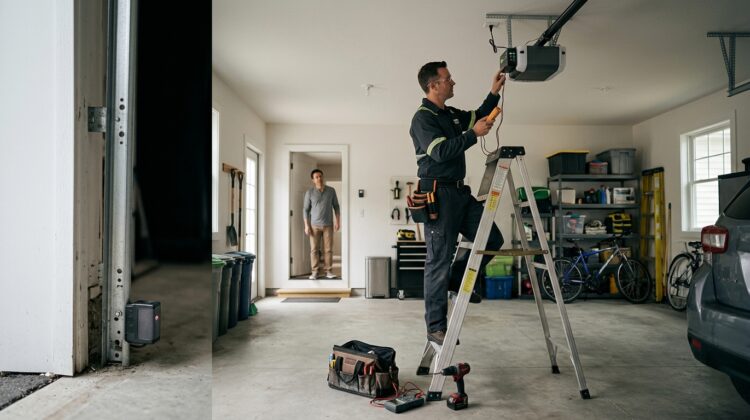
The garage door opener safety rule 2026 is getting an important update. In September, the U.S. Consumer Product Safety Commission moved forward with changes that align the federal garage door opener standard with the latest UL 325 requirements.
The update focuses on one of the most important parts of a modern opener: entrapment protection.
That means the rule is not mainly about app controls, cameras, voice assistants, or faster motors. It addresses what happens when a garage door closes near a person, pet, vehicle, package, or other object.
The newest changes also look closely at battery-backup systems.
More homeowners now rely on backup batteries during power outages. The new UL 325 provisions require the safety system to continue protecting against entrapment even when the opener runs on backup power.
For homeowners, the practical lesson is simple. A battery backup should not keep the opener moving if there is not enough stored power to complete a safe cycle.
What the Garage Door Opener Safety Rule 2026 Changes
The federal safety standard for automatic residential garage door operators appears in 16 CFR Part 1211.
CPSC bases major parts of that rule on UL 325, the safety standard for door, gate, and related operator systems.
UL published a newer version of the standard in 2025. CPSC then prepared a 2026 update so the federal rule reflects those revisions.
The September package focuses mainly on battery-backed operators and the way openers monitor secondary entrapment devices.
Battery Backup Must Still Protect Against Entrapment
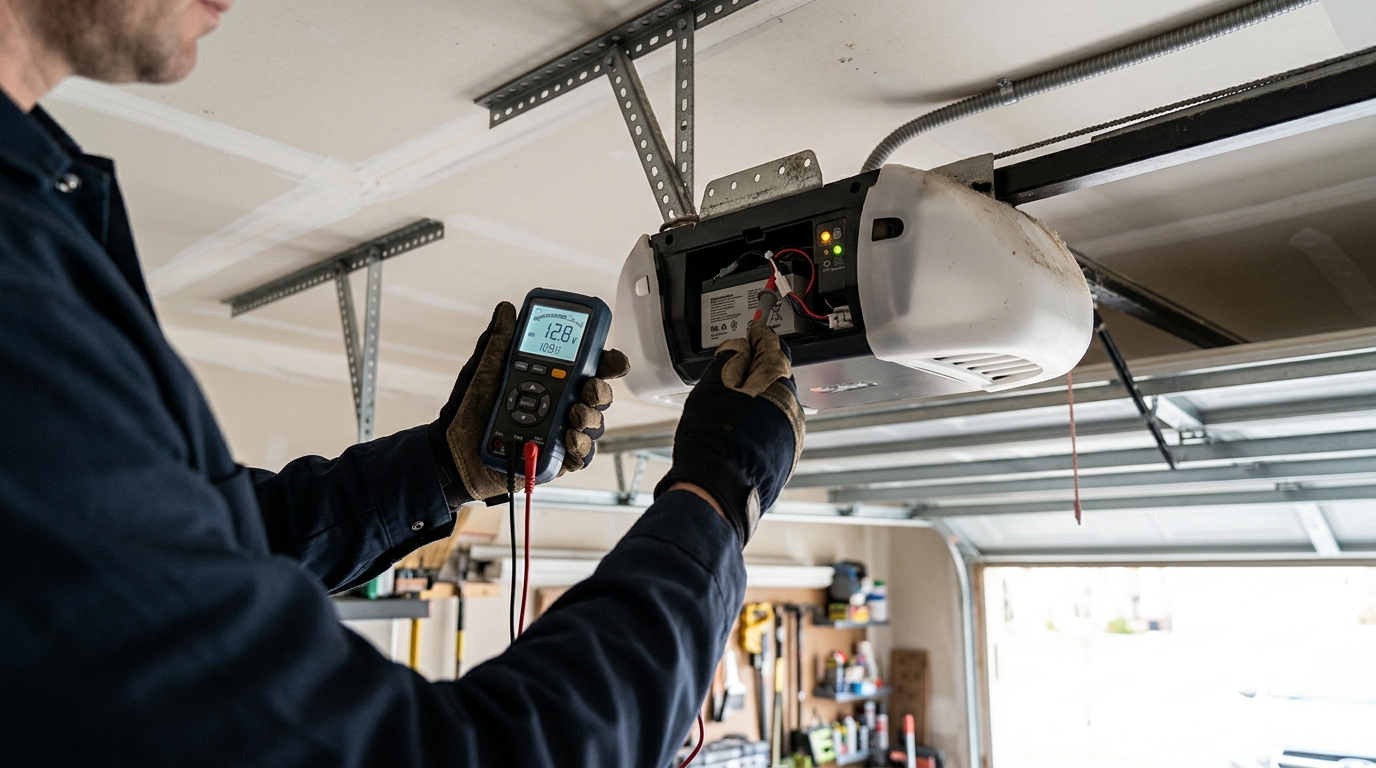
A battery backup can keep a garage door usable during an outage. That is convenient, but safety still needs to come first.
The updated UL 325 provisions add specific testing for garage door openers that use backup batteries.
The goal is to confirm that the opener can still detect an obstruction and respond properly when household AC power is unavailable.
Testing also looks at the battery near its lowest usable charge.
That matters because a battery may have enough energy to start moving a door without having enough power to complete a full safe cycle.
A Weak Battery Should Not Start a Cycle It Cannot Safely Finish
The newer requirement uses a straightforward idea.
If the battery does not have enough power for the required operation, the opener should not continue behaving as though everything is normal.
The CPSC draft explains that the system must verify that enough charge exists to perform the necessary open-and-close cycle.
If the available charge falls too low, the system can leave the door open and prevent normal powered operation until the battery receives more charge or AC power returns.
That approach helps prevent a more dangerous situation where the opener starts closing but cannot operate its safety response correctly.
Homeowners who already rely on backup power can review our battery backup garage door opener guide for practical maintenance and outage planning.
Battery Backup Is a Safety Feature, Not Just a Convenience Feature
Many homeowners think about backup power only when the electricity fails.
However, the opener still controls one of the heaviest moving parts in the home.
A weak battery, bad sensor, damaged spring, or poorly balanced door can create problems during an outage just as easily as during normal operation.
Check the backup battery regularly.
Listen for battery alerts from the opener. Replace batteries according to manufacturer guidance, and do not ignore warning lights simply because the opener still moves the door.
The door itself also needs proper balance.
A battery-backed opener should not compensate for a broken spring, binding track, or excessively heavy door.
The Update Also Clarifies Sensor Monitoring
Modern residential openers use secondary entrapment protection, often through photoelectric sensors near the bottom of the opening.
The opener checks that the safety device remains connected before it allows normal closing.
The revised UL 325 language changes how manufacturers describe that monitoring requirement.
The earlier wording referred to monitoring both the presence and “correct operation” of the device.
The new version removes the phrase “correct operation” because the technical committee concluded that manufacturers cannot practically test that phrase as written.
The system still needs to monitor the safety device.
The Change Does Not Mean Homeowners Can Ignore Their Photo Eyes
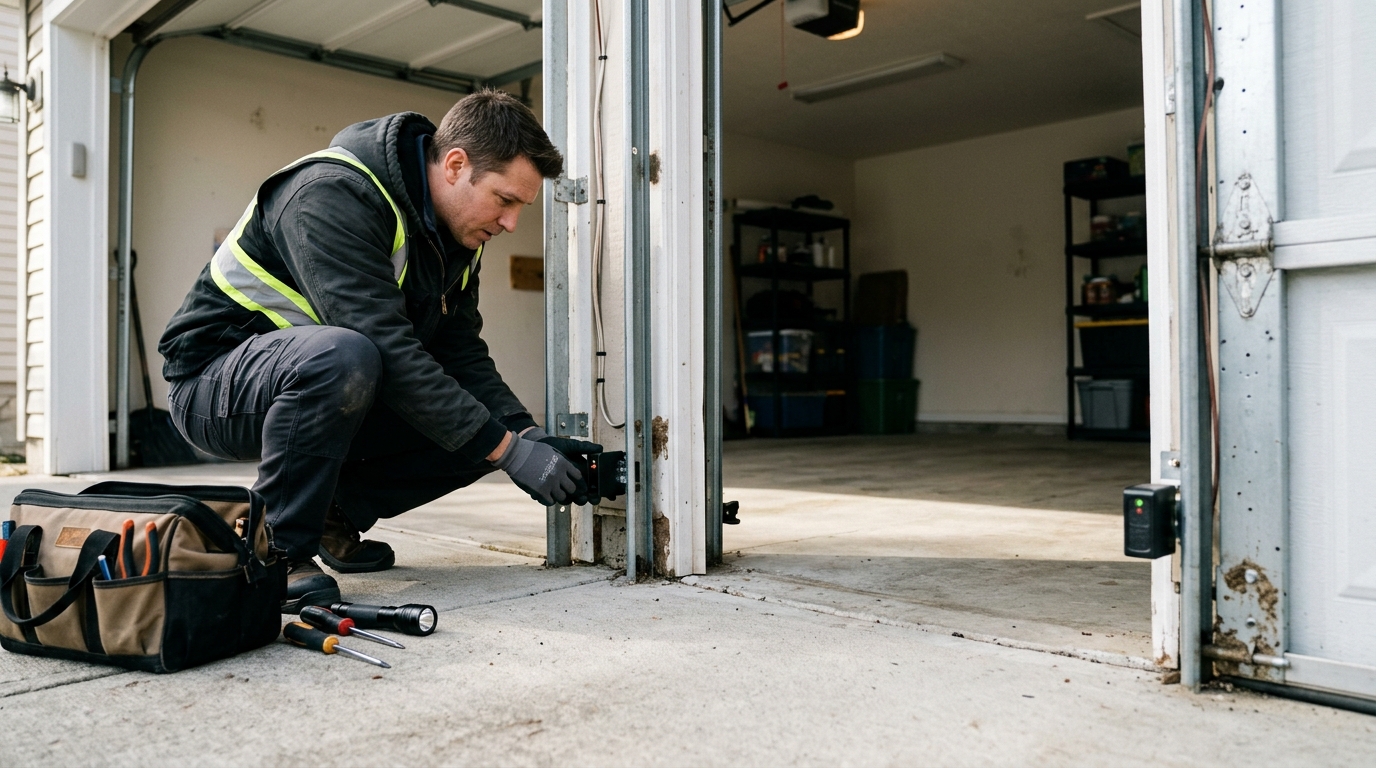
The wording change does not reduce the importance of garage door safety sensors.
If a sensor becomes disconnected, misaligned, damaged, or blocked, the opener may refuse to close normally.
That behavior often frustrates homeowners, but it can also show that the safety system is doing its job.
Do not permanently bypass a sensor because the door will not close.
Clean the lenses first. Check alignment, wiring, brackets, and indicator lights.
Our garage door sensor problems guide explains the common causes of blinking lights, unexpected reversal, and doors that refuse to close.
What Homeowners Should Do Before Replacing or Upgrading an Opener
The 2026 CPSC action does not mean every older opener suddenly became illegal or unsafe.
It also does not mean homeowners need to remove a working opener immediately.
The update mainly affects the federal standard that manufacturers must follow for covered new products.
Still, the rule gives homeowners a useful reason to review their existing system.
If your opener is old, unreliable, missing modern sensor protection, or showing battery errors, a replacement may make sense.
Check the Whole Garage Door System, Not Just the Motor
A new opener cannot fix every garage door problem.
Before replacing the motor unit, inspect how the door moves.
Watch for shaking panels, worn rollers, loose tracks, frayed cables, noisy bearings, or a door that feels unusually heavy.
Disconnect the opener only when you know how to do so safely and follow the manufacturer’s instructions.
Never loosen or adjust torsion springs as a casual DIY project. Those components store significant energy and can cause serious injuries.
Test Backup Power and Auto-Reverse as Part of Routine Maintenance
Homeowners should test safety functions on a regular schedule.
Confirm that the photo eyes remain clean and aligned. Check that the door reacts correctly when the beam detects an obstruction.
Follow the opener manufacturer’s approved procedure for testing the force-reversal system.
Then test battery backup according to the manual.
Turn off normal AC power only if the manufacturer instructs you to do so for testing. Make sure the opener responds as expected and listen for battery warnings.
Our UL 325 homeowner safety guide provides more background on sensor protection, smart openers, and family safety.
The garage door opener safety rule 2026 matters because modern garage systems increasingly depend on electronics, batteries, sensors, and automation.
The newest CPSC update does not focus on flashy technology. It focuses on something more basic: making sure entrapment protection continues to work when the opener uses backup power.
That is exactly where safety standards should focus.
A garage door opener needs to know when it can safely move the door and when it should stop.
Homeowners do not need to become experts in federal regulations. They should simply choose certified equipment, keep sensors working, test backup batteries, and repair mechanical problems before adding more automation.
For the official regulatory details, review the CPSC briefing package on the 2026 update to the Safety Standard for Automatic Residential Garage Door Operators.