
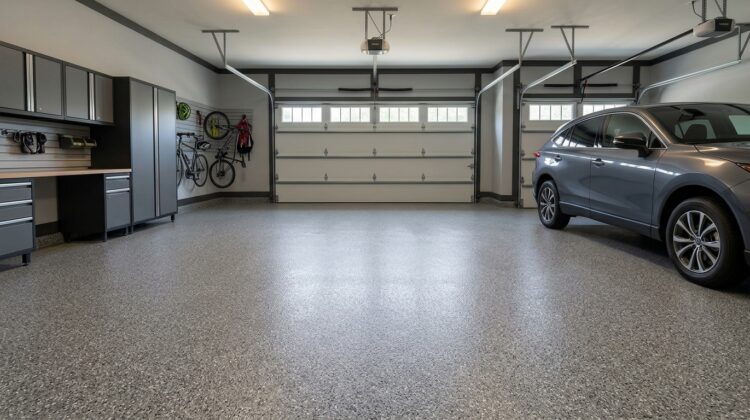
Homeowners comparing an epoxy vs polyaspartic garage floor often focus on the finished appearance: a glossy surface, decorative flakes, and easier cleanup. Those features matter, but the most expensive mistakes happen before the coating is applied. Poor concrete preparation, unrecognized moisture, inadequate slip resistance, and a rushed cure can cause disappointing results. The garage door adds another practical complication: the coating must work around the threshold, tracks, bottom seal, and everyday vehicle traffic.
In 2026, many garages are workshops, storage areas, home gyms, or electric-vehicle parking spaces, so choosing a flooring system is more than a color decision. This guide explains how epoxy and polyaspartic systems differ at a practical level, how to discuss concrete testing with an installer, and why the garage door opening deserves its own plan. The right choice depends on the actual product and site conditions, not a blanket claim that one chemical family always wins.
Epoxy vs Polyaspartic Garage Floor: Understand the Real Differences
Epoxy is commonly used as a resinous base coating, while polyaspartic materials are often selected for faster curing topcoats or complete systems. Many professional floors combine products instead of using a single material throughout. The number of layers, preparation method, primer type, flake broadcast, and protective topcoat affect the finished result. A quote that says only “premium epoxy” or “polyaspartic” does not tell you enough to compare quality.
Product specifications determine working time, cure intervals, adhesion limits, ultraviolet resistance, and chemical tolerance. Some polyaspartic systems may return to service sooner, but speed varies with temperature, humidity, thickness, and the exact formulation. Some epoxies are practical for budget-conscious installations, while specialty formulations can have different moisture tolerances. Avoid promising a fixed one-day installation unless the selected system documentation supports it.
Concrete Preparation Matters More Than the Marketing Name
A coating needs a compatible, clean, sound concrete substrate. Dirt, old sealers, tire residue, moisture, and weak surface material can interfere with bonding. Installers may mechanically grind or otherwise prepare concrete to the profile required by the selected product. A smooth-looking slab is not necessarily ready for resin. The surface can appear dry while retaining moisture that matters to a coating system.
Why Moisture Testing Is Worth the Trouble
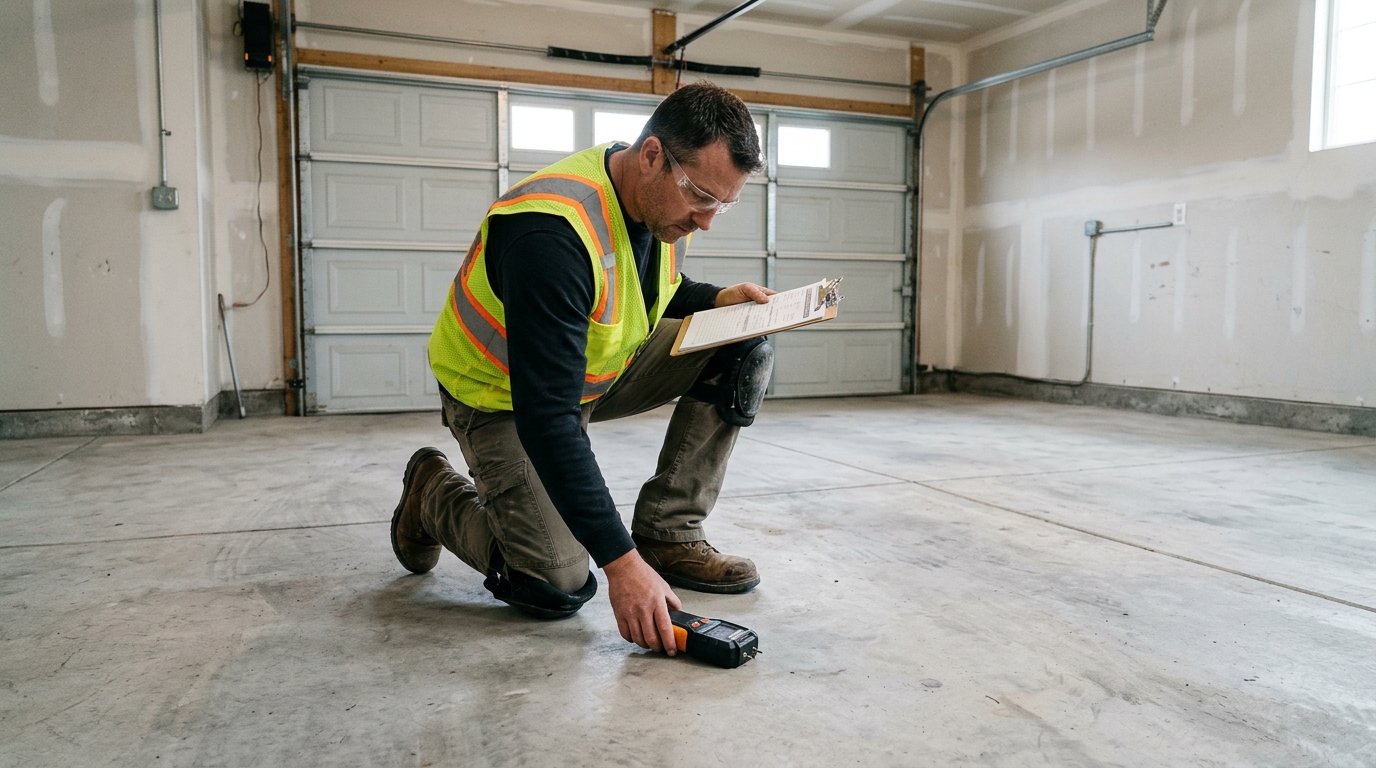
The International Concrete Repair Institute’s moisture-testing program describes recognized tests used to evaluate concrete slabs, including ASTM F2170 and F1869. Results must be compared with the chosen coating manufacturer’s limits. There is no universal pass-or-fail moisture value that applies to every epoxy or polyaspartic product. Ask the installer which method will be used and request the reading in writing.
A simple plastic-sheet observation can reveal a possible problem but is not a substitute for a specification-appropriate test. If a slab has persistent dark areas, damp joints, repeated efflorescence, or water infiltration, identify the cause before coating. A decorative layer cannot solve leaking plumbing or groundwater pressure. Our garage door condensation guide helps separate surface moisture from broader garage humidity problems.
Cracks, Joints, and Old Coatings Need a Plan
Not every visible crack means the slab is structurally unsafe, but some movement or deterioration requires specialist assessment. Ask whether the quote includes crack treatment, oil removal, removal of failing existing coatings, and preservation of active movement joints. A contractor who simply fills every joint and coats over it without discussing movement may be proposing a short-lived cosmetic fix.
The January 2026 ITRC technical sheet on epoxy floor coatings emphasizes surface preparation and moisture evaluation for its specialized applications. Its environmental context differs from a residential decorative garage floor, so use it as supporting evidence about preparation principles, not as proof that a particular home coating will provide vapor-intrusion protection.
Durability, Slip Resistance, and Daily Use
Neither epoxy nor polyaspartic is automatically slip-proof. Smooth glossy finishes can become slick when rainwater, snowmelt, dust, or vehicle fluids are present. Ask about appropriate traction aggregates or a textured flake system, especially at the doorway where water enters. Balance grip with cleaning needs: an aggressively rough surface may trap grime, while an extremely smooth one can feel treacherous when wet.
UV Exposure, Hot Tires, and Chemical Spills
Garages with strong afternoon sunlight through the open door may benefit from a topcoat selected for the expected UV exposure. Ask for the actual product data sheet instead of accepting generic claims of “no yellowing.” Hot-tire pickup, road salt, automotive fluids, and abrasive debris are separate stresses. The best-performing system must match the garage’s real use and the maintenance recommended by its manufacturer.
Cleaning habits matter after installation. Use approved cleaners, remove corrosive spills promptly, avoid dragging sharp metal equipment, and inspect areas where the coating meets the threshold. If the surface begins peeling or blistering, document the area and ask the contractor to assess moisture and adhesion before applying another cosmetic layer. Covering a failing coating with more resin rarely fixes the reason it failed.
Plan Installation Around the Garage Door and Household Schedule
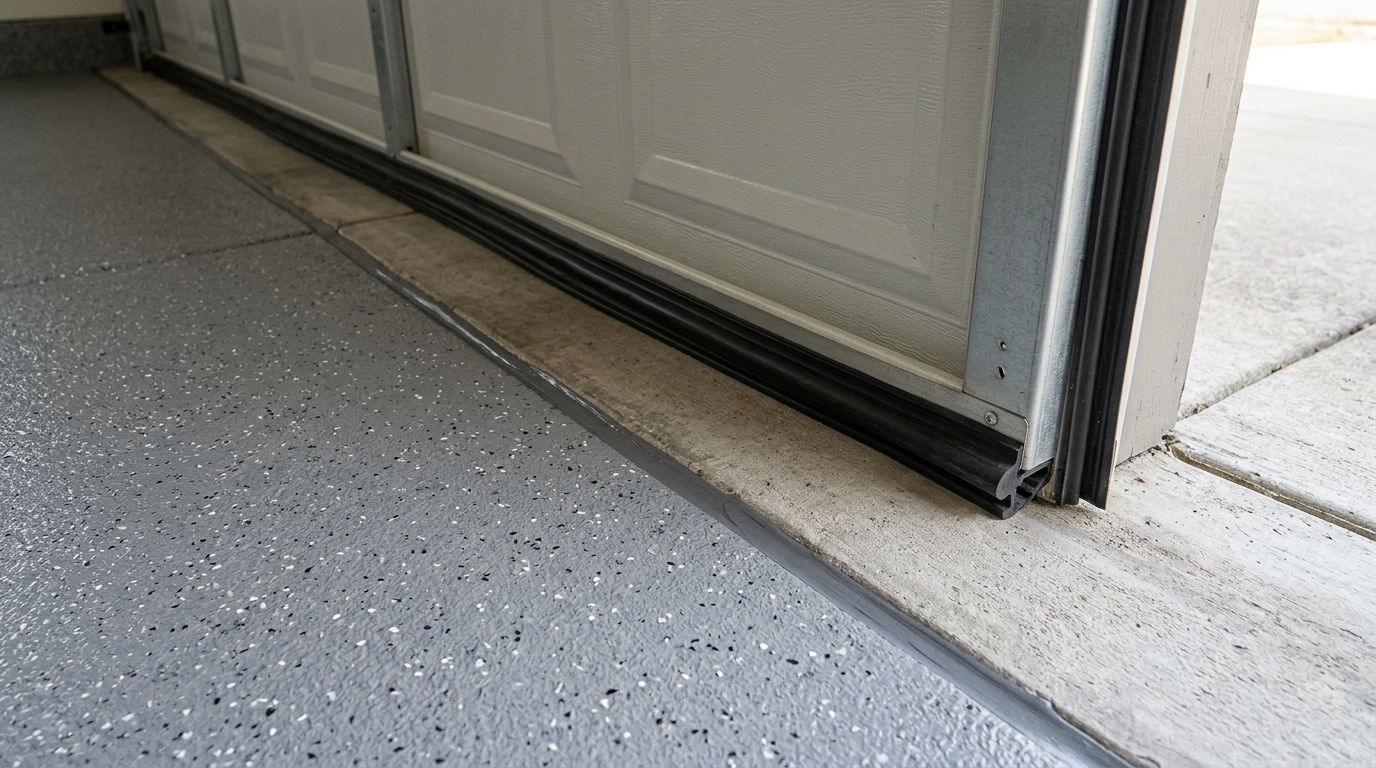
A floor coating contractor should measure more than the square footage. The location of the tracks, floor-to-door clearance, threshold slope, and bottom weather seal affect the transition from the interior slab to the driveway. A thick decorative system may slightly change contact with a seal, and sloppy buildup at the opening can interfere with proper door closure. Avoid altering the opener’s force settings or door travel to compensate for a flooring mistake.
Discuss whether the garage door must remain open during application and initial curing, how the area will be ventilated safely, and how the household will secure the garage during that period. If a door must be temporarily removed or adjusted, use a trained garage door technician rather than asking the flooring crew to loosen spring-loaded hardware. The coating crew and door specialist should agree on the boundary of their work.
Questions to Ask Before Signing a Coating Contract
Request the brand and exact products for primer, base, broadcast materials, and topcoat, plus a written surface-preparation method and moisture-test plan. Ask about repair of cracks and joints, slip-resistant texture, temperature limits, odor management, ventilation, and cure time for foot traffic versus vehicle parking. Compare warranty coverage for peeling, wear, hot-tire damage, moisture, and labor. A low quote that omits grinding and testing may not be comparable to a comprehensive proposal.
Protect the Threshold and Verify Door Operation
Before work begins, photograph the garage door bottom seal, track locations, and slab transition. Confirm that coating will not block the drainage path or fill a designed joint without proper treatment. Our garage door bottom gap guide explains why an uneven slab or driveway slope needs separate diagnosis. A coating can improve cleanability, but it is not a repair for settlement or rainwater flowing toward the opening.
After the stated cure period, a qualified person should verify that the garage door closes against its seal normally and that the opener’s reversing safeguards still work. Keep protective equipment and stored goods clear of the door’s travel path. Do not test a newly coated surface with hot tires, harsh chemicals, or heavy equipment sooner than the installer allows. Ask for care instructions and retain the product documents with the invoice.
If the garage doubles as a gym or workshop, plan for mats, rolling toolboxes, and equipment feet. These can concentrate wear even on a durable system. Our garage door screen guide for gyms and workshops offers ideas for comfort while keeping the opening useful. Flooring, ventilation, and door hardware should be considered together rather than as unrelated improvements.
A strong proposal should also describe what happens if the coating fails. Ask whether the contractor will investigate adhesion and moisture before deciding on a repair, how warranty photographs should be submitted, and whether spot repairs may have a visible color difference. Keep extra flakes or a record of the color blend where practical. If the garage experiences flooding or repeated pooling, resolve the water source first; the coating should not be marketed as a substitute for drainage work.
Also plan the temporary inconvenience. Vehicles, bicycles, stored boxes, and appliances may need a secure location while preparation and curing proceed. Measure available off-site parking, check homeowner association rules where relevant, and keep family members away from the active work area. The cheapest quoted cure schedule is not helpful if the selected coating cannot safely support vehicle traffic when promised.
Choosing an epoxy vs polyaspartic garage floor is ultimately a specification and workmanship decision. Compare the full system, moisture conditions, site preparation, traction, sunlight exposure, and realistic downtime. A beautiful floor is successful only when it remains serviceable and the garage door continues to operate safely. When a contractor can explain those details clearly, you are in a better position to invest without paying twice for avoidable failures.