
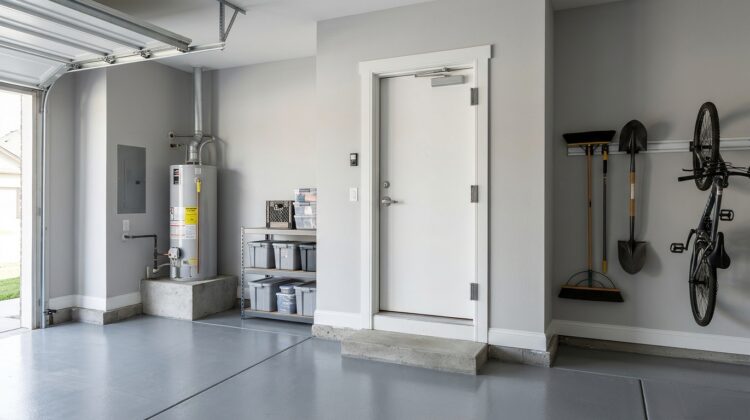
In an attached garage, this doorway forms part of the separation between a space that may contain vehicles, stored fuels, electrical equipment, and other hazards and the rooms where people live.
A properly selected and installed door can help limit the spread of a fire. It can also contribute to controlling unwanted air movement between the garage and living space.
However, building requirements vary by location, construction date, and adopted code. This guide explains common standards, inspection concerns, and when to consult a qualified professional.
Garage-to-House Fire Door Requirements: What the Code Says
The International Residential Code includes provisions for openings between private garages and adjoining residential spaces.
For many one- and two-family homes, these provisions appear in Section R302.5.1.
However, homeowners must follow the code adopted by their jurisdiction, including local amendments.
Which Doors May Be Used Between a Garage and a House?
Under the 2021 International Residential Code, several door constructions are permitted between a garage and dwelling.
These options are not identical, and purchasing a door based only on its appearance can create problems.
Solid Wood, Steel, and 20-Minute Fire-Rated Doors
The code identifies solid wood doors at least 1⅜ inches thick as one permitted option.
It also identifies solid-core or honeycomb-core steel doors meeting the same minimum thickness requirement.
Another option is a door with a 20-minute fire-protection rating.
These provisions do not mean every wooden door or metal-looking door automatically complies.
A hollow interior bedroom door, for example, should not be assumed suitable simply because it fits the existing frame.
Likewise, decorative panels, glass inserts, and other modifications may affect whether a product meets applicable requirements.
Homeowners should review the door manufacturer’s specifications and any required labels.
When replacing an existing unit, consider the complete assembly, including the frame, hardware, installation instructions, and applicable code provisions.
The International Code Council’s residential code explains the relevant separation requirements.
Consult your local building department before purchasing a replacement because the adopted code edition may be different.
Self-Closing and Self-Latching Hardware
Another important requirement involves the way the door closes.
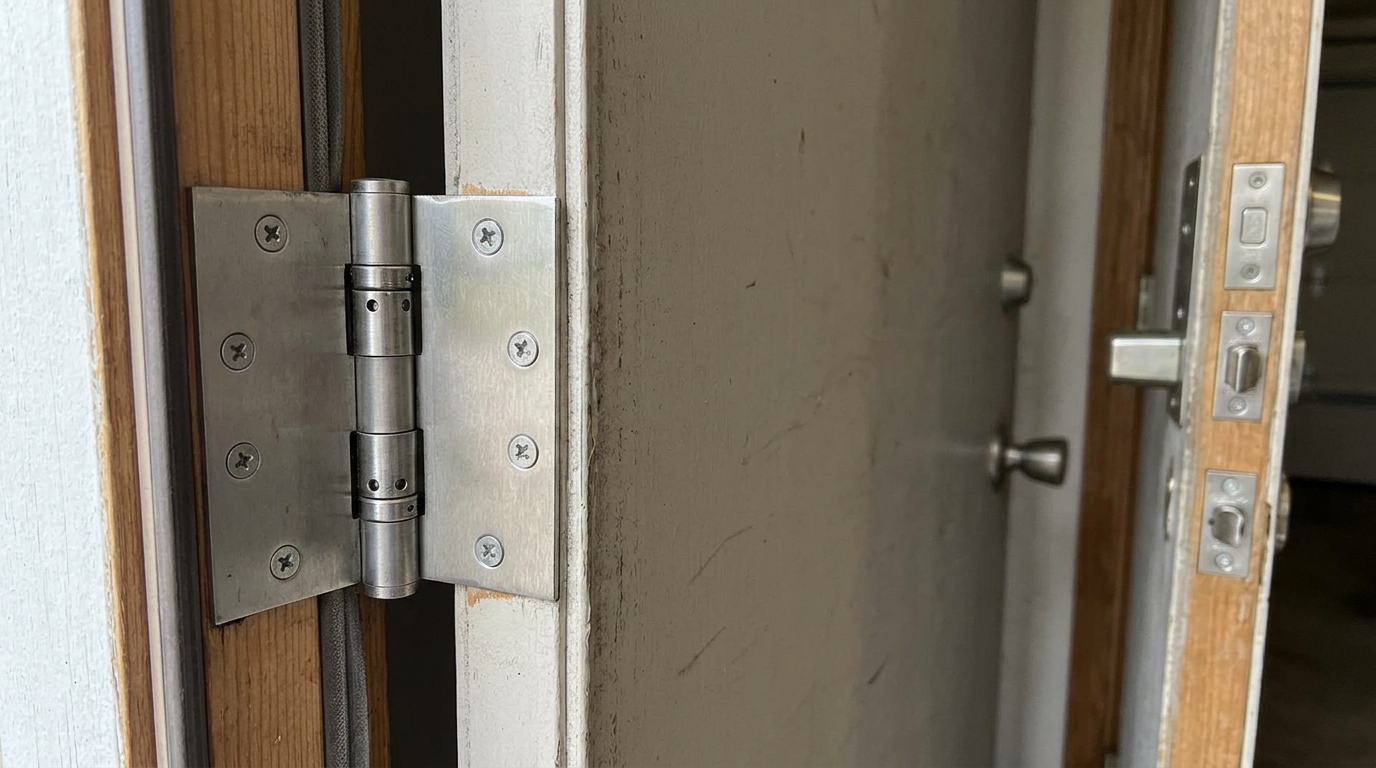
The cited IRC provision requires the door to be self-latching and equipped with a self-closing or automatic-closing device.
The purpose is straightforward: a garage entry door provides less protection when it is left standing open.
Appropriate hardware may include compatible self-closing hinges or another approved closing mechanism.
However, installing a random spring hinge does not guarantee that the complete opening meets code.
Door weight, hinge placement, closing force, latch alignment, and manufacturer instructions all matter.
A door may swing toward the frame but fail to latch because of a worn strike plate or poor adjustment.
Similarly, excessively strong hardware may create usability problems.
Have a qualified installer select and adjust the components when necessary.
Never remove a required closing device simply because it makes carrying groceries less convenient.
Why Fire Separation Matters in Attached Garages
Attached garages can contain combustible materials and ignition sources.
They may also be adjacent to bedrooms, kitchens, laundry rooms, and other occupied areas.
That combination makes proper separation an important element of residential safety.
Garage Fire Risks and Smoke Movement
The U.S. Fire Administration recommends a 20-minute fire-rated, self-closing, self-latching door between an attached garage and a house.
It also advises homeowners to store combustible materials carefully and keep them away from heat-producing appliances.
However, no single door makes a garage fireproof.
The surrounding walls, ceiling, penetrations, and other parts of the building also contribute to the separation.
For example, a damaged wall opening or improperly installed duct may undermine the intended barrier.
Garage air can also contain vehicle exhaust, fuel vapors, and other pollutants.
Air leakage around the entry door may allow some of those contaminants to reach occupied rooms.
Weatherstripping can help limit airflow when compatible with the door assembly, but it is not a substitute for required fire protection.
Never run a vehicle engine inside an attached garage, even with the overhead garage door open.
Follow the U.S. Fire Administration’s garage fire safety guidance when reviewing household risks.
Why a Pet Door or Unapproved Opening Can Be a Problem
Homeowners sometimes consider adding a pet flap, ventilation grille, or pass-through to the door connecting the garage and living space.
However, cutting an opening can compromise the door’s intended protective function.
Modifying a listed fire-rated assembly may also invalidate its tested configuration.
Even when a particular assembly uses a prescriptive door option rather than a labeled fire-rated product, alterations may conflict with local requirements.
Therefore, avoid cutting or drilling large openings without reviewing the applicable code and manufacturer instructions.
The same concern applies to replacing the entry door with a decorative interior door.
A fashionable glass panel or convenient pet opening is not automatically worth the resulting safety risk.
For context, our Garage Door Club homepage includes a discussion of the viral garage-to-pantry pass-through trend.
Any proposed opening in a garage separation should be assessed before construction begins.
How to Inspect and Maintain a Garage Entry Fire Door
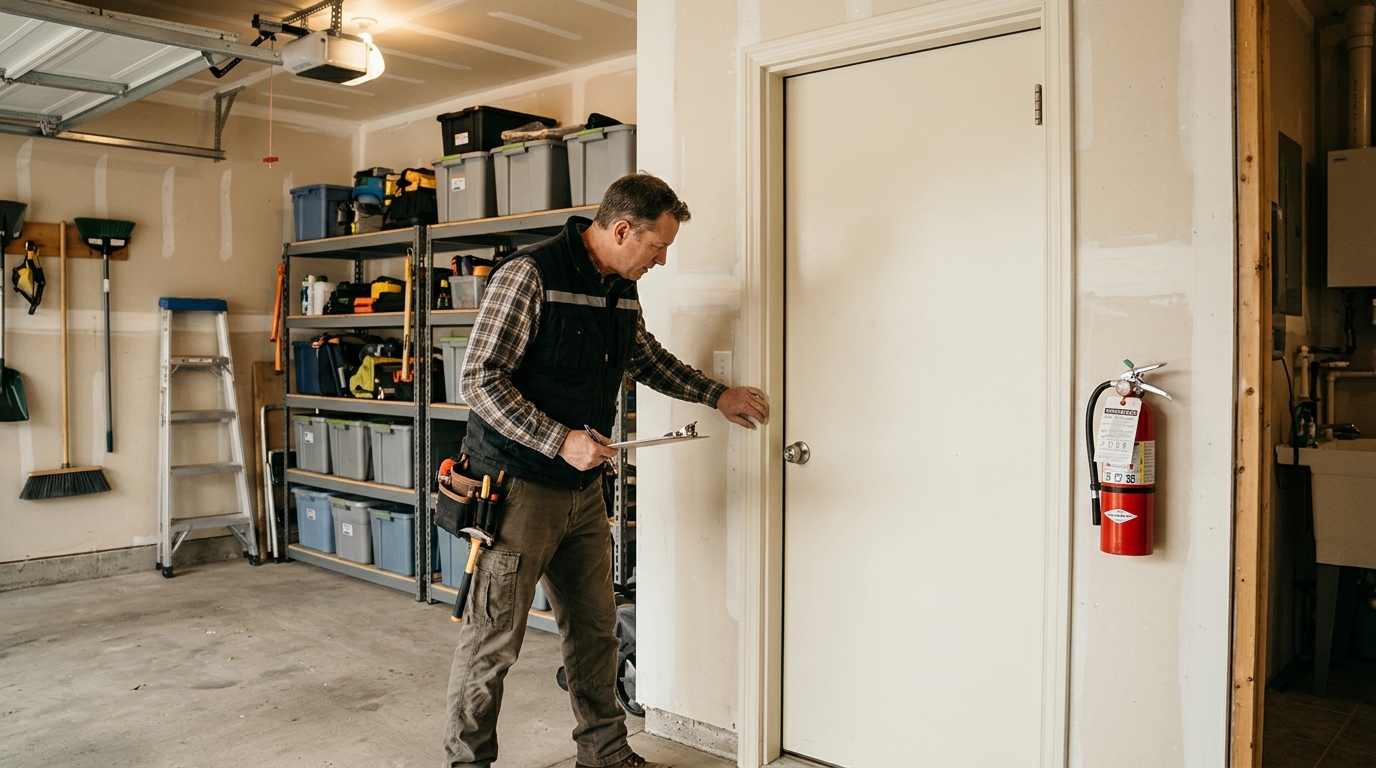
Homeowners can perform a basic visual inspection without removing hardware or making structural changes.
The goal is to recognize obvious problems and arrange appropriate service.
Safe Homeowner Checks and Professional Repairs
Begin by identifying the door and its current condition.
Next, consider whether the installation may have been modified by previous owners.
Check the door material and documentation.
Look for a manufacturer’s label or other identifying information where accessible.
Some rated assemblies contain labels that should not be painted over or removed.
However, the absence of an obvious label does not automatically prove that a prescriptive solid-wood or steel door is noncompliant.
Compare the actual door construction with the requirements adopted locally.
If the material is uncertain, ask a qualified contractor or inspector.
Check whether the door closes and latches.
From a safe position, operate the door normally and observe whether it closes without being pushed.
Check whether the latch engages the strike plate.
Do not force the door or adjust unfamiliar closing equipment if it is damaged.
A sticking latch may result from misalignment, worn hardware, or problems with the frame.
These issues deserve attention because a door that remains partly open cannot provide its intended separation.
Look for damage around the frame.
Inspect accessible surfaces for cracks, missing hardware, damaged trim, and visible gaps.
Pay particular attention to areas altered during electrical, plumbing, or remodeling work.
However, do not remove wall finishes merely to perform a routine inspection.
If you suspect an unsafe penetration, arrange an evaluation.
Repairs must use appropriate materials and methods for the relevant construction.
Consider air leakage and odors.
If exhaust or chemical odors regularly reach the living space, the problem deserves investigation.
A door may need appropriate perimeter sealing, but other leakage paths can exist in walls, ducts, and ceilings.
Do not assume adding a thicker seal will solve an entire air-quality problem.
For additional safety context, review research from the U.S. Department of Energy on garage-to-home air transfer.
Maintain carbon monoxide alarms according to applicable requirements and manufacturer instructions.
If carbon monoxide is suspected, leave the area and contact emergency services.
Choose replacement hardware carefully.
Door closers, hinges, latches, and seals must work together.
Homeowners sometimes replace hardware for convenience without realizing that the original equipment served a safety function.
Before modifying the door, identify the required performance and compatible products.
Some repairs may require permits or inspections depending on local rules.
Keep receipts and product documentation for future home maintenance records.
When should a professional inspect the door?
Arrange an inspection when the door is hollow, extensively modified, damaged, unable to latch, or missing required closing hardware.
A qualified professional can help determine whether repair or complete replacement makes more sense.
Costs vary based on door type, frame condition, labor, location, and code requirements.
Do not rely on a universal replacement price without obtaining a written estimate.
How does this differ from the overhead garage door?
The overhead garage door and the garage-to-house entry door serve different purposes.
The overhead door provides vehicle access, security, and weather protection.
The smaller interior entry door helps maintain separation between the garage and occupied rooms.
Consequently, upgrading an overhead door with insulation or smart technology does not replace the need for a compliant interior entry door.
Homeowners should maintain both systems independently.
For additional garage safety articles, browse our garage door safety archive.
Frequently asked questions
Does every garage entry door need a 20-minute fire rating?
Not necessarily. Some adopted residential codes permit specified solid-wood or steel doors as alternatives. Local requirements control.
Does the entry door need to close automatically?
The cited 2021 IRC provision requires self-latching and self-closing or automatic-closing hardware.
Can I install a pet door?
Do not modify the separation door without confirming that the modification is permitted and compatible with its required protective function.
Can weatherstripping replace a fire-rated assembly?
No. Air sealing and fire-protection requirements are different.
Final thoughts
Garage-to-house fire door requirements protect an important boundary between an attached garage and the living area.
The right door material, properly working latch, compatible closer, and surrounding construction all matter.
Homeowners can recognize obvious warning signs, but code compliance should be confirmed with a qualified professional and the local building department.
Safety note: This article provides general U.S. residential information. Building requirements vary by jurisdiction and code edition.