
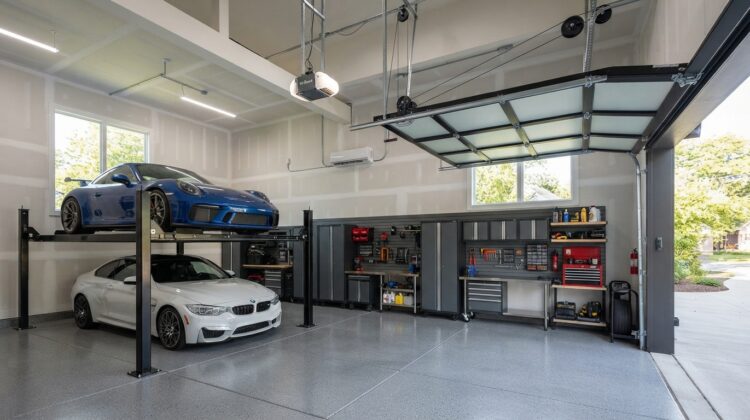
A high-lift garage door conversion can completely change how you use a tall garage. Instead of letting the door turn horizontal just above the opening, a high-lift setup allows the door to travel farther up the wall before it curves toward the ceiling. That simple change can free valuable overhead space for a car lift, ceiling storage, taller vehicles, workshop equipment, or a cleaner garage layout.
Interest in high-lift garage doors is growing in 2026 as more garages become workshops, gyms, storage spaces, and enthusiast car bays. In many of those rooms, a standard track blocks useful ceiling space.
A high-lift conversion can solve that problem, but it is not simply a matter of extending the track. The track geometry, cables, drums, spring system, opener, and available headroom all have to work together. Therefore, the first step is understanding what the conversion changes and whether your existing garage can support it safely.
How a High-Lift Garage Door Conversion Creates More Usable Space
Most residential sectional garage doors use standard-lift tracks. The door rises vertically for a short distance and then follows a curved track into a horizontal position under the ceiling. This layout works well in a typical garage, but it can leave a large portion of the upper wall unused.
A high-lift system changes that path. The vertical section of track extends higher before the door transitions through the curved section. As a result, the open door sits closer to the ceiling and farther above the garage opening.
This extra clearance is most useful in tall garages. However, the actual lift depends on door height, framing, tracks, springs, and obstacles such as lights, ducts, beams, and storage racks.
What Changes Compared With a Standard Garage Door Track?
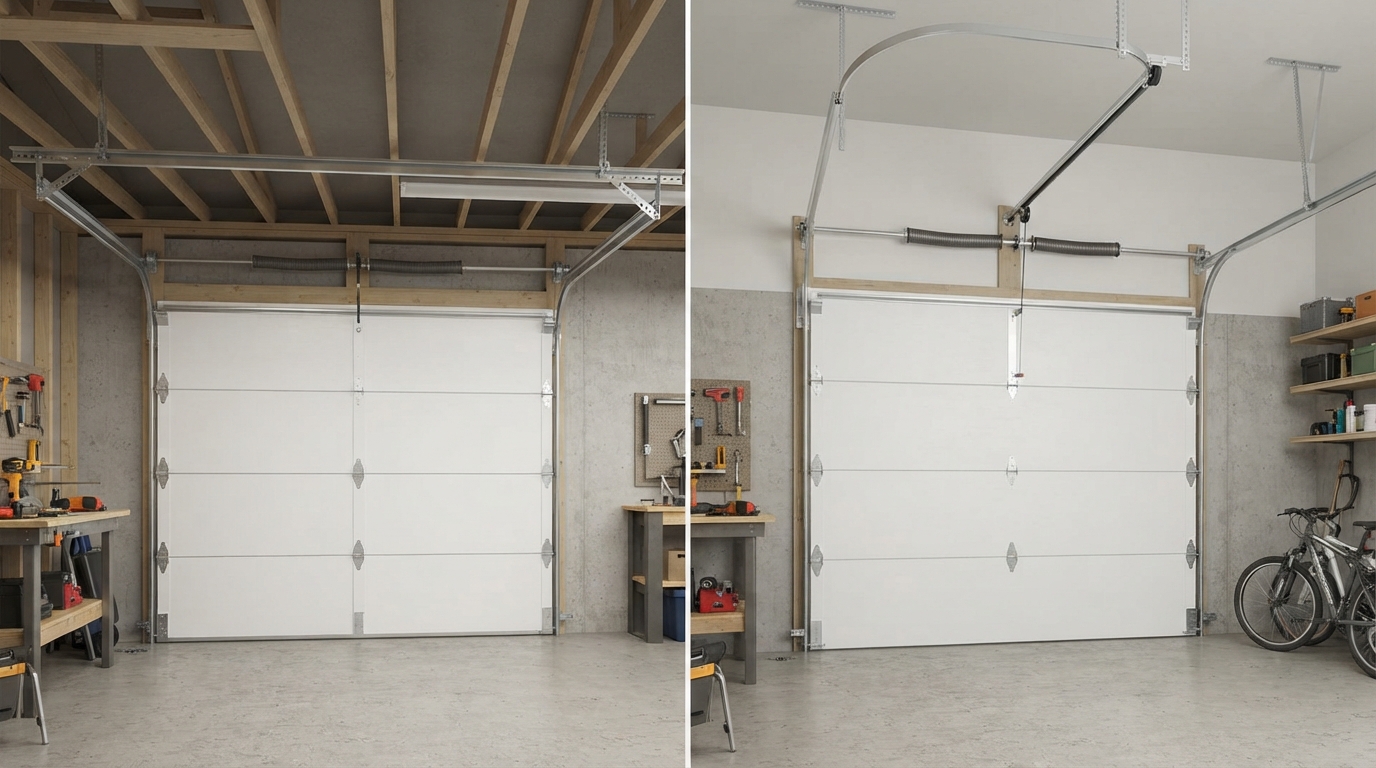
A proper conversion usually involves more than replacing one section of track. The garage door system has to remain balanced throughout its new travel path. For that reason, a technician may need to change the vertical track, curved track, cable drums, cables, torsion spring configuration, brackets, and opener arrangement.
The exact parts depend on the door. A wide or insulated door may need a different setup from a lighter single door. Space beside the torsion shaft also matters when a wall-mounted opener is considered.
If your current door already has track damage, worn rollers, loose hardware, or balance problems, address those issues before planning a conversion. Our guide to garage door maintenance explains several warning signs homeowners should watch for before making a major upgrade.
Standard Lift vs. High Lift: The Main Difference
The easiest way to understand the difference is to look at where the open door is stored. With a standard system, the door becomes horizontal fairly close to the top of the opening. Therefore, the tracks and door panels occupy a large part of the ceiling area.
With high lift, the door climbs higher first. The horizontal portion moves upward, which opens more space below it. That additional space may allow a raised vehicle to sit beneath the open door without interfering with the tracks.
High lift is also different from full vertical lift. A high-lift door still curves near the ceiling, while a vertical-lift system continues mostly upward and requires much more wall height above the opening.
Why Car Lifts and Overhead Storage Drive the Upgrade
Car lifts are one of the biggest reasons homeowners consider a high-lift garage door conversion. A two-post or four-post lift can raise a vehicle into the area normally occupied by standard tracks. Even when the ceiling itself is tall enough, the original garage door may still be the limiting factor.
High lift can also help homeowners who want ceiling-mounted storage racks. Moving the door and tracks upward may create a more useful storage zone. Even so, storage must never interfere with the door, springs, cables, opener, tracks, safety sensors, or required service clearances.
If storage is your main goal, review our article on garage upgrade ideas and ceiling storage. Plan the door path first, then design storage around the final track location instead of installing racks and hoping the door will clear them.
What Happens to the Springs, Drums, Cables, and Opener?
A garage door is not lifted safely by the opener alone. The spring system counterbalances much of the door’s weight. Cables wrap around drums as the door moves, while rollers guide the sections through the track. When the travel path changes, those components may need to change as well.
High-lift drums are designed for a different cable path than standard drums. In addition, spring requirements may need to be recalculated so the door remains properly balanced during the longer vertical portion of travel. This is one reason a high-lift conversion should be treated as a system modification rather than a simple track upgrade.
Garage door springs and cables operate under significant tension. Do not loosen drums, cables, spring hardware, or torsion components to create more clearance yourself. A mistake can allow the door to move unexpectedly or release stored spring energy.
Why Wall-Mount Openers Are Often Paired With High-Lift Doors
A conventional ceiling-mounted opener uses a rail and trolley positioned near the center of the garage ceiling. Unfortunately, that rail can occupy the same space a homeowner is trying to free for a vehicle lift or storage system.
A wall-mount opener attaches near the torsion shaft instead. Therefore, it can remove the long center rail from the ceiling and produce a cleaner overhead area. Current wall-mount opener designs are specifically intended to free usable garage space, although compatibility still depends on the door, track configuration, and installation.
Homeowners comparing opener types should also review our garage door opener maintenance guide. It explains how the opener, tracks, balance, safety sensors, and door hardware work together.
For additional manufacturer information, review LiftMaster’s official wall-mount garage door opener information. Manufacturer specifications are especially useful because opener compatibility, door weight, hardware, and installation requirements can vary between models.
Is a High-Lift Garage Door Conversion Right for Your Garage?
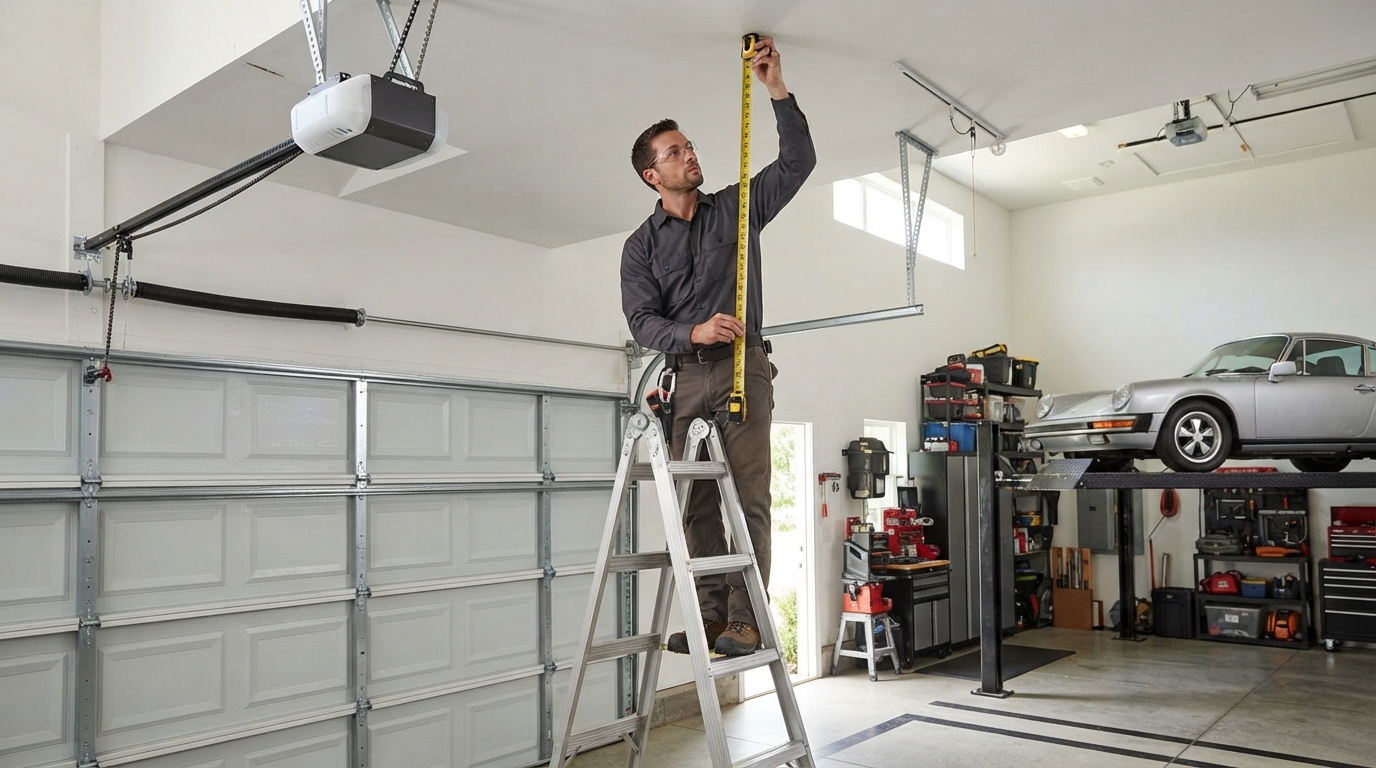
A high-lift conversion works best when the garage has unused vertical space above the opening. However, ceiling height alone does not tell the whole story. The technician also needs to consider the door height, distance above the opening, side clearance, torsion shaft location, ceiling slope, opener position, framing, and anything mounted overhead.
Start by thinking about your actual goal. If you want a car lift, determine the lift’s required ceiling height and the height of the vehicle when raised. If you want overhead storage, map out where the racks would sit. If you own a tall truck or van, consider both the vehicle height and the position of the open door.
Then look for obstacles. HVAC ducts, plumbing, lighting, garage door braces, structural beams, attic access panels, hanging shelves, and electrical runs can reduce the usable space. Moving those items may add work to the project, so they should be identified before the door system is redesigned.
Measure the Space, Evaluate the Door, and Plan the Entire Garage
Good planning starts with accurate measurements. A professional will typically need the opening width and height, floor-to-ceiling height, headroom above the opening, sideroom beside the tracks, and the position of the torsion system. They may also inspect the door sections, hinges, rollers, track condition, cables, spring age, and opener.
The condition of the existing door also matters. Damaged sections, corroded hardware, failing rollers, or aging springs may add significant repair work before a conversion makes sense. A solid sectional door may be a better candidate, but the complete system should be evaluated.
It is also important to measure the planned equipment instead of relying only on advertised garage dimensions. For example, a car lift needs space for the lift itself, the vehicle underneath it, the raised vehicle, and safe clearance from the garage door. Likewise, overhead storage needs enough clearance for both the rack and the items stored on it.
Planning everything together prevents a common mistake: upgrading one part of the garage only to discover that another component still blocks the space. The car lift, garage door, opener, lights, ceiling racks, ducts, and work areas should function as one layout.
When a Professional High-Lift Assessment Makes Sense
A professional assessment is especially important when you plan to install a vehicle lift, because two moving systems will share the same overhead space. The garage door must clear the raised vehicle, and the lift must remain within the safe operating space provided by its manufacturer.
The same rule applies to ceiling racks. Keep bins, ladders, hooks, and stored items outside the door path, and leave service access around the tracks, opener, and springs.
A technician can also determine whether your current torsion system is suitable for modification. The spring calculations, cable drums, track position, and door balance must match the new geometry. These are not areas where trial and error is appropriate.
After installation, continue normal maintenance. Watch the rollers as the door travels through the transition, listen for scraping or unusual noise, inspect visible hardware, and test the opener’s safety features. Our garage door maintenance checklist can help you build a regular inspection routine.
A high-lift garage door conversion can be one of the most useful upgrades for a tall garage in 2026. It can make room for a car lift, unlock overhead storage, improve workshop clearance, and remove the visual clutter of low tracks and a center opener rail.
However, the value of the upgrade depends on correct planning. The track path, spring system, cables, drums, opener, ceiling height, and other garage equipment all need to work as one system. Measure first, decide how you want to use the space, and have the high-tension components evaluated by a qualified garage door professional.
When the garage has enough vertical room, a properly designed high-lift setup can turn wasted space above the door into useful working height. That can make a standard garage far more practical without expanding the building itself.