
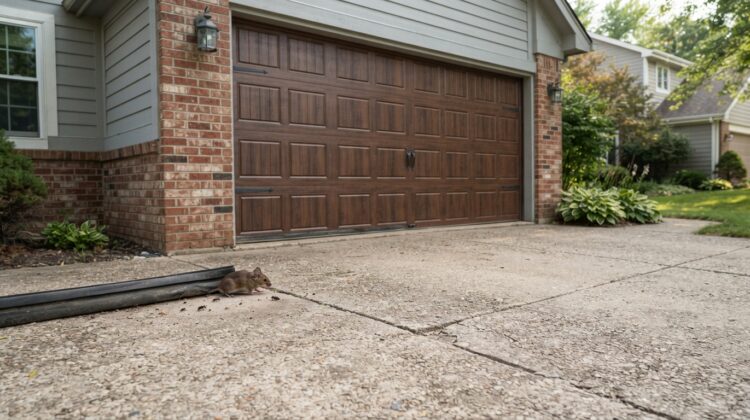
A garage door can look closed from the driveway and still leave enough space for unwanted pests to enter. Small gaps along the bottom seal, corners, side weatherstripping, or frame can give mice, insects, spiders, and other pests a path into the garage. Once inside, they may find stored food, cardboard boxes, pet supplies, nesting material, or access to the rest of the house.
That is why garage door gap pest prevention belongs on a homeowner’s maintenance checklist in 2026. The goal is to close unnecessary openings without interfering with safe door movement, drainage, or required clearances.
The CDC notes that mice can squeeze through an opening about 1/4 inch, roughly the width of a pencil. Small garage door gaps matter more than they appear. This guide explains where gaps form, which seals can help, and how to make the garage less attractive to pests.
Why Garage Door Gaps Become Easy Pest Entry Points
A sectional garage door has to move, so it relies on flexible seals rather than permanent caulk around the opening. The bottom seal compresses against the floor, while weatherstripping along the sides and top closes the space between the moving door and frame.
Those materials wear over time. Weather, dirt, repeated cycles, and compression can make rubber or vinyl stiff, cracked, flattened, or torn. Concrete floors can also settle or slope and create a gap.
Pests use the weakest point. A mouse does not need a large hole, and many insects need less space. Inspect the entire perimeter instead of only the center of the bottom seal.
Where Garage Door Gaps Usually Form
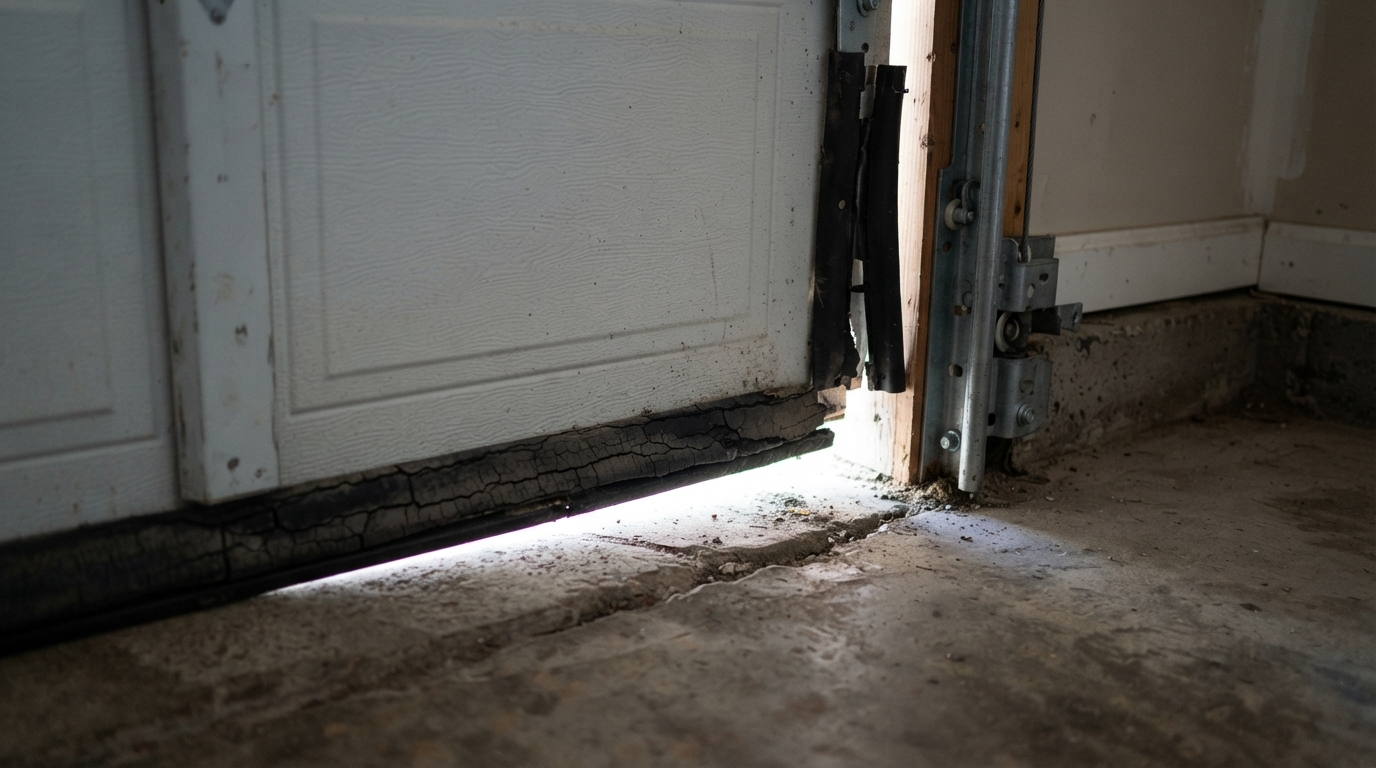
Start with the door fully closed during daylight. Stand inside with the lights off and look around the perimeter. Visible daylight can reveal an opening. Pay special attention to both bottom corners, where the lower seal meets the side weatherstripping.
Next, inspect the full bottom edge. Look for cracks, hard sections, missing pieces, or areas that no longer touch the slab. Then check the side and top weatherstripping for warping, gaps, loose fasteners, and sections that no longer contact the door face.
Also check the service door, windows, wall penetrations, utility lines, vents, and the joint where the garage meets the foundation. Pest exclusion works best when the whole garage is treated as one enclosure.
For a broader inspection, use our garage door maintenance checklist. It covers weatherstripping along with rollers, hardware, springs, cables, balance, and other parts that can affect how well the door closes.
Bottom Corners Deserve Extra Attention
The lower corners are common trouble spots because several surfaces meet there. The bottom seal must contact the concrete while the side seal presses against the door. Even a small mismatch can leave a triangular opening.
An uneven driveway or slab can make the problem worse. If the floor is higher or lower in one area, a straight door may not seal evenly, and a thicker bottom seal may not solve the cause.
Before changing opener limits or hardware, determine why the gap exists. A damaged seal is one issue. A crooked door, worn roller, track problem, structural movement, or incorrect closing position is another. Never adjust springs, cables, drums, or other high-tension parts to force the door lower.
Other warning signs include droppings, gnawed cardboard, nesting material, insects, or damaged food packaging. If you find rodent evidence, inspect nearby for an entry point and follow public-health guidance for safe cleanup.
Choose the Right Seal for the Location of the Gap
No single product fixes every garage door gap. The right solution depends on whether the opening is under the door, along the sides, at the header, around the frame, or in an adjacent wall.
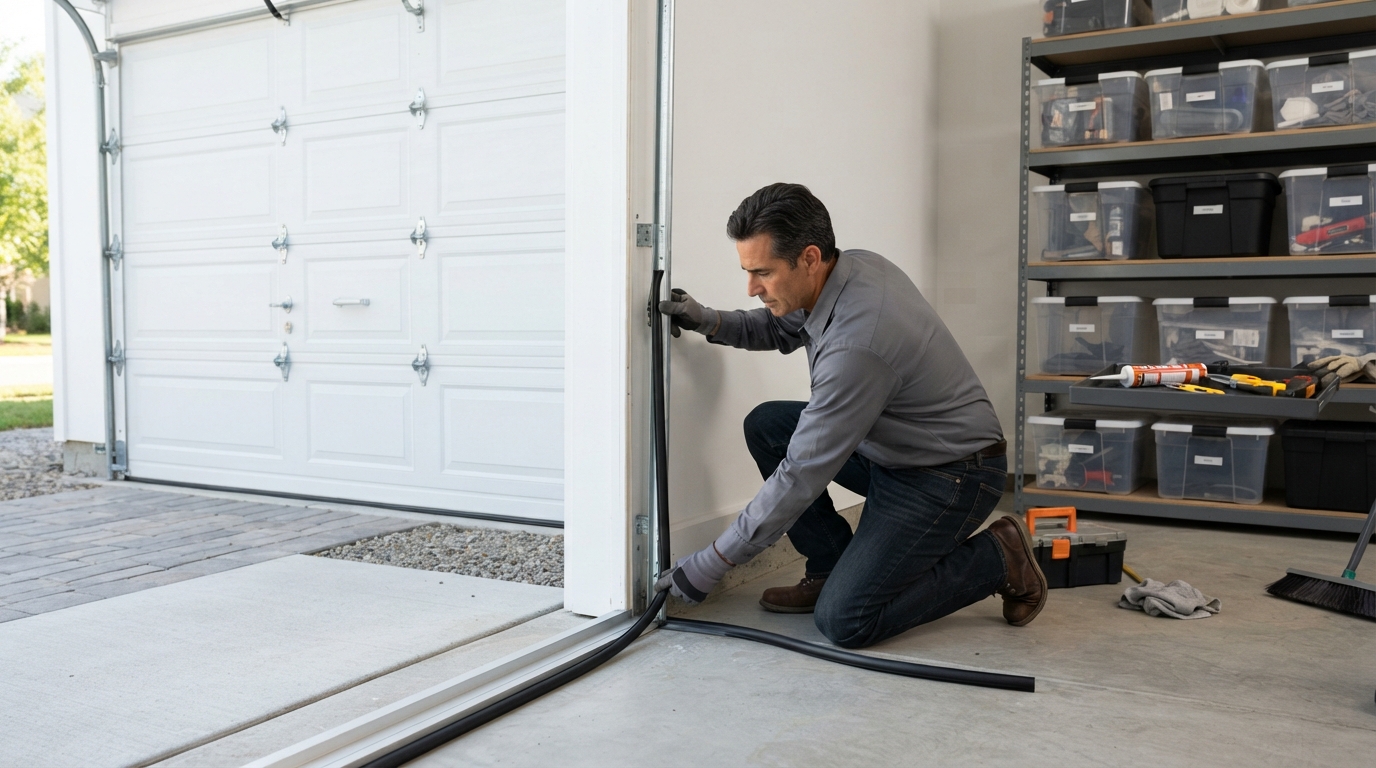
A garage door bottom seal attaches to the lower edge of the door and compresses against the floor. Different doors use different retainers and seal profiles, so match the replacement to the existing system rather than buying only by width.
Side and top weatherstripping closes the perimeter around the door face. It should make light contact with the closed door without folding excessively or rubbing so hard that it interferes with operation.
A threshold seal attaches to the concrete floor. It can help where a slab is slightly uneven or where wind-driven water and debris enter beneath the door. Placement matters because the door must close correctly against it.
If your main concern is drafts and moisture as well as pests, read our garage door weatherproofing guide. Many of the same perimeter seals can improve comfort while reducing unnecessary openings.
Weatherstripping and Thresholds Solve Different Problems
The bottom seal is the flexible part attached to the moving door, while the threshold is a raised surface on the floor. In some garages, one is enough. In others, they can work together when the products and door geometry are compatible.
Do not make the threshold so high that the door closes incorrectly, the opener strains, or water becomes trapped inside. The bottom seal should compress enough to close the opening without being crushed flat.
After replacing any seal, operate the door several times and watch it closely. Confirm that it moves freely, reaches its normal closed position, and does not reverse unexpectedly. Make sure the photo-eye safety sensors remain unobstructed.
How to Pest-Proof the Garage Without Interfering With the Door
Sealing the overhead door is only half of pest prevention. If the garage offers food, water, and shelter, pests that enter while the door is open may still stay.
Remove attractants. Store bird seed, pet food, and other edible products in durable closed containers. Clean spills and crumbs, keep trash covered, and avoid leaving food in the garage overnight.
Reduce hiding places too. Cardboard and fabric piles can provide shelter or nesting material. Shelving and sealed containers make storage easier to inspect, while a visible floor perimeter helps you notice activity sooner.
Repair leaks, address standing water, and keep the garage as dry as practical. A clean, dry space is less inviting than one with food, water, darkness, and clutter.
Build Pest Prevention Into Normal Garage Door Maintenance
Add a quick seal inspection to your monthly routine. Close the door and check for daylight around the bottom rubber, side seals, corners, and threshold. Outside, check for damaged trim, frame cracks, and vegetation touching the structure.
Inspect again after major weather changes. Extreme heat can distort some materials, while cold conditions can make older seals stiff. Heavy rain may also reveal gaps that were not obvious during dry weather.
If you are improving the garage for comfort, sealing gaps can support energy performance too. Our guide to energy-efficient garage doors in 2026 explains how insulation and perimeter seals work together. A well-insulated door still performs poorly when large gaps remain around the edges.
Do Not Rely on Spray Foam Alone for Every Pest Gap
Expanding foam can be useful for some building-envelope gaps, but it is not automatically the right solution around a moving garage door. Never fill track clearances, roller paths, drainage routes, safety-sensor areas, or spaces required for normal door movement.
For rodent exclusion elsewhere around the garage, the CDC’s rodent-sealing guidance recommends materials such as steel wool for small holes and metal, hardware cloth, cement, or similar durable materials for larger openings. The correct material depends on the location and construction.
Use sealants only where they suit the building surface. Some gaps indicate a mechanical or alignment problem rather than a hole that should simply be filled.
Know When the Gap Needs a Garage Door Professional
Call a garage door professional when a gap remains after the correct weather seal is installed, the door sits crooked, one side touches the floor before the other, the tracks appear damaged, or the door no longer closes smoothly.
Professional evaluation is also appropriate when the bottom section is damaged, the seal retainer is broken, or the door needs mechanical adjustment. Do not correct an uneven door by adjusting torsion springs, lift cables, cable drums, or bottom brackets. These parts can be under significant tension.
If pests are already established inside the garage or home, sealing the door may not be enough. Consider qualified pest-control help when activity continues after obvious entry points and food sources are addressed.
Garage door gap pest prevention works best when it combines simple habits. Keep the overhead door aligned. Replace damaged bottom and perimeter seals. Close appropriate cracks around the garage structure. Store food securely. Reduce clutter. Control moisture. Then repeat the inspection throughout the year.
The biggest mistake is waiting for a large visible gap. According to the CDC, a mouse can fit through an opening about 1/4 inch wide. A small opening that seems harmless can already be large enough to matter.
In 2026, a better-sealed garage can also limit drafts, dust, wind-driven debris, and some moisture. Treat the garage door perimeter as part of the home’s maintenance system so small seal problems are easier to correct early.