
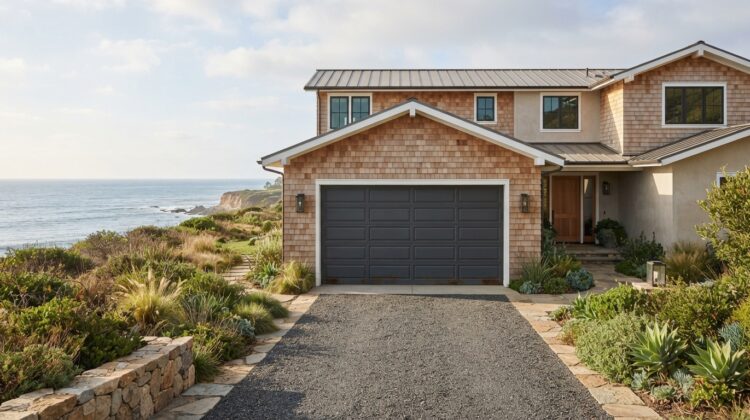
Coastal living comes with beautiful views, ocean breezes, and a climate many homeowners love. However, salt air and high humidity can be hard on a garage door. Steel panels, springs, cables, hinges, rollers, tracks, fasteners, and opener hardware can all develop corrosion faster near the coast than they would in a dry inland area.
That makes coastal garage door corrosion an important maintenance issue in 2026. A small rust spot may look cosmetic at first. Yet corrosion can spread under paint, weaken hardware, create rough movement, and shorten the useful life of door components. In severe cases, damaged cables or springs can create a safety concern.
The good news is that homeowners can often slow corrosion with regular cleaning, early inspections, correct lubrication, and better material choices. The goal is not to make a garage door completely immune to salt air. Instead, the goal is to catch problems while they are still manageable.
This guide explains why coastal garage doors rust, which parts deserve the most attention, how to build a practical maintenance routine, and when repair may no longer be enough.
Why Coastal Garage Door Corrosion Happens Faster
Metal corrosion needs moisture, oxygen, and a surface that can react. Coastal environments add another powerful factor: salt. Ocean spray and salt carried by wind can settle on garage door panels and hardware. When that salt combines with moisture and humidity, corrosion can accelerate.
FEMA explains that salt spray from breaking waves and onshore winds can increase corrosion rates on metal building components. It also notes that high humidity and longer periods of surface wetness make the problem worse. Homeowners can review FEMA’s coastal corrosion protection guidance for a deeper look at how salt and moisture affect metal near shorelines.
Garage doors are especially exposed because they face the outside directly. They also contain many moving metal parts. As a result, even a door that still looks clean from the street may have corrosion developing around brackets, springs, cables, fasteners, or the bottom panel.
Salt, Humidity, and Water Attack Metal Together
Salt does not need to arrive as obvious ocean spray. Fine airborne particles can travel inland and settle on exterior surfaces. Morning condensation, rain, sprinkler overspray, wet driveways, and humid air can then keep those particles damp.
That repeated wet-and-dry cycle matters. Each cycle gives corrosion another chance to develop. Scratches, chipped paint, bare fasteners, panel seams, and hardware joints are common starting points because protective coatings may already be thin or damaged there.
The Bottom Section and Hardware Usually Show It First
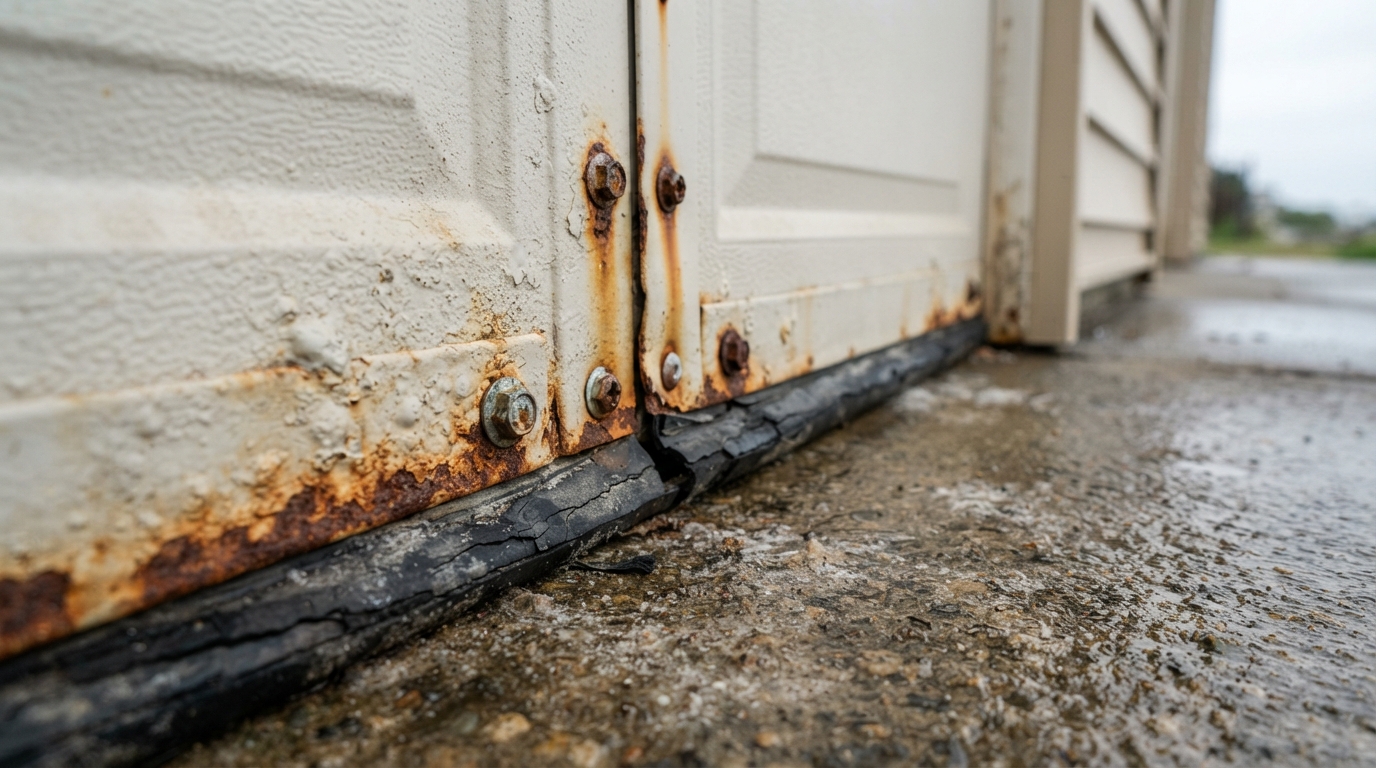
The lower part of the door receives more splash from rain, driveway runoff, sprinklers, and cleaning water. It may also stay damp longer because it sits close to concrete. For that reason, inspect the bottom edge, panel seams, retainer, fasteners, and weather seal carefully.
Next, look at exposed hardware. Hinges, roller stems, track brackets, springs, cable drums, and fasteners can show orange staining, surface pitting, flaking coatings, or rough movement. Do not touch or adjust springs or lift cables. These parts are under high tension and should be serviced by a trained garage door technician.
Early Rust Is Easasier to Manage
Surface rust is different from deep structural corrosion. A small stain on a painted steel panel may be manageable if the metal is still solid and the protective finish can be restored. However, bubbling paint, deep pitting, holes, weakened edges, or heavily corroded hardware deserve faster attention.
Do not simply paint over active rust. The surface should be evaluated, cleaned, prepared, and refinished with products suitable for the door material and the manufacturer’s instructions. If the panel has already lost strength, cosmetic repair will not restore structural integrity.
Which Garage Door Parts Need the Most Attention
A coastal inspection should cover more than the front face of the door. Start outside, then inspect the system from inside the garage while the door is fully closed. Look for corrosion, water marks, cracked coatings, loose seals, and areas where daylight enters around the perimeter.
The door panels matter, but the moving system matters just as much. Springs help counterbalance the door. Cables transfer lifting force. Rollers guide the door through the tracks. Hinges allow sections to move. Fasteners keep hardware attached. Corrosion on any of these components can affect smooth and safe operation.
For a broader routine, use our garage door maintenance checklist. It covers visual inspections, balance, hardware, weatherstripping, safety features, and other items that support long-term reliability.
Springs, Cables, Rollers, and Tracks Need Careful Inspection
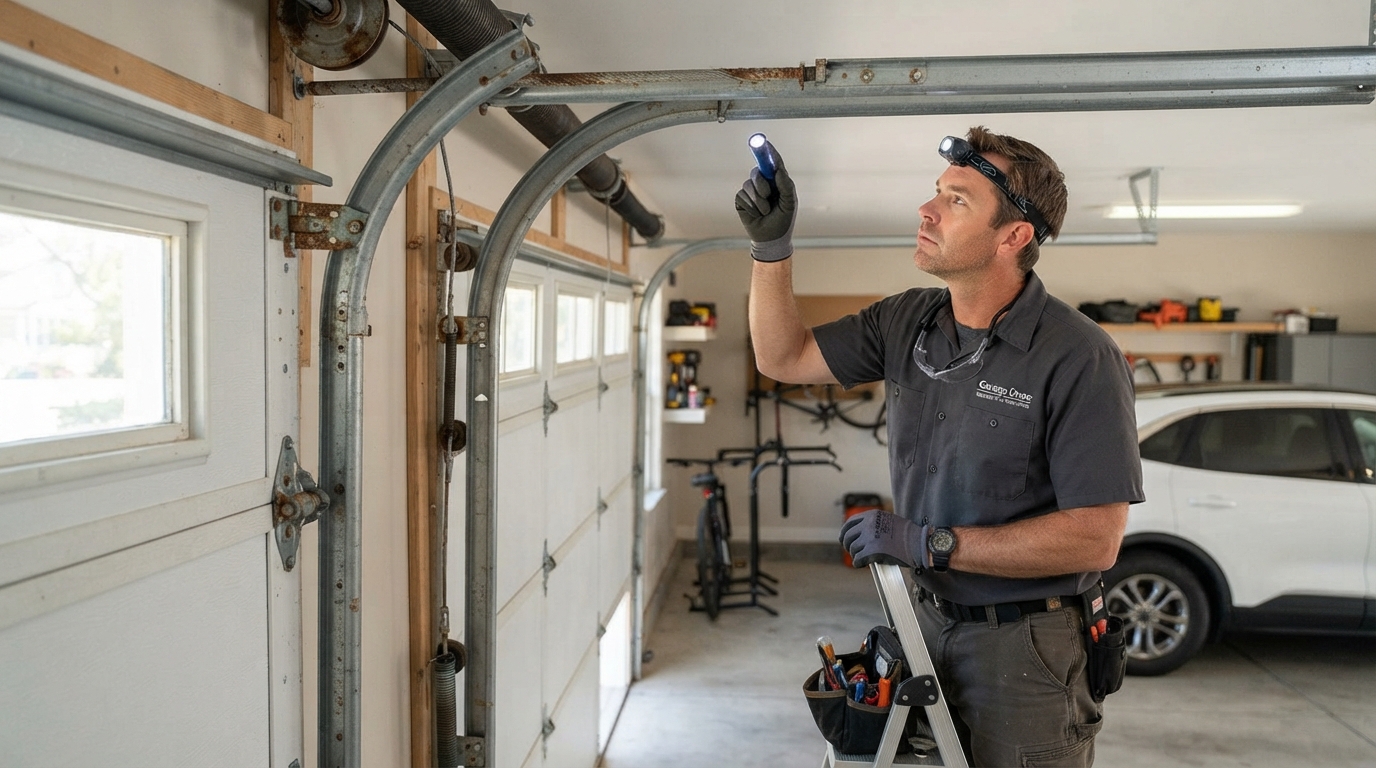
Check springs visually from a safe distance. Look for heavy rust, visible gaps, or unusual deformation. Inspect lift cables for corrosion or broken strands without touching them. Check roller stems, hinges, track brackets, and fasteners for rust that appears to be spreading.
Tracks should be clean and properly secured. However, do not coat the track surface with heavy grease. Rollers need a clean path, and excess lubricant can collect dust and debris. Follow the door and opener manufacturer’s maintenance instructions for the exact lubrication points and product type.
Also listen while the door operates. New grinding, scraping, popping, jerking, or hesitation can signal wear. Corrosion is not always the only cause, but changes in sound or motion are a reason to inspect the system instead of waiting for a complete failure.
How to Prevent Rust and Know When Replacement Makes Sense
Coastal garage door corrosion is easier to control when maintenance is routine. Waiting until rust is obvious from the street usually means the problem has had more time to spread. A simple schedule can help protect the finish, hardware, seals, and moving parts.
Start by keeping the exterior clean. Rinse salt and grime from the door using fresh water and a mild cleaning method approved by the manufacturer. Pay attention to lower panels, edges, decorative hardware, and areas where residue can collect. Avoid harsh chemicals or abrasive tools that may damage protective finishes.
Next, keep water away from the door when possible. Adjust sprinklers so they do not spray the panels or tracks. Correct drainage problems that leave water sitting at the threshold. Replace damaged weatherstripping that allows wind-driven rain or moisture into the garage. Our guide to weatherproofing a garage door explains how bottom, side, and top seals help control moisture and gaps.
A Practical Coastal Maintenance Routine for 2026
Once a month, walk around the door and look for new rust spots, bubbling paint, scratches, water stains, loose trim, or damaged seals. Check the lower corners closely. If your home is very close to the ocean, frequent rinsing may be useful because salt deposits can return quickly.
Every few months, inspect visible hinges, roller stems, tracks, brackets, springs, cables, and opener hardware. Look for changes rather than perfection. A small mark that stays the same is different from corrosion that becomes darker, larger, rougher, or more deeply pitted between inspections.
At least once a year, consider a professional inspection, especially in a high-salt environment. A technician can evaluate balance, spring condition, cable wear, rollers, bearings, hardware, opener performance, and safety systems. They can also identify corrosion in places that are easy for a homeowner to miss.
Choose Materials and Finishes That Fit Coastal Exposure
If replacement becomes necessary, ask about materials and hardware suited to humid or salt-air conditions. Aluminum does not rust like carbon steel, although it can still corrode in other ways. Galvanized steel, factory-applied coatings, corrosion-resistant fasteners, quality weather seals, and properly finished hardware may provide better protection than untreated or damaged surfaces.
Do not choose a new door based on corrosion resistance alone. Wind exposure, insulation, weight, opener compatibility, local building requirements, design, and budget still matter. Coastal homes may need several features working together rather than one “marine” label.
Replacement becomes more reasonable when corrosion is widespread, the bottom section is weakening, hardware repeatedly needs service, panels are perforated, or multiple systems are reaching the end of their life. If you are unsure, compare the condition of the entire system with our guide on when to replace vs. repair your garage door.
Above all, treat rust as information. It shows where moisture, salt, damaged coatings, or aging materials are winning. Small problems are easier to address than widespread corrosion. Regular cleaning, smart moisture control, safe inspections, correct maintenance, and timely professional service can help a coastal garage door stay dependable for longer.
In 2026, coastal garage door corrosion is not just a curb-appeal issue. It is a maintenance, durability, and safety issue. Watch the lower panels. Watch the hardware. Keep salt and water from building up. Most importantly, never attempt high-tension spring or cable repairs yourself. A few minutes of prevention today can help avoid a much larger repair later.