
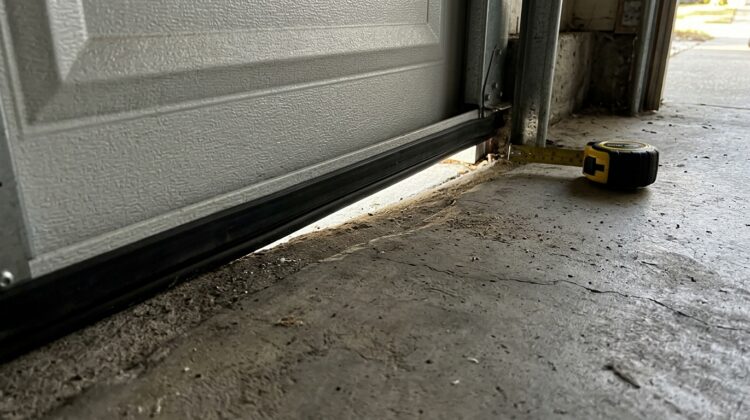
Sometimes the rubber bottom seal is simply worn out. In other situations, the concrete slab has settled, the driveway slopes toward the opening, or the garage door no longer closes evenly.
The right repair depends on the actual cause. Adding a larger weather seal may help a small surface irregularity, but it will not reliably solve every drainage or mechanical problem.
This guide explains how homeowners can identify common gap patterns, compare repair options, and avoid damaging the garage door’s lifting and safety systems.
Why a Garage Door Bottom Gap Appears on Uneven Concrete
Garage doors are designed to close against the floor with a suitable flexible seal.
However, a concrete garage threshold is not always perfectly level.
Minor surface variations may be manageable, while more significant settlement or movement can create persistent gaps.
How to Identify the Source of the Gap
Begin by observing the closed door from a safe position.
Look for daylight, water staining, damaged rubber, or irregular contact along the bottom edge.
Uneven Slab, Concrete Settlement, and Drainage Problems
Concrete can develop uneven surfaces because of settlement, construction tolerances, cracking, or long-term movement.
If one side of the floor is lower, a straight garage door may not contact the slab consistently.
Water may also flow toward the garage if the driveway slope directs runoff to the opening.
These problems can exist independently or occur together.
For example, a small gap may allow rainwater through because the driveway channels water toward that corner.
In another garage, the gap may be visible but rarely allow water inside because drainage carries runoff away.
Therefore, identifying the floor’s drainage behavior matters as much as measuring the gap.
Homeowners can inspect accessible concrete for cracking, low spots, water stains, and deteriorated joints.
However, substantial slab movement or structural cracking should be evaluated by an appropriate professional.
Do not assume a rubber seal will correct a larger concrete foundation problem.
Worn Bottom Weatherstripping and Door Alignment
Bottom weatherstripping becomes less flexible over time.
Repeated contact with the ground, weather exposure, and dirt can cause the rubber to crack or flatten.
When this happens, even a relatively level garage floor may develop gaps.
However, a visibly uneven door may indicate something more serious than weatherstripping.
Damaged lifting cables, springs, rollers, or tracks can affect how the door moves.
A door that hangs crooked should not be corrected by adding more rubber under one side.
Doing so may conceal a mechanical problem without resolving it.
If the door appears tilted, binds, or moves unevenly, stop using it and consult a trained technician.
Never adjust lifting cables or spring hardware yourself.
Our guide to buckled garage doors discusses structural symptoms that deserve professional attention.
How Much Gap Can a Garage Door Seal Handle?
There is no universal gap size that every garage door seal can safely accommodate.
Seal performance depends on the door model, retainer, material shape, floor profile, and manufacturer specifications.
Bottom Seal Options and Their Limitations
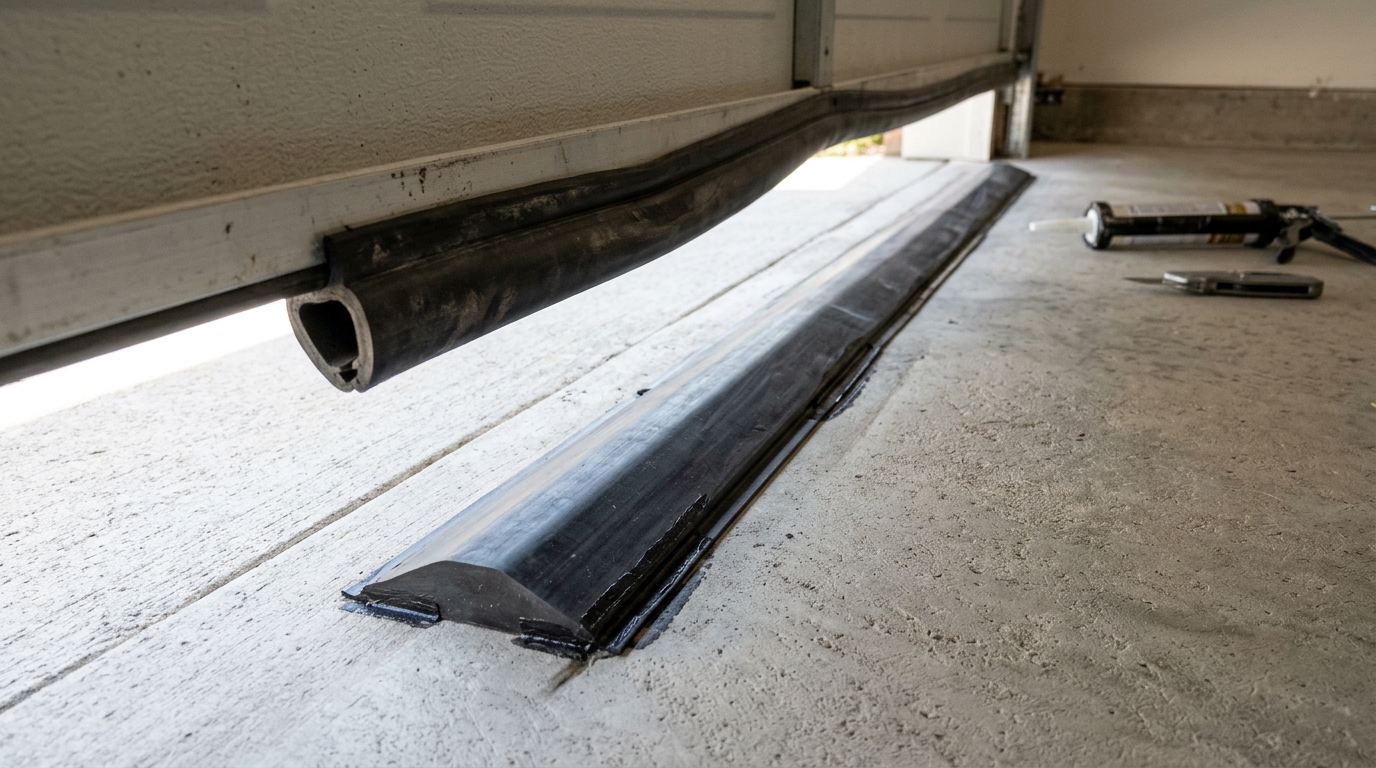
Common bottom seals include bulb-style rubber profiles and flexible seals shaped to fit specific retainers.
Some designs compress against minor surface variations and help limit drafts.
However, compatibility matters because garage door retainers use different channels and attachment systems.
A replacement that looks similar may not fit properly.
Before purchasing, identify the door manufacturer, retainer configuration, and recommended seal dimensions.
Do not install an excessively thick product simply because the gap appears large.
Extra material can prevent the door from reaching its intended closed position.
It may also change how the opener detects resistance.
Homeowners should follow the door and opener manufacturers’ installation instructions.
If the gap remains significant after compatible weatherstripping is installed, investigate the floor or door alignment.
Garage Floor Threshold Seals and Water Barriers
A floor-mounted threshold is another possible option for some garages.
This type of product attaches to the concrete near the garage door opening.
When correctly selected and installed, it can help reduce water movement beneath a closed door.
However, a threshold is not suitable for every situation.
It may create a raised surface that affects vehicle clearance, wheelchairs, carts, or pedestrian access.
It also may not solve water accumulation caused by significant drainage problems.
Some products require specific adhesives, temperatures, concrete preparation, and curing periods.
Failure to follow those instructions can lead to detachment or leaks.
Most importantly, a floor threshold must not prevent the garage door from operating safely.
The U.S. Consumer Product Safety Commission explains why automatic garage door openers need reliable entrapment protection.
Homeowners should never modify safety settings merely to force the door against a new threshold.
Choosing a Safe Repair for Garage Door Bottom Gaps
Before spending money on replacement parts, determine whether the problem primarily involves a seal, uneven concrete, drainage, or door mechanics.
Each cause suggests a different repair approach.
Step-by-Step Inspection and Repair Planning
A basic visual assessment can help homeowners prepare for a contractor’s visit or select an appropriate maintenance product.
However, it should not involve moving or disassembling hazardous door components.
Start with the door fully closed.
Stand clear of the moving system and inspect from accessible areas.
Look for consistent contact along the bottom edge.
A gap concentrated at one corner may indicate floor irregularity, a damaged seal, or misalignment.
A gap across the entire width may suggest an incorrect seal, a closure-setting problem, or other conditions.
Do not rely on one visual clue as a final diagnosis.
Check for water entry after rain.
Observe where water collects and whether runoff travels toward the garage.
Make notes without entering flooded areas containing electrical equipment.
Rainwater coming through a wall joint or side frame may resemble water entering beneath the door.
Finding the actual entry point can prevent unnecessary spending.
For broader moisture-control advice, read our garage door moisture prevention article.
Compare the seal with the manufacturer’s specification.
Check whether the existing rubber is torn, hardened, or missing.
If replacement is appropriate, obtain a compatible product rather than relying exclusively on a generic online description.
Some garage door models require specific seal profiles.
When uncertain, ask a qualified technician or the manufacturer for guidance.
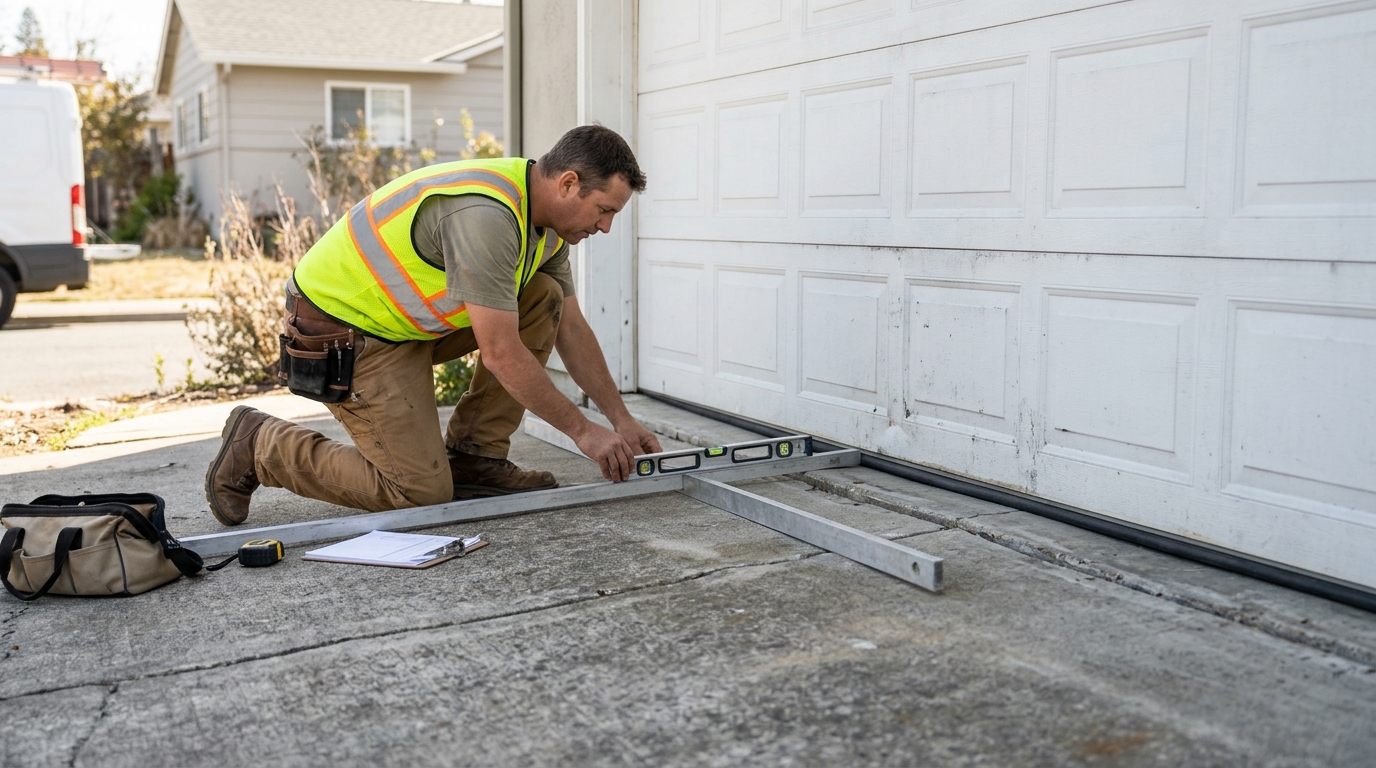
Decide whether concrete repairs are necessary.
Small surface irregularities may be addressed through an appropriate sealing solution.
However, substantial settlement, cracking, or poor drainage may require concrete work.
Possible professional solutions depend on site conditions and might involve correcting the drainage path or repairing the affected slab.
There is no single concrete repair method suitable for every garage.
A contractor should evaluate slopes, existing joints, water movement, and surrounding structures before recommending work.
Applying a thin patch without understanding the cause may result in another failure.
Do not lower a garage door beyond its proper travel.
Some homeowners try to eliminate daylight by changing opener limits or force settings.
However, incorrect adjustments can increase stress on the door and interfere with safety systems.
If the door is mechanically sound but does not close properly, follow model-specific guidance or arrange professional service.
Never bypass photoelectric sensors or the automatic reversal system.
Those features are intended to help protect people and objects near the moving door.
Consider pest control and weather protection.
A bottom gap may also allow mice, insects, leaves, and other debris to enter.
Reducing the opening can improve the garage’s resistance to these intrusions.
However, sealing the bottom alone may not address gaps at the corners, sides, or surrounding framing.
Our garage improvement article archive includes additional seasonal sealing and maintenance guidance.
Homeowners should also avoid storing food, loose pet supplies, or damp cardboard in ways that attract pests.
When is professional service the better option?
Call a technician if the door is crooked, noisy, binding, or difficult to move.
Professional assessment is also appropriate when repeated seal replacements fail to resolve a gap.
If concrete settlement or drainage is the primary issue, a qualified concrete or drainage contractor may be required.
For mixed problems, coordinating the work can prevent one contractor from accidentally creating difficulties for the other.
Ask for a clear written scope before approving significant repairs.
How to compare repair estimates
Request information about the underlying cause, selected products, installation method, and expected limitations.
A low-cost seal replacement may be reasonable for a worn rubber profile.
However, it may offer limited value when the driveway slope is the real problem.
Likewise, expensive concrete work may be unnecessary if the door simply needs a compatible replacement seal.
Choose the repair that addresses the identified issue rather than the most dramatic recommendation.
Frequently asked questions
Why is daylight visible under one corner?
Possible causes include uneven concrete, worn weatherstripping, or garage door alignment problems.
Will a thicker bottom seal fix the gap?
Sometimes, but only when the product is compatible and the door remains able to close and reverse correctly.
Are floor threshold seals useful?
They may reduce water entry in suitable installations, but they cannot correct major drainage or structural problems.
Should I adjust the opener’s force?
Do not use force adjustments to conceal an uneven floor or make the door close against an obstruction.
Who should repair significant concrete settlement?
A qualified concrete or foundation professional should evaluate substantial movement.
Final thoughts
A garage door bottom gap on uneven concrete requires an accurate diagnosis before selecting a repair.
Weatherstripping, floor thresholds, drainage improvements, and concrete repairs all serve different purposes.
Homeowners can safely recognize visible warning signs, but door alignment, lifting hardware, and safety-system concerns belong with trained professionals.
Safety note: Never loosen track brackets, springs, cables, or bottom fixtures to compensate for an uneven garage floor.