
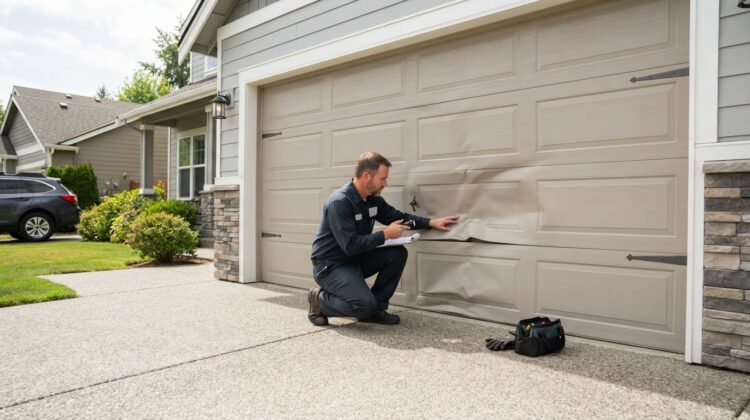
A dented, cracked, bent, or rusted garage door section can make an otherwise good door look like it needs complete replacement. However, that is not always true. In many cases, garage door panel replacement allows a homeowner to replace one damaged section while keeping the rest of the door.
The challenge is knowing when that approach actually makes sense. A small dent in one relatively new panel is very different from structural damage across several sections. Door age also matters. So do insulation, panel availability, color fading, hardware condition, spring balance, and the cost of matching an older design.
That makes garage door panel replacement an important decision rather than a simple cosmetic repair. Choosing the wrong approach can lead to a mismatched door, repeated repair costs, or mechanical problems that were never addressed.
This 2026 guide explains when replacing one garage door panel makes sense, when complete door replacement may provide better value, and what homeowners should check before ordering a replacement section.
Why One Damaged Garage Door Panel Does Not Always Mean You Need a New Door
Most residential sectional garage doors are made from several horizontal sections connected by hinges. Those sections move together as the rollers follow the vertical and horizontal tracks.
Because the door is sectional, localized damage may sometimes be repaired by replacing only the affected section. This can be useful after a low-speed vehicle impact, a severe dent, localized rust, cracked glazing, or another problem that damages one area while leaving the rest of the door in good condition.
However, replacing a section is not as simple as finding another piece of metal with the same dimensions. The new panel needs to work with the existing sections, hinges, rollers, tracks, reinforcement, insulation, and spring system.
If you are already unsure whether your door deserves another repair, start with our garage door repair vs. replacement checklist. It can help you evaluate the condition of the complete system before focusing on one damaged panel.
First Decide Whether the Damage Is Cosmetic or Structural
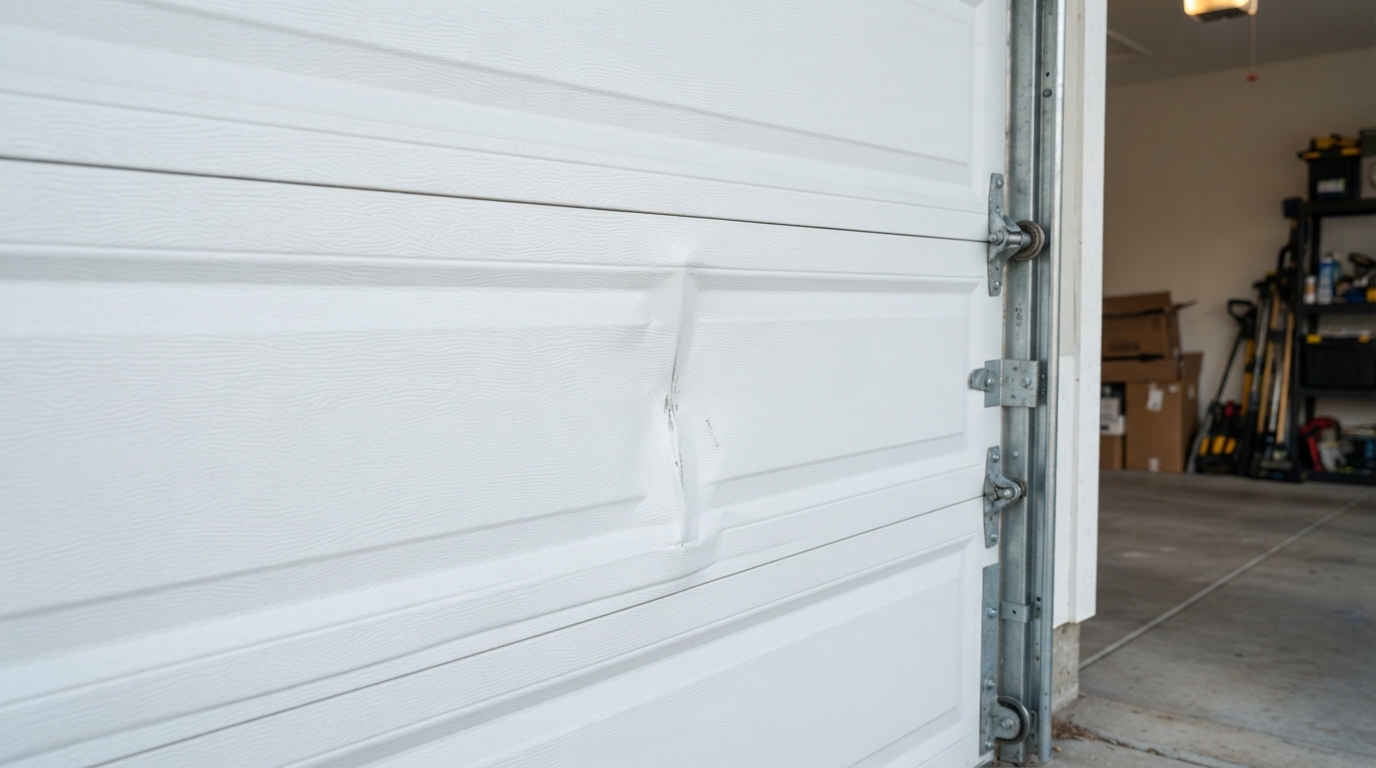
The first question is not how bad the panel looks. It is whether the damage has changed how the door operates.
A shallow dent in the exterior skin may be mostly cosmetic. If the panel remains straight, the hinges are secure, the section joints line up correctly, and the door moves smoothly, the problem may be limited to appearance.
Structural damage is different. A severely bent section can distort the shape of the door. Cracked reinforcement, separated panel layers, damaged end stiles, or a section that no longer lines up with its neighbors can affect how the rollers travel through the tracks.
Watch the damaged area while the door operates from a safe distance. If it flexes heavily, catches, rubs, shakes, or creates a new gap between sections, stop repeatedly cycling the door and have it inspected.
Damage near hinges, roller brackets, or the lower section deserves extra attention because those areas connect the panel to other important parts of the system.
When Replacing a Single Panel Can Make Sense
Single-panel replacement is usually most attractive when the damage is isolated and the rest of the door is still in good condition.
For example, imagine a newer sectional door with four sections. The bottom section is damaged when a vehicle backs into it, but the remaining sections are straight, the tracks are undamaged, the opener works correctly, and the spring system is in good condition. If the manufacturer still sells an exact replacement section, replacing only the damaged panel may be practical.
The age of the door matters too. Finding an exact panel for a current or recent model is often easier than finding one for a discontinued door.
A professional should confirm the manufacturer, model, section dimensions, thickness, insulation construction, reinforcement, and hardware arrangement before a replacement is ordered. A panel that looks similar from the driveway may still be mechanically incompatible.
Panel replacement can also preserve a door you already like. If its design works well with the home and the remaining components have years of service left, replacing one damaged section can avoid an unnecessary full-door change.
The Matching Problem Can Make a Simple Repair More Complicated
Finding the correct replacement panel is one of the biggest challenges with older garage doors.
Manufacturers change panel patterns, embossing, insulation systems, section thicknesses, colors, and hardware over time. Even when the original brand still exists, a section from a current product line may not fit an older model.
Color matching creates another issue. A door that has spent ten years exposed to sunlight may no longer match its original factory color. A brand-new section in the correct color code can therefore look brighter or darker than the surrounding sections.
Painting may reduce the visual difference when the door material and manufacturer allow it. However, homeowners should check finishing requirements and warranty conditions before applying a new coating.
Insulated doors can be even more specific. The replacement section should match the construction and thickness of the remaining door. Adding a panel with a significantly different weight can affect the overall door system.
This is one reason replacement-panel shopping should begin with identification rather than price. Find the manufacturer label, model information, door width, section height, section thickness, design pattern, and any available serial information first.
When Replacing the Whole Garage Door Makes More Sense
A single-panel repair becomes less attractive when several parts of the door are reaching the end of their useful life.
Suppose one section is badly damaged, another is rusting, the weather seals are failing, the rollers are worn, and the door has already required several recent repairs. Installing one new section may improve one problem while leaving the homeowner with an aging system that continues to need work.
The same applies when multiple panels are bent. By the time several replacement sections, labor, hardware, and adjustments are included, comparing the repair estimate with a complete replacement becomes important.
Door age should also influence the decision. An older door may lack the insulation, section design, weather seals, hardware, or appearance available on newer products. That does not mean every old garage door needs replacement. It simply means a large repair deserves a broader comparison.
For homeowners considering resale or curb appeal as part of the decision, see our guide to garage door replacement ROI in 2026. Replacement can make more sense when an aging or heavily damaged door is already weakening the exterior appearance of the home.
How to Make a Safe Garage Door Panel Replacement Decision
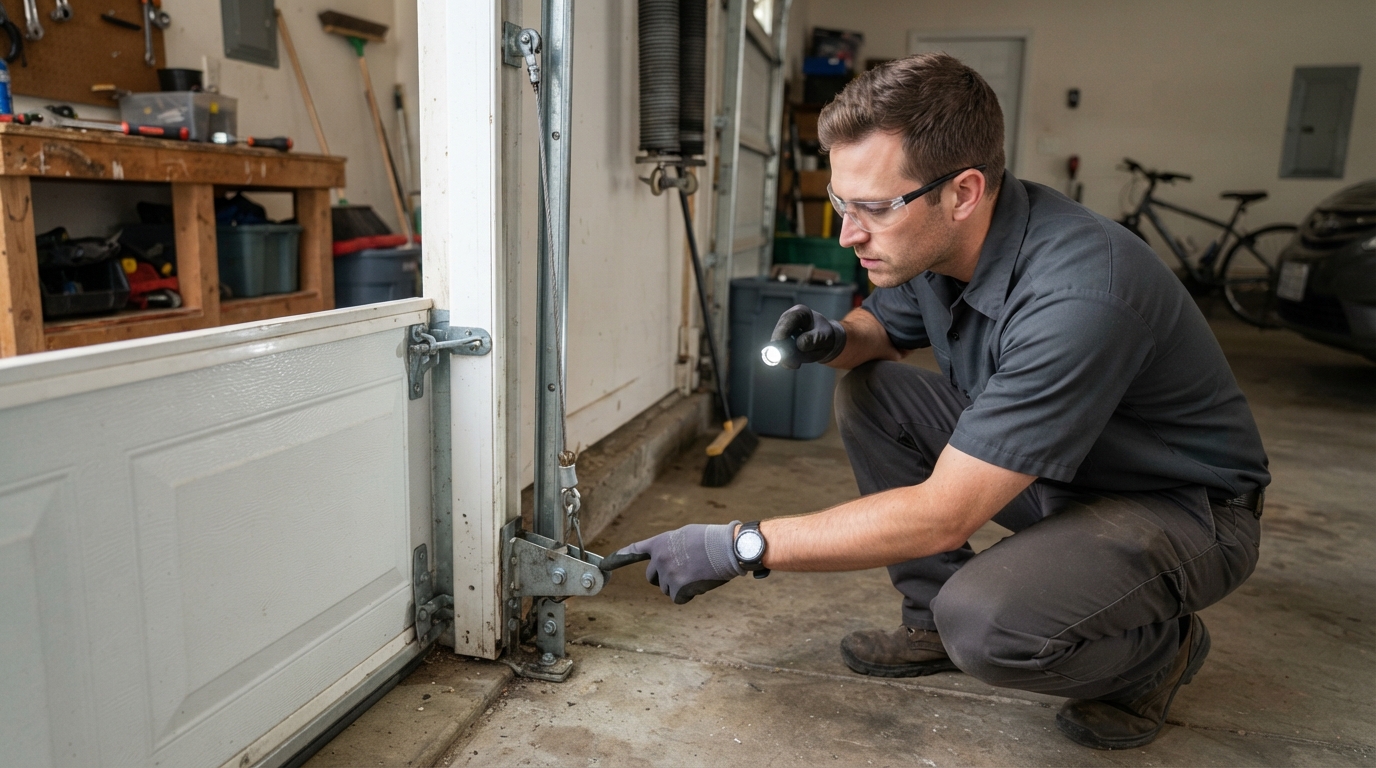
Before approving a panel replacement, inspect more than the damaged section. A garage door works as a complete counterbalanced system, so the condition of the surrounding components matters.
Start with the tracks. A vehicle impact strong enough to damage a door panel can also move or bend the track. Look for obvious deformation, loose brackets, or rollers that no longer sit correctly.
Next, inspect visible hinges and rollers without removing them. Look for bent hinges, missing fasteners, damaged roller stems, or places where the panel has pulled away from attached hardware.
Then consider the opener. If the door began moving slowly, reversing, or making unusual sounds after the damage occurred, stop assuming the problem is cosmetic. The opener may be reacting to increased resistance or a door that no longer travels correctly.
Our garage door maintenance checklist provides a broader visual inspection routine for identifying worn rollers, seals, hardware, cables, springs, and other problems.
Evaluate the Entire System Before Ordering a Replacement Section
A technician evaluating panel damage should consider how the replacement will affect door weight and balance. Garage door springs are selected to counterbalance a particular door weight. If a replacement section changes that weight significantly, the spring system may need to be evaluated as well.
This is especially important when changing panel construction. For example, replacing a basic section with a heavier insulated section is not simply a cosmetic substitution.
The technician should also examine the neighboring sections. Impact damage can travel beyond the obvious dent. Hinges may pull against the next panel, reinforcement can bend, and section joints can become distorted.
Pay special attention to the bottom section. This area may contain lift-cable attachment points and bottom brackets connected to the counterbalance system.
Do Not Remove Bottom Brackets, Springs, or Cables to Change a Panel
Garage door panel replacement can involve components connected to a high-tension system. This is especially important around the bottom section.
The Door & Access Systems Manufacturers Association warns that bottom brackets connected to the spring system can be under extreme tension and should only be loosened or adjusted by a trained door systems technician.
For official garage door safety information, review DASMA’s garage door system safety guidance.
Homeowners can safely perform visual checks. Look at the panels, photograph damage, locate manufacturer information, and document how the door behaves. However, do not loosen torsion springs, extension springs, lift cables, cable drums, bottom brackets, or related tension hardware to remove a damaged section.
If an impact has made the door unstable, leave it in a safe position and avoid repeatedly operating it until it has been evaluated.
Compare the Long-Term Result, Not Just the Lowest Repair Price
The final decision should consider what the garage door will look and operate like after the repair.
A single replacement panel makes sense when the match is good, the remaining sections are healthy, and the complete system still has useful life. In that situation, replacing the whole door may create unnecessary cost.
Complete replacement becomes more attractive when matching sections are unavailable, several panels are damaged, corrosion is widespread, the door is structurally tired, insulation is poor, or repair costs continue to accumulate.
Also consider what happens after the work is complete. Will the replacement panel match the existing finish? Will the door remain properly balanced? The insulation remain consistent? Are the rollers and hinges still worth keeping? Is the opener suitable for the finished system?
These questions provide a better picture than comparing the price of one section with the price of one new door.
Garage door panel replacement can be a smart way to repair localized damage in 2026, but it works best when the decision starts with the whole system. One damaged section does not automatically mean you need a completely new garage door. At the same time, one new section cannot solve problems spread throughout an aging door.
Identify the exact door, determine whether the damage is cosmetic or structural, check whether a compatible section is still available, and evaluate the condition of the surrounding hardware. Then compare the finished repair with the long-term benefits of replacement.
Most importantly, keep high-tension components out of DIY panel work. Springs, cables, drums, and bottom brackets can create serious hazards. A professional inspection can help determine whether a panel replacement will safely restore the door or whether the damage is telling you it is time for a complete replacement.