
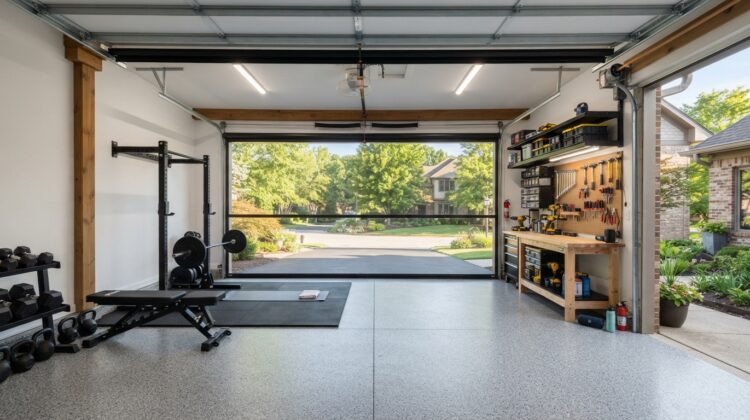
Garages are changing. Many homeowners now use them as workout rooms, workshops, hobby spaces, and flexible project areas. However, opening the main garage door creates a new problem. Fresh air can enter, but so can mosquitoes, flies, leaves, dust, and other outdoor debris.
A garage door screen can make that large opening more useful. The screen sits across the garage opening while the main door is raised. As a result, air and daylight can move through the space while many insects and larger pieces of debris stay outside.
There are several screen styles, and they do not all work the same way. Magnetic curtains, retractable systems, and motorized screens vary in cost, durability, convenience, privacy, and installation. This guide explains how to choose the right setup without interfering with your garage door.
Why Garage Door Screens Are Useful for Gyms and Workshops
The biggest advantage of a garage door screen is simple: it lets you use the large garage opening without leaving the entire space exposed. That can be useful when exercising, woodworking, repairing equipment, or working on a project for several hours.
For a home gym, an open garage can feel less confined. Air movement may help the room feel more comfortable during mild weather. Natural daylight can also make the space more inviting. Meanwhile, the screen creates a visible boundary between the workout area and the driveway.
However, a screen is not a complete ventilation system. Projects that create hazardous dust, fumes, vapors, or combustion gases may need source capture or mechanical exhaust. Our guide to garage ventilation for home gyms and workshops explains why airflow should be planned around the activity taking place.
Airflow, Bugs, Debris, and Privacy All Matter
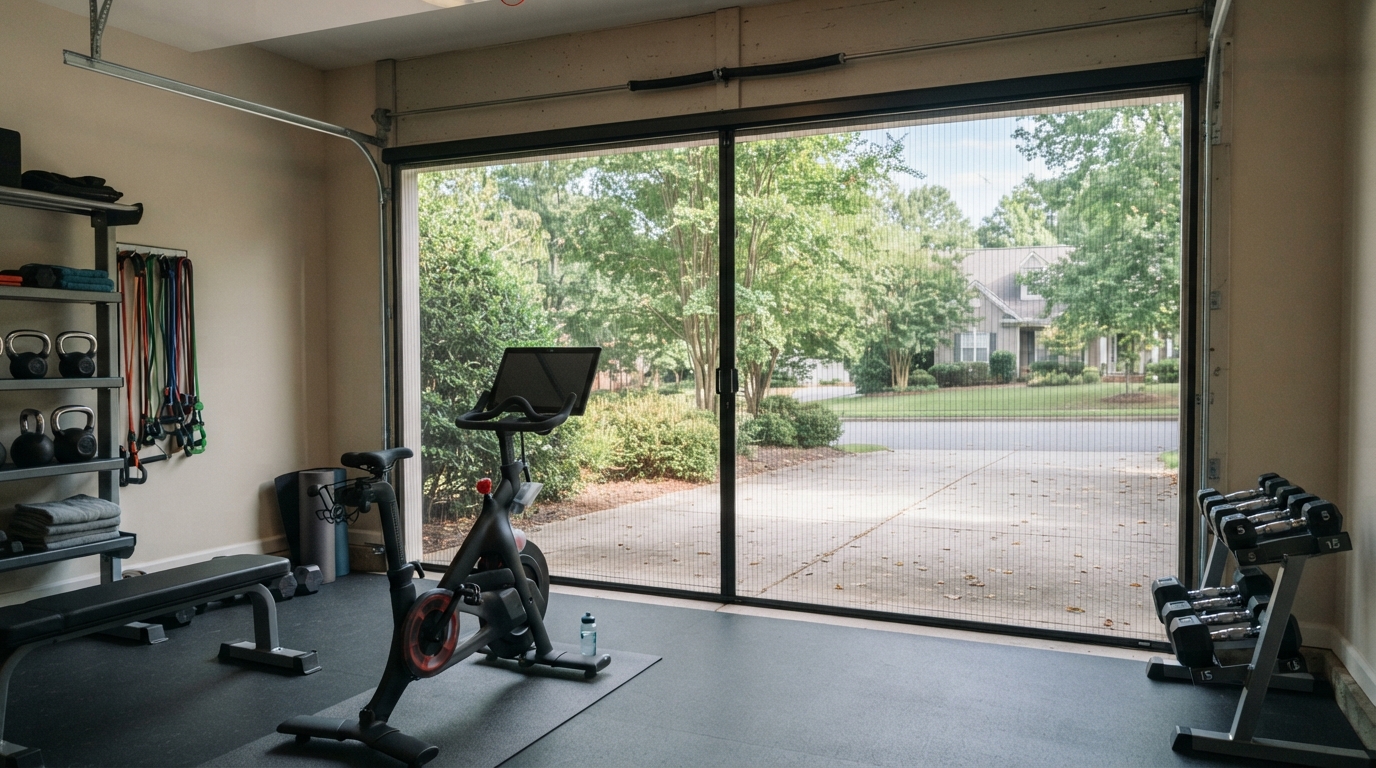
A mesh screen allows air to pass through many small openings. At the same time, it creates a barrier against flying insects. This makes the garage easier to use when you want the door open but do not want the room completely exposed.
Mesh density affects the experience. A tighter mesh can improve insect protection and privacy, but it may reduce airflow and outside visibility. A more open mesh usually feels breezier, although people may be able to see into the garage more easily.
Privacy mesh can help on a busy street, but it is not a solid wall. Visibility changes with lighting, and a brightly lit garage may still be visible at night.
A Screen Can Support Airflow, but It Cannot Make Fumes Safe
Opening the garage door and using a screen can improve natural air movement when outdoor conditions allow. However, airflow is not the same as contaminant control. Wood dust, paint vapors, solvents, welding fumes, vehicle exhaust, and gasoline-powered equipment require greater caution.
The U.S. Environmental Protection Agency identifies automobile exhaust from attached garages as a potential source of carbon monoxide. Carbon monoxide is colorless and odorless, so a screen cannot prove that a garage is safe from it. Never run a vehicle, generator, or other fuel-burning equipment inside the garage simply because the main door is open.
For attached garages, keep the door leading into the home closed and properly sealed. If your workshop creates dust or fumes, use controls suited to the specific hazard. Think of the screen as a comfort feature rather than a substitute for safe ventilation.
Garage Screens Can Make Flexible Spaces Easier to Use
A garage may serve several purposes during one week. It might hold a vehicle overnight, become a gym in the morning, and turn into a project space on Saturday. A screen can support that flexibility because it does not permanently close the main opening.
This approach also fits with broader garage upgrades. Flooring, lighting, wall storage, ceiling storage, and better organization can make the room more practical. If you are planning a larger makeover, see our garage upgrade ideas for more ways to improve the space.
Magnetic, Retractable, and Motorized Garage Door Screens
The best garage door screen depends on how often you will use it and how polished you want the installation to feel. A simple magnetic screen can work for occasional use. A framed retractable or motorized screen may make more sense when the garage functions as a gym or workshop several days each week.
Magnetic screens are usually the simplest type. Mesh panels hang across the opening and meet in the center with magnets. They can be easy to walk through, and many can be removed when not needed. However, loose edges can create gaps, while wind can move lightweight mesh.
Manual retractable systems stay attached to a frame or track and store out of the way when not needed. That usually creates a cleaner everyday setup.
Motorized screens add push-button operation and suit frequent use or wide openings. However, they add electrical components and usually need more careful installation.
Choose the Screen Around How You Actually Use the Garage
Start with your routine instead of the product. If you use the screen only a few weekends each year, a removable option may be enough. If you train in the garage every morning, convenience and durability may matter more. A busy workshop may need stronger mesh and a sturdier frame.
Also consider pets and children. Visible crossbars or contrasting mesh can make a closed screen easier to notice.
Measure the opening carefully as well. Small differences in width, height, framing, trim, floor slope, or surrounding hardware can affect how well a screen seals along the sides and bottom.
How to Install a Garage Door Screen Without Creating New Problems
A garage door screen and the main overhead door must share the opening safely. The screen cannot interfere with tracks, rollers, cables, springs, photo-eye sensors, bottom seals, handles, or the door’s travel path.
Before installing anything, open and close the garage door while watching the full path of the panels and hardware. Identify where the screen frame, fasteners, tracks, housing, or roll would sit. There should be no point where the two systems can collide.
Never drill into or modify torsion springs, lift cables, drums, tracks, or structural door hardware to make a screen fit. These components can carry significant loads or spring tension.
If the garage door already moves unevenly, makes unusual noise, or has damaged hardware, fix that issue first. Our garage door maintenance checklist can help you spot common problems before adding another system around the opening.
Check Clearance, Weather, Security, and Maintenance Before Buying
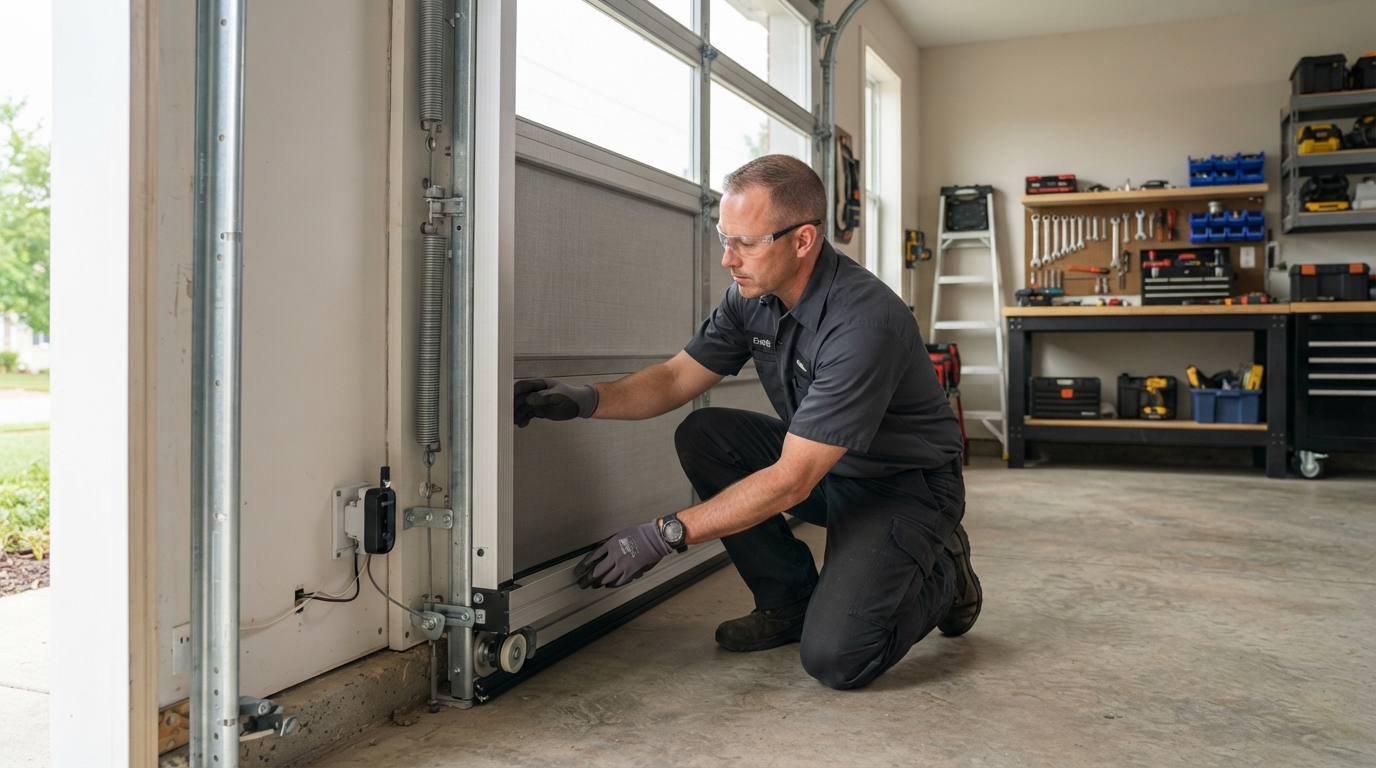
Also think about weather, security, cleaning, and storage before choosing a permanent installation.
Wind can put pressure on a large screen. A product that works well in calm weather may behave differently during a strong gust. Follow the manufacturer’s limits for wind and weather, and retract the screen when conditions exceed those limits.
Rain is another concern. Mesh can let wind-driven moisture enter the garage. Keep electrical equipment, power tools, cardboard storage, and moisture-sensitive materials away from areas where water may blow inside.
Do Not Treat a Garage Door Screen as a Security Door
A mesh screen can create privacy and make the opening feel enclosed. However, it should not be treated as the home’s main security barrier unless a specific product is designed and rated for that purpose.
When you leave the garage unattended, close and secure the actual garage door. Valuable tools, bicycles, gym equipment, vehicles, and stored household items can still attract attention. If the garage connects to the house, keep the entry door locked as well.
Maintenance is straightforward but important. Clean the mesh to remove dust and pollen. Check edges, tracks, fasteners, zippers, magnets, or retracting mechanisms for wear. Repair small tears before they become larger.
Finally, inspect the main garage door at the same time. A screen does not correct worn weatherstripping, damaged panels, poor balance, or gaps around the closed door. If comfort is the main goal, an insulated garage door and good perimeter seals may also help when the garage is closed.
A garage door screen can be a practical 2026 upgrade for homeowners who want more use from a gym, workshop, hobby area, or multipurpose garage. It can provide fresh-air access, daylight, insect protection, and a clearer boundary between the garage and outdoors.
The right choice depends on your routine. Magnetic screens can suit occasional use. Retractable systems offer a cleaner everyday setup. Motorized screens add convenience for frequent use and larger openings. In every case, correct measurements and garage-door clearance matter.
Most importantly, use the screen for what it does well. It can make an open garage more comfortable, but it is not a substitute for safe ventilation, a locked garage door, or proper maintenance. Plan those systems together, and your garage can become a more flexible space without giving up its original function.